

 Send Email
 whatsapp


The Best Way to Remove Dirt and Bacteria? Microfiber Cleaning Cloth

Microfiber Cleaning cloths deliver superior performance in removing dirt and bacteria from surfaces. Scientific studies show that amicrofiber towel can eliminate up to 98% of bacteria, far surpassing traditional materials. The table below highlights how reusable microfiber towel options outperform other cleaning tools:
| Cleaning Material | Bacteria Removal (%) | Virus Removal (%) |
|---|---|---|
| Microfiber Cloth | Up to 98% | Up to 93% |
| Traditional Cotton | 30% | 23% |
Key Takeaways
- Microfiber towels remove up to 98% of bacteria and trap dirt better than traditional cloths, making them highly effective for cleaning.
- Their unique fine fibers and static charge capture tiny particles and bacteria without harsh chemicals, keeping surfaces cleaner and safer.
- Proper use and care, like folding towels to use clean sections and washing after each use, extend their life and prevent spreading germs.
Why a Microfiber Towel Excels at Removing Dirt and Bacteria

Unique Fiber Structure and Cleaning Power
A microFiber Towel stands out due to its advanced fiber technology. Each towel contains thousands of ultra-fine synthetic fibers, often made from polyester and polyamide. These fibers are split into tiny, wedge-shaped filaments, creating a much larger surface area than traditional cleaning cloths. This unique structure allows the towel to capture and retain more dirt, dust, and bacteria.
- Microfiber fibers are much finer than human hair, enabling them to attach to microscopic dirt particles that larger fibers miss.
- The wedge-shaped filaments act like tiny hooks, grabbing and holding onto dirt and grime.
- The fibers generate a static charge when dry, attracting dust and preventing it from spreading.
- When damp, the towel wipes away grease and grime efficiently, often without the need for harsh chemicals.
- The dense fiber structure inhibits bacterial growth, providing additional antimicrobial benefits.
Tip: Microfiber towels clean effectively with just water, making them a safer choice for those sensitive to cleaning chemicals.
How Microfiber Towels Trap Dirt and Bacteria
The effectiveness of a microfiber towel lies in its ability to trap and lock contaminants. The ultra-fine fibers create millions of hooks and loops, increasing the towel's surface area and enhancing its cleaning power. These fibers use both mechanical and electrostatic mechanisms to remove dirt and bacteria.
Microfiber towels utilize several mechanisms for superior cleaning:
| Mechanism | Description |
|---|---|
| Ultra-fine synthetic fibers | Split into millions of hooks and loops, increasing surface area to trap particles |
| Van der Waals forces | Adhesive forces that mechanically dislodge and lock contaminants into the cloth |
| Electrostatic charge | Attracts dust and microbes, preventing redistribution during cleaning |
| Small fiber size | Reaches microscopic crevices and captures particles the size of bacteria |
| Mechanical cleaning | Physical and electrostatic effects enable thorough cleaning without chemicals |
Laboratory studies confirm that microfiber towels can remove up to 99.4% of surface microorganisms, far exceeding the performance of cellulose or cotton wipes. The wedge-shaped cross-section of the fibers traps particles within the fiber matrix, preventing re-deposition and ensuring a more hygienic clean. This makes the microfiber towel an essential tool in environments where contamination control is critical, such as hospitals and cleanrooms.
Microfiber Towel vs. Traditional Cleaning Cloths
The differences between a microfiber towel and traditional cleaning cloths become clear when comparing their structure and performance.
| Property | Traditional Cloth Fibers | Microfiber Fibers |
|---|---|---|
| Fiber Diameter | 1–2 dtex (cotton fibers) | 0.1–0.3 dtex (about 1/100th diameter of human hair) |
| Fiber Shape | Cylindrical, single-direction | Split, star-shaped, with microscopic spaces |
| Fiber Density | Lower density and thread count | Higher density and thread count, greater absorbency |
| Absorbency | Moderate | Holds 7-8 times its weight in liquid |
| GSM (grams per square meter) | Generally lower | Higher GSM means thicker, denser, more absorbent |
Microfiber towels outperform cotton cloths in several key areas:
- They remove up to 99% of bacteria from surfaces, compared to about 30% for cotton.
- Their fine fibers reach into small crevices, trapping dirt and allergens more effectively.
- Microfiber dries faster and resists bacterial growth, reducing the risk of odors and contamination.
- The towels maintain cleaning efficiency after hundreds of washes, while cotton cloths degrade more quickly.
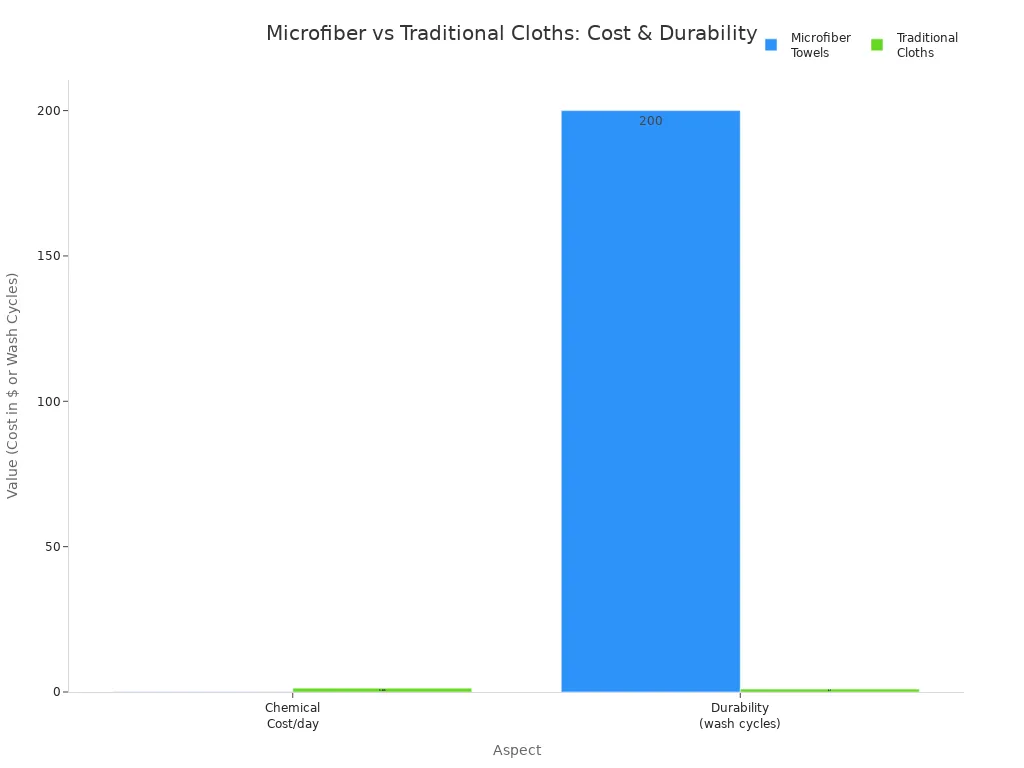
Note: Although microfiber towels have a higher upfront cost, their durability and reduced need for cleaning chemicals make them more cost-effective over time.
A microfiber towel provides unmatched cleaning power, durability, and hygiene compared to traditional options. Its advanced fiber structure and proven ability to trap dirt and bacteria make it the best choice for maintaining a clean and healthy environment.
Using and Caring for Your Microfiber Towel
Step-by-Step Guide to Cleaning with a Microfiber Towel
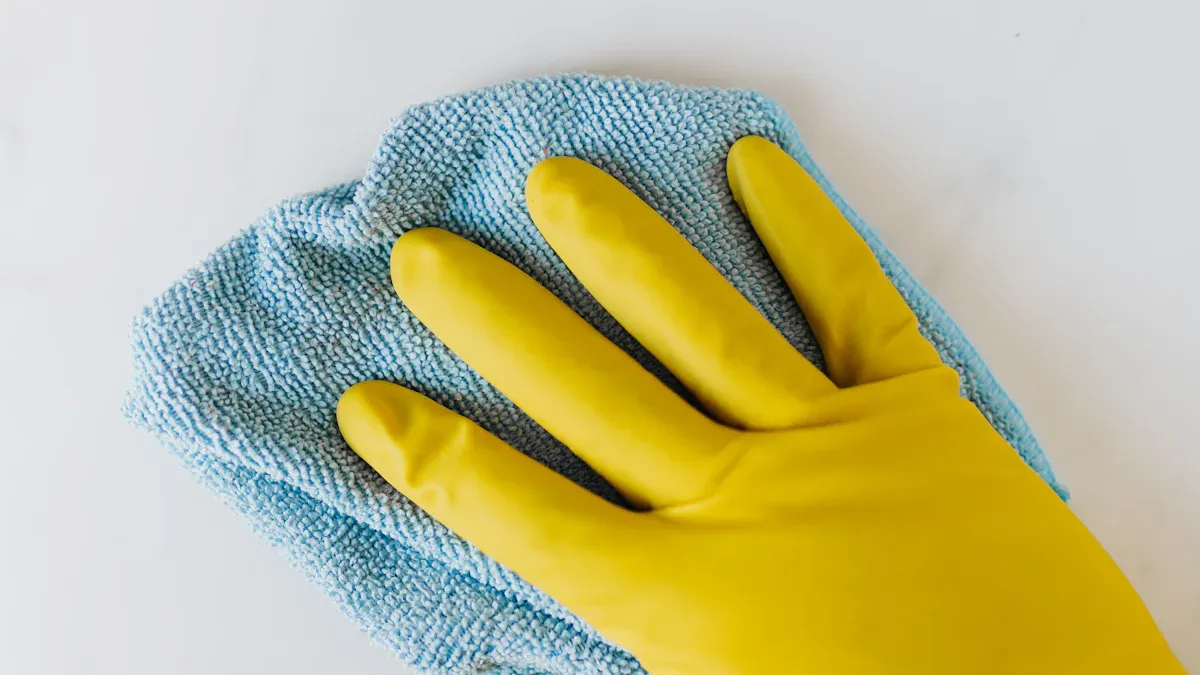
To maximize cleaning efficiency, users should follow these steps:
- Fold the microfiber towel into quarters to create multiple clean surfaces.
- Spray water or cleaning solution directly onto the surface.
- Wipe the area using one clean section, allowing the fibers to trap dirt and bacteria.
- Switch to a fresh section before moving to a new area.
- After use, shake out the towel to remove loose debris.
Tip: Use colored towels or mark quadrants to track clean sections and prevent accidental reuse.
Preventing Cross-Contamination
A color-coding system helps prevent cross-contamination. Assign specific colors to different zones, such as blue for glass, green for kitchen, and red for bathrooms. Store clean and used towels separately. Train all users on the color system and proper storage. This approach reduces the risk of spreading bacteria between surfaces.
Washing, Drying, and Maintaining Microfiber Towels
Proper care extends the life of a microfiber towel. Wash towels separately from other fabrics using warm water and a mild detergent. Avoid bleach, fabric softeners, and high heat. Air dry or tumble dry on low. Store towels in a dry, ventilated area to prevent bacterial growth.
Durability and Environmental Considerations
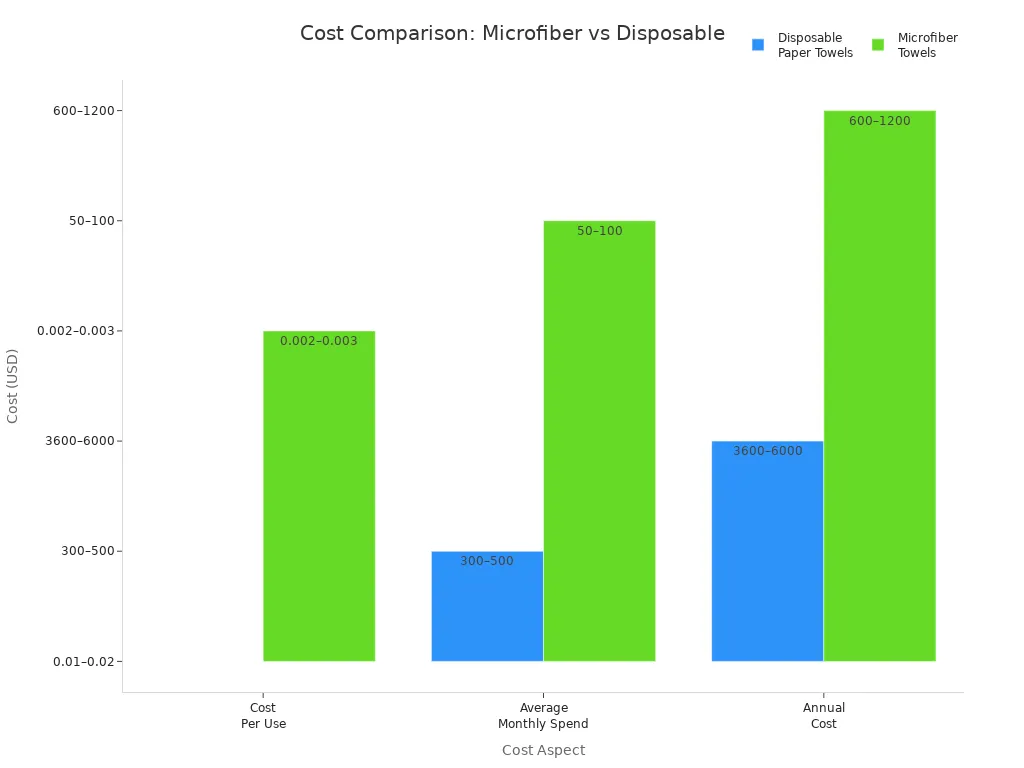
A quality microfiber towel can last 300 to 500 washes with proper care, making it a cost-effective and sustainable choice. Unlike disposable paper towels, microfiber towels reduce landfill waste and overall resource consumption, though users should recycle worn towels responsibly.
A microfiber towel offers superior cleaning by physically removing dirt and bacteria from surfaces.
- Health experts highlight its ability to reduce allergens and chemical exposure, making homes safer for children and pets.
- Color-coded towels help prevent cross-contamination, supporting a healthier, cleaner environment for every household.
FAQ
How often should someone wash a microfiber towel?
Experts recommend washing microfiber towels after each use. This practice maintains cleaning effectiveness and prevents bacteria buildup.
Can microfiber towels scratch delicate surfaces?
Microfiber towels do not scratch most surfaces. Their soft, fine fibers make them safe for glass, electronics, and car finishes.
What cleaning products work best with microfiber towels?
Water alone works for most tasks. For tough stains, a mild detergent or specialized cleaner enhances performance.
Tip: Avoid bleach and fabric softeners.
