

 Send Email
 whatsapp


Eco-Friendly Cleaning: Go Chemical-Free with Microfiber Cloths

Microfiber Cloths deliver chemical-free cleaning, capturing dirt and bacteria with advanced fibers. Over 28.5% of U.S. households now prefer microfiber cleaning cloths for eco-friendly results.
- Their absorbency suits washing car towelsand kitchen surfaces.
- Consumers choose microfiber towel and microfibre towel options for durability and hygiene.
Key Takeaways
- Microfiber cloths clean deeply without chemicals by trapping dirt and bacteria with tiny fibers, making them safer and more effective than regular cloths.
- Using and caring for microfiber cloths properly—like folding them, washing without softeners, and drying on low heat—keeps them working well and lasting hundreds of washes.
- Microfiber cloths reduce waste and chemical use, helping protect your health and the environment while saving money over time.
Microfiber Cloths: The Chemical-Free Cleaning Solution
How Microfiber Cloths Work
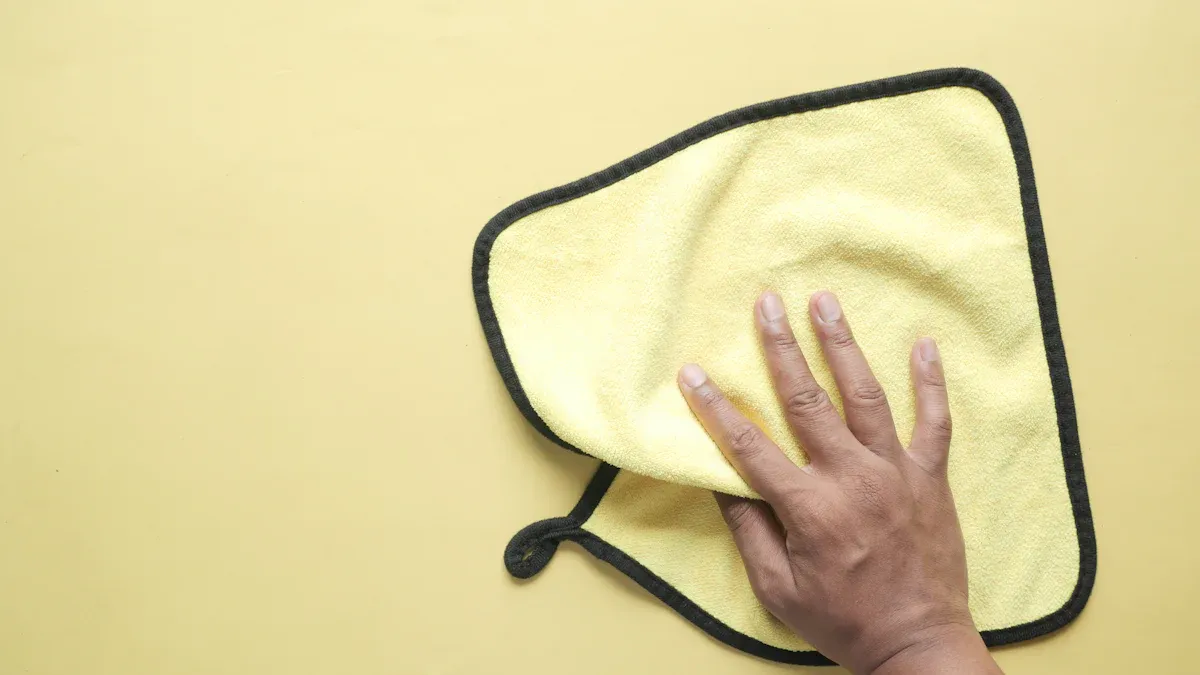
Microfiber Cloths use advanced technology to clean surfaces without the need for harsh chemicals. Manufacturers create these cloths from ultra-fine fibers, typically a blend of polyester and polyamide. During production, the fibers are split into microscopic strands, forming tiny hooks and spaces. These hooks trap dirt, dust, and even bacteria, locking them inside the cloth until rinsed. The fibers are much smaller than a human hair, which increases the surface area and enhances their cleaning power.
When used dry, the fibers generate a static charge that attracts dust particles. This prevents dust from being pushed around and ensures thorough cleaning. When damp, the cloths lift and remove grime through capillary action, making them effective with just water. The combination of mechanical trapping and electrostatic attraction allows Microfiber Cloths to clean efficiently without chemical cleaners.
Tip: For best results, fold the cloth into quarters. This creates multiple clean surfaces and maximizes the cloth’s effectiveness.
Microfiber vs. Regular Cloths
Microfiber Cloths outperform regular cotton cloths in several key areas. The fibers in microfiber are about 1/100th the diameter of a human hair, while cotton fibers are much thicker. This difference gives microfiber a greater surface area and more contact points for picking up dirt and bacteria.
| Aspect | Microfiber Cloths | Cotton Cloths |
|---|---|---|
| Bacteria removal rate | Approximately 95% | Approximately 75% |
| Fiber characteristics | Finer fibers, greater surface area | Thicker fibers |
| Durability after washes | Maintains effectiveness after many washes | Degrades faster with repeated washing |
| Cleaning efficiency | Superior in bacterial removal | Less effective in bacterial removal |
Laboratory studies show that Microfiber Cloths can remove up to 99% of bacteria from surfaces without chemicals, while traditional cloths only remove about 30%. Microfiber is also highly absorbent, holding up to seven times its weight in water. Cotton, on the other hand, tends to push dirt around and can harbor bacteria due to its organic nature. Although cotton is softer and less expensive, experts agree that microfiber is superior in cleaning efficiency and durability.
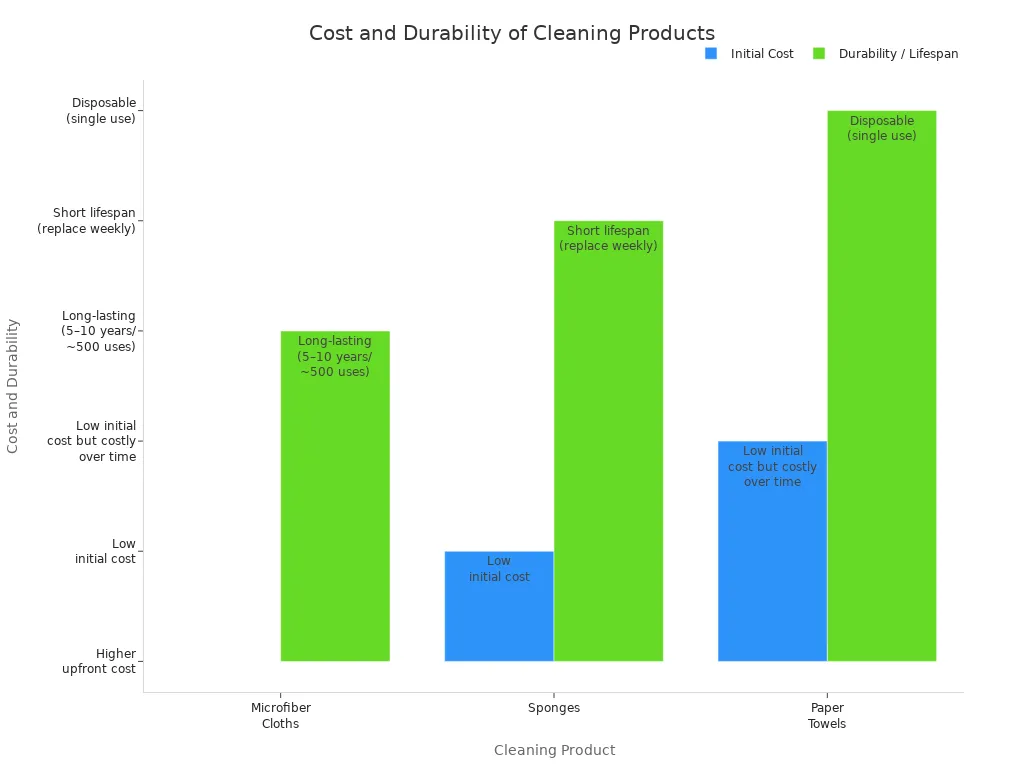
Microfiber Cloths have a higher upfront cost than paper towels or sponges, but their long lifespan—up to 500 washes—makes them cost-effective over time. Proper care, such as washing without fabric softener, helps maintain their performance.
Health and Environmental Benefits
Microfiber Cloths offer significant health and environmental advantages. Their ability to trap and remove bacteria, dust, and allergens reduces the need for chemical disinfectants. This mechanical cleaning method lowers exposure to harsh substances, making homes safer for children, pets, and those with allergies.
Studies highlight that Microfiber Cloths are about three times more effective at removing bacteria than traditional cleaning cloths. They can lift up to 99% of bacteria from nonporous surfaces, which is especially important in healthcare and food preparation areas.
From an environmental perspective, Microfiber Cloths reduce waste by replacing disposable wipes and paper towels. Life Cycle Assessments show that their reusability leads to less landfill waste and a lower carbon footprint compared to single-use products. However, laundering does require water and energy, so users should wash full loads and avoid harsh detergents to minimize impact.
Note: Certifications such as OEKO-TEX® and LEED recognize high-quality microfiber products for their safety and sustainability. These standards ensure that Microfiber Cloths meet strict requirements for chemical-free cleaning.
Cleaning Every Room with Microfiber Cloths
Kitchen and Bathroom Surfaces
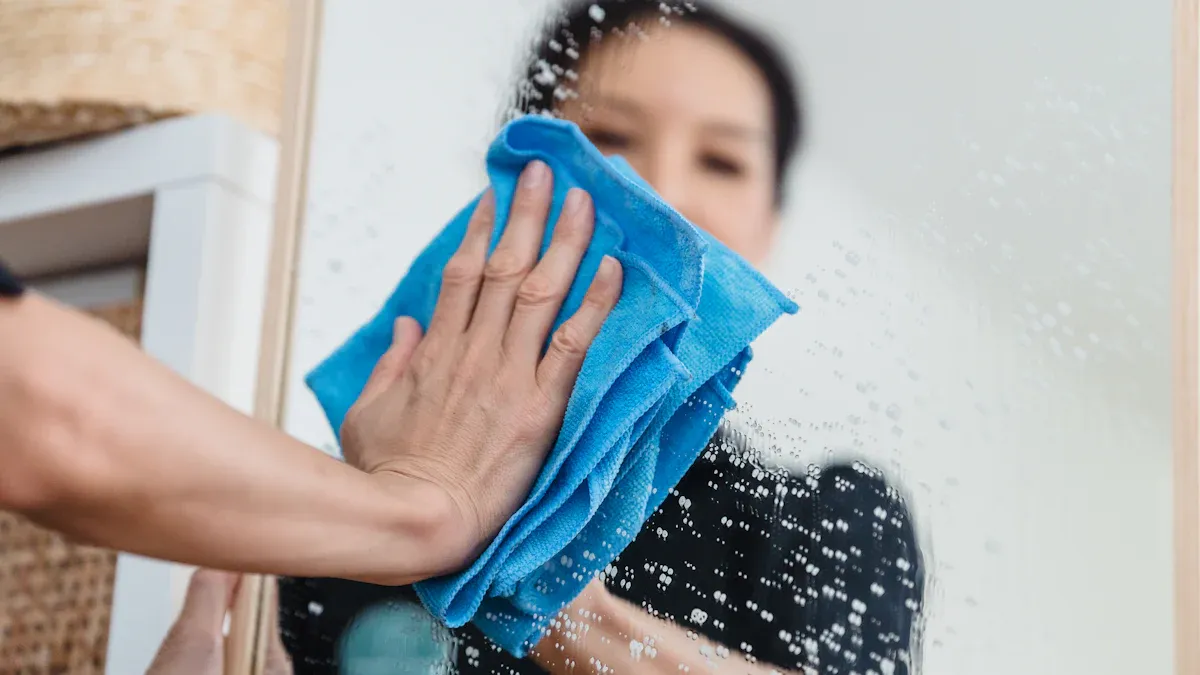
Microfiber Cloths deliver superior cleaning for kitchens and bathrooms. Professionals recommend using separate cloths for each area to prevent cross-contamination. Color-coding cloths helps maintain hygiene and organization. In the kitchen, a dedicated cloth removes grease, food residue, and grime from counters and appliances. For best results, users should wet the cloth thoroughly before wiping surfaces. Rinsing and wringing the cloth during use ensures maximum dirt removal, especially in heavily soiled spots.
After cleaning, washing cloths in hot water (around 140°F) with detergent eliminates germs and microorganisms. Fabric softeners should be avoided, as they coat fibers and reduce cleaning efficiency. Instead, adding a small amount of white vinegar can boost sanitation. Users should always dry cloths completely before storing them to prevent bacterial growth.
Tip: Store kitchen and bathroom cloths separately and never leave them damp to maintain hygiene.
Windows, Mirrors, and Glass
Microfiber Cloths excel at streak-free cleaning of glass surfaces. Clean, lint-free cloths attract and trap dust, leaving windows and mirrors sparkling. Experts suggest using side-to-side or top-to-bottom motions rather than circular wiping to minimize static and ensure even coverage. Distilled water or a vinegar-water solution works well, as soaps and dyes can leave streaks.
For stubborn spots, gentle spot cleaning prevents scratches or cloudiness. Combining a microfiber cloth with a squeegee in a reverse S pattern enhances the finish. The ultra-fine fibers lift dirt without scratching, preserving the clarity of glass and mirrors.
Electronics, Screens, and Dusting
Microfiber Cloths provide a safe solution for cleaning electronics and screens. Users should always turn off and unplug devices before cleaning. A dry or slightly damp microfiber cloth removes dust and fingerprints without scratching delicate surfaces. Cleaning solutions should be sprayed onto the cloth, not directly on the screen, to avoid moisture damage.
Harsh chemicals, paper towels, and abrasive materials can harm screens. Microfiber Cloths, with their ultra-fine fibers, trap dust and oils without leaving lint or residue. This makes them ideal for LCDs, touchscreens, and other sensitive electronics. After cleaning, a dry microfiber cloth ensures a streak-free finish and prevents moisture buildup.
Maximizing the Life and Effectiveness of Microfiber Cloths
Proper Use and Techniques
Selecting the right microfiber cloth for each cleaning task increases efficiency and extends lifespan. Plush, high-pile cloths work best for dusting, while thinner, low-pile cloths suit glass and mirrors. Folding the cloth into quarters creates multiple clean surfaces, reducing cross-contamination. Dry cloths excel at dusting, and slightly damp cloths remove grime. Assigning cloths to specific tasks and rotating them regularly distributes wear evenly. Users should avoid harsh chemicals, which weaken fibers and reduce effectiveness. Storing cloths in clean, dry containers keeps them free from dust and moisture.
Tip: Rinse microfiber cloths thoroughly with warm water after each use to prevent dirt buildup and maintain cleaning power.
Washing and Caring for Microfiber Cloths
Proper laundering preserves absorbency and softness. Machine wash cloths separately from lint-producing fabrics using mild, liquid detergent. Cold or warm water protects fiber integrity; hot water damages fibers. Avoid bleach, fabric softeners, and dryer sheets, as these leave residues that impair cleaning ability. Air drying or using a dryer on low heat prevents melting and maintains effectiveness. Pre-washing new cloths removes manufacturing residues. Regular inspection for fraying or thinning helps identify when replacement is needed.
| Common Mistake | Impact | Advice |
|---|---|---|
| Using bleach or softener | Reduces absorbency | Use vinegar in rinse cycle |
| Washing with regular laundry | Attracts lint | Wash separately |
| Drying on high heat | Melts fibers | Air dry or use low heat |
Sustainability and Environmental Considerations
Microfiber Cloths offer long-term sustainability, but laundering releases microplastics into wastewater. Washing less frequently, using cold water, and washing full loads minimize fiber shedding. Installing external washing machine filters, such as PlanetCare, captures up to 90% of released microfibers. Air drying reduces energy use and airborne microfiber emissions. Storing cloths in well-ventilated, dry areas prevents mold and extends lifespan. Choosing high-quality cloths and following best practices supports both cleaning performance and environmental responsibility.
Microfiber Cloths deliver a safer cleaning experience by removing up to 98% of bacteria and 93% of viruses with only water, reducing chemical exposure. They last hundreds of washes, minimizing household waste and saving money over time.
| Factor | Disposable Paper Towels | Microfiber Cloths |
|---|---|---|
| Usage Lifespan | Single-use | 300–500 washes |
| Waste Generation | High | Low |
- Microfiber Cloths support sustainability and cost-effectiveness.
- They help maintain a healthier home environment.
FAQ
How often should someone replace microfiber cloths?
Microfiber cloths last for hundreds of washes. Replace them when fibers fray, lose absorbency, or show visible wear. High-quality cloths extend lifespan.
Tip: Inspect cloths monthly for thinning or damage.
Can microfiber cloths clean without any cleaning products?
Microfiber cloths clean effectively with just water. Their fibers trap dirt, dust, and bacteria, eliminating the need for chemical cleaners in most household tasks.
| Cleaning Task | Water Only | Cleaner Needed |
|---|---|---|
| Dusting | ✅ | |
| Glass/Windows | ✅ | |
| Grease Removal | ✅ |
Are microfiber cloths safe for sensitive surfaces?
Microfiber cloths provide gentle cleaning for screens, lenses, and delicate surfaces. Their ultra-fine fibers prevent scratches and leave no lint or residue.
🖥️ Use dry or slightly damp for electronics.
