

 Send Email
 whatsapp


Microfiber Cloth Explained Uses, Benefits, and Cleaning Tips

A Microfiber Cloth, made from ultra-fine synthetic fibers, traps dirt and bacteria more effectively than traditional materials. Using acloth microfiber design, these towels can remove up to 98% of bacteria with just water, according to scientific studies. Whether you’re using a microfiber cloth for car cleaning or household tasks, the quick dry microfiber towel offers superior performance. The table below highlights household adoption rates and cleaning efficiency compared to other materials:
| Metric | Value | Notes |
|---|---|---|
| Percentage of households using microfiber cloths | 74% | Indicates preference for superior cleaning |
| Cleaning efficiency of microfiber cloths | 99% bacteria removal | Outperforms traditional fabrics |
Key Takeaways
- Microfiber cloths clean better than cotton or paper towels by trapping dirt and bacteria with ultra-fine fibers, often needing only water for effective cleaning.
- These cloths work well for many taskslike dusting, kitchen and bathroom cleaning, polishing glass, and caring for electronics without scratching surfaces.
- Proper washing and drying keep microfiber cloths effective and long-lasting, helping reduce waste and save money by replacing disposable towels.
How Microfiber Cloth Works and Why It’s Better
Microfiber Cloth Composition and Unique Properties
A microfiber cloth features ultra-fine synthetic fibers, often measuring just 3–5 micrometers in diameter. Some ultra-microfibers reach as small as 0.33 microns. Manufacturers create these fibers by splitting polyester and polyamide into sharp-edged strands. This unique structure allows the cloth to mechanically peel away dirt, similar to how a carpenter’s plane removes wood shavings. The high density of fibers—sometimes over 200,000 per square inch—enables the cloth to attract and hold dirt particles through van der Waals forces. These weak adhesive forces become significant due to the sheer number of fibers, allowing the cloth to capture microscopic dirt and bacteria without the need for harsh chemicals. When washed in hot water, the fibers uncurl and release trapped debris, making the cloth reusable and highly effective.
Microfiber Cloth vs. Cotton and Paper Towels
The cleaning performance of microfiber cloth stands out when compared to cotton and paper towels. The table below highlights key differences:
| Fiber Type | Fiber Size & Structure | Cleaning Impact |
|---|---|---|
| Microfiber | Ultrafine, split synthetic fibers | Lifts and traps dirt, highly absorbent, lint-free |
| Cotton | Thicker, natural hollow fibers | Absorbs moisture, pushes debris, leaves lint |
| Paper Towel | Larger, cellulose-based fibers | Less effective, disposable, leaves dirt behind |
Laboratory tests confirm that microfiber cloths remove bacteria and viruses more effectively than cotton or paper towels. In hospital settings, microfiber achieved significant reductions in pathogens like E. coli and MRSA. High-quality microfiber, with a dense weave and optimal fiber blend, leaves surfaces streak-free and reduces chemical use. In contrast, low-quality microfiber or traditional materials often leave lint, degrade quickly, and may scratch delicate surfaces.
Microfiber Cloth Uses and Key Benefits

Dusting and All-Purpose Cleaning
Microfiber cloths have become a staple in many households for their versatility and effectiveness in dusting and general cleaning. Consumers frequently use these cloths to wipe countertops, clean up spills, and tackle tough stains. The ultra-fine fibers trap dust, pollen, and pet hair, making them ideal for allergy-sensitive environments. Unlike traditional dusters that push particles around, microfiber cloths lift and hold debris, reducing airborne allergens and leaving surfaces spotless. Their quick-drying and lint-free properties make them suitable for daily maintenance tasks throughout the home.
Tip: For best results, fold the cloth into quarters and use a clean section for each area to maximize dust pickup and minimize cross-contamination.
Kitchen, Bathroom, and Surfaces
In kitchens and bathrooms, hygiene is a top priority. Microfiber cloths excel at removing bacteria from surfaces, outperforming sponges and cotton cloths. The densely woven fibers act like tiny fingers, trapping up to 99% of bacteria and dust particles. This high level of cleaning reduces the need for chemical disinfectants, supporting a safer and more eco-friendly home environment.
| Aspect | Microfiber Cloths | Sponges |
|---|---|---|
| Bacteria removal | Can pick up 99% of bacteria | Tend to harbor bacteria, can spread germs |
| Reusability | Reusable, machine washable, lasts 5–10 years | Require frequent replacement |
| Cleaning effectiveness | Cleans without streaks, often chemical-free | Good for scrubbing but less hygienic overall |
| Surface safety | Safe for various surfaces | Can develop odors and harbor germs |
| Best use | Wiping counters, mirrors, appliances in kitchens and bathrooms | Washing dishes, scrubbing soap scum (with frequent replacement) |
| Hygiene | Superior for hygienic cleaning in kitchens and bathrooms | Not recommended for shared bathrooms due to germs |
Microfiber cloths also absorb up to eight times their weight in water, making them perfect for drying plates, utensils, and wiping down wet surfaces. Their ability to clean with just water helps reduce exposure to harsh chemicals, benefiting both health and the environment.
Windows, Mirrors, and Glass
Polishing glass and mirrors requires a streak-free finish. Microfiber cloths deliver exceptional results due to their unique fiber blend—typically 80% polyester and 20% polyamide. The high-density weave, often at least 300 GSM, absorbs liquid efficiently and leaves no residue. Rounded or satin-piped edges prevent fraying, ensuring long-term streak-free performance.
- Microfiber cloths prevent scratching on glass surfaces.
- The splitting process increases surface area, enhancing dust and dirt pickup.
- Proper care, such as washing with mild detergent and drying on low heat, preserves fiber integrity.
To achieve a flawless finish, start with a dry cloth to remove dust, then use a slightly damp cloth for polishing. Folding the cloth and using clean sections for each pass further enhances the streak-free effect.
Electronics, Screens, and Delicate Items
Cleaning electronics and delicate screens demands a gentle touch. Microfiber cloths, with their ultra-fine fibers, lift dust and oils without scratching sensitive surfaces. They are lint-free, ensuring no residue or fuzz remains on screens. For best results, follow these steps:
- Power off and unplug the device.
- Use a dry microfiber cloth to gently wipe the screen in a circular motion.
- For stubborn spots, dampen the cloth with a solution of distilled water and a small amount of isopropyl alcohol.
- Wipe gently, applying minimal pressure, and avoid spraying liquid directly onto the screen.
- Dry with a fresh microfiber cloth.
Regular use prevents dust buildup and fingerprint oils, which can damage glass over time. Machine washable cloths maintain their effectiveness through hundreds of uses, making them a cost-effective choice for electronics care.
Cars, Upholstery, and More
Automotive cleaning benefits greatly from microfiber technology. The star-shaped fibers trap dirt, dust, and bacteria, removing up to 99% of contaminants without chemicals. MicroFiber Towels absorb up to seven times their weight in water, enabling efficient drying and cleaning without streaks or water spots. Their soft, non-abrasive texture protects car paint, glass, and interior surfaces from scratches.
- Microfiber cloths are versatile for washing, drying, buffing, polishing, and interior cleaning.
- Quick drying prevents mold and mildew growth.
- Specialized products, such as drying towels and wash mitts, enhance cleaning performance and safety.
Their durability and reusability make them an eco-friendly and economical choice for car owners.
Superior Cleaning, Absorbency, and Eco-Friendly Advantages
Microfiber cloths stand out for their superior cleaning power and absorbency. Scientific studies show that these towels can absorb up to eight times their weight in water, far surpassing cotton towels, which absorb about 70% of their weight. The microscopic fiber structure creates capillary channels that retain up to 98% of moisture, making them ideal for tasks requiring high absorbency.
Switching from disposable paper towels to reusable microfiber cloths significantly reduces household waste. Paper towels contribute approximately 3,000 tons of waste daily in the United States. By choosing reusable options, households conserve natural resources and reduce landfill contributions. This switch also offers substantial cost savings. For example, a moderate user can save around $70 annually, with the initial investment in microfiber cloths paying off within five months.
- Microfiber cloths reduce or eliminate the need for chemical cleaners by mechanically trapping dirt and bacteria.
- Their electrostatic properties attract particles, allowing effective cleaning with just water.
- Studies indicate microfiber can reduce chemical and water use by up to 95%, supporting sustainable cleaning routines.
Note: A single microfiber cloth can replace about 300 paper towels over its lifetime, making it one of the most impactful ways to reduce single-use waste and environmental footprint.
Microfiber Cloth Cleaning and Care Tips
How to Wash and Dry Microfiber Cloths
Proper washing and drying methods help maintain the performance of microfiber cloths. Users should follow these best practices:
- Wash microfiber towels separately from other fabrics to prevent lint contamination.
- Use cold or warm water with a gentle detergent; avoid bleach and harsh soaps.
- Do not use fabric softeners or dryer sheets, as they leave residues that reduce absorbency.
- Air dry by shaking out towels and hanging them in a well-ventilated area, or machine dry on low heat.
- Store towels fully dry in a clean, dry place to prevent mildew.
Specialized detergents designed for microfiber can break down dirt and restore absorbency. For sanitizing, wash in warm water (140°F–150°F) and add white vinegar during the rinse cycle to soften fibers.
Common Mistakes to Avoid
Many users unintentionally shorten the lifespan of their microfiber cloths. Common mistakes include:
- Exposing towels to high heat during washing or drying, which damages fibers.
- Using excessive detergent, leading to buildup and reduced cleaning power.
- Washing with cotton or lint-shedding fabrics, causing lint to clog fibers.
- Storing damp towels, which promotes mold and fiber damage.
- Failing to wash new towels before first use, affecting performance.
Tips for Making Microfiber Cloths Last Longer
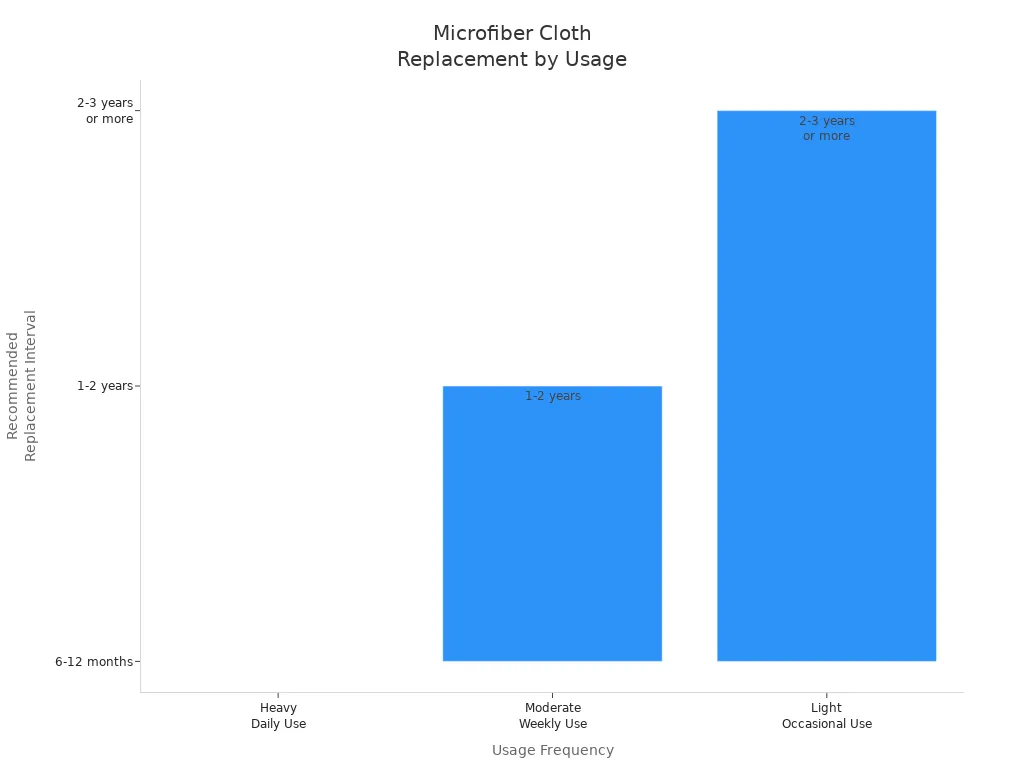
Routine care extends the life of microfiber towels. The following table outlines replacement intervals based on usage:
| Usage Frequency | Replacement Interval | Key Maintenance Tips | Signs Indicating Replacement |
|---|---|---|---|
| Heavy Daily Use | Every 6–12 months | Wash separately, avoid high heat, use mild detergent | Loss of absorbency, fraying, stains |
| Moderate Weekly Use | Every 1–2 years | Same as above | Same as above |
| Light Occasional Use | Every 2–3 years+ | Same as above | Same as above |
Store towels in a clean, dry place, organized by type, and rotate use to distribute wear evenly. Loosely fold or hang towels to prevent creasing and fiber damage.
Microfiber cloths offer a smart, eco-friendly cleaning solution. Studies show they outperform disposables in sustainability, cost, and cleaning power. Users report years of reliable use with proper care. Their reusability, chemical-free cleaning, and versatility make them a practical choice for healthier homes and reduced waste.
FAQ
How often should someone wash microfiber cloths?
Most experts recommend washing microfiber cloths after each use, especially when cleaning greasy or heavily soiled surfaces. Regular washing maintains cleaning effectiveness.
Can microfiber cloths scratch surfaces?
High-quality microfiber cloths do not scratch surfaces. Their ultra-fine fibers gently lift dirt and dust, making them safe for glass, electronics, and car finishes.
What should someone avoid when washing microfiber cloths?
Avoid using bleach, fabric softener, or dryer sheets. These products damage fibers and reduce absorbency. Always wash microfiber separately from lint-producing fabrics.
