

 Send Email
 whatsapp


Why Disposable Hospital Curtains Are Transforming Infection Control in Modern Healthcare
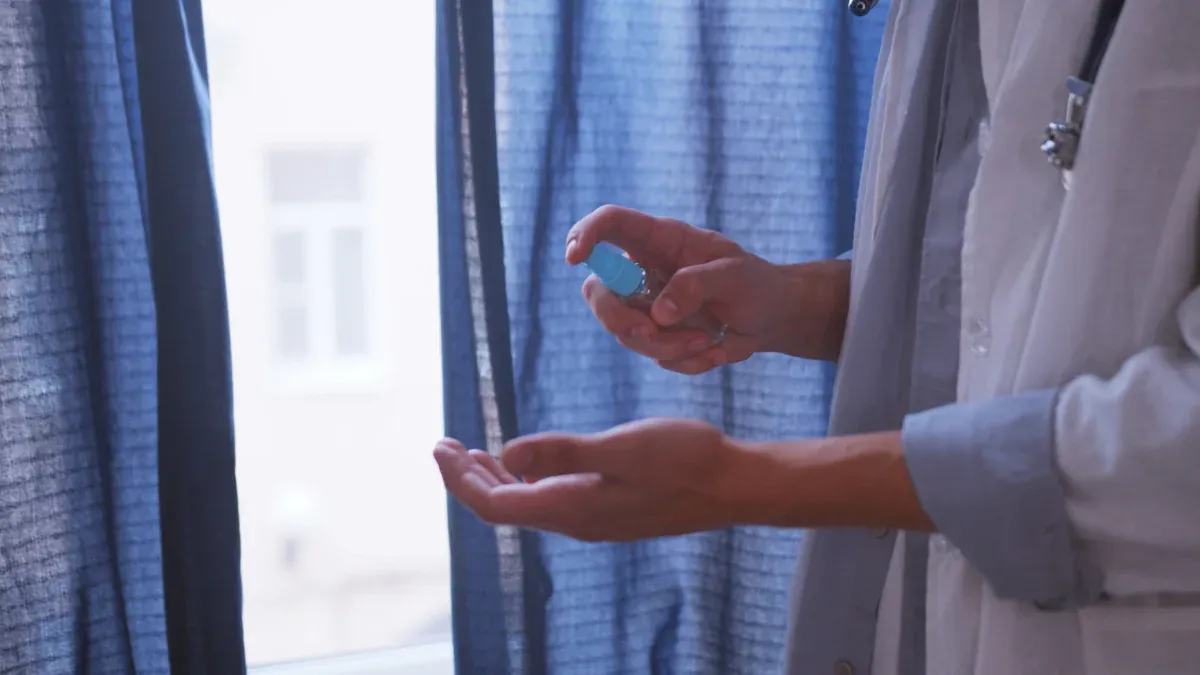
Healthcare environments face persistent risks from healthcare-associated infections. The following statistics highlight the scale:
| Statistic Description | Data / Value |
|---|---|
| Annual HAIs across U.S. healthcare system | More than 1 million |
| Estimated deaths among hospital patients with HAIs (2015) | Approximately 72,000 |
Disposable Hospital Curtains help address these risks. Many facilities now choose disposable cubicle curtains and medical curtain products over traditional hospital curtain options.
Key Takeaways
- Disposable hospital curtains reduce infection risks by using antimicrobial materials that stop harmful germs from spreading on high-touch surfaces.
- These curtains are easy and quick to replace, saving staff time and reducing safety hazards compared to traditional fabric curtains.
- Hospitals save money and improve patient safety by switching to disposable curtains, while also adopting best practices to minimize environmental impact.
Infection Risks and Limitations of Traditional Hospital Curtains

High-Touch Surfaces and Pathogen Transmission
Hospital Privacy Curtains rank among the most frequently touched surfaces in patient care areas. Healthcare workers, patients, and visitors often handle these curtains before, during, and after care encounters. Studies show that nearly half of healthcare workers acquire bacteria on their fingertips after touching curtains. Over time, contamination increases, especially in areas where people grip the fabric.
A culture survey revealed that 42% of hospital curtains carried vancomycin-resistant enterococci, 22% harbored methicillin-resistant Staphylococcus aureus (MRSA), and 4% contained Clostridium difficile. Hand imprint cultures confirmed that these pathogens transfer easily to hands, making curtains a significant source of healthcare-associated infections. Pathogens such as MRSA and Candida species can survive on curtain fabrics for days to weeks, while Gram-negative bacteria like Pseudomonas aeruginosa and Acinetobacter baumannii remain viable for over a month. The persistence of these organisms highlights the risk posed by traditional curtains.
Hospital curtains act as fomites, serving as reservoirs for dangerous pathogens and facilitating their spread throughout healthcare environments.
Cleaning Challenges and Compliance Issues
Maintaining traditional fabric curtains presents several logistical and safety challenges. Removing and replacing each curtain can take up to 30 minutes, often requiring ladders and exposing staff to potential injuries. Curtains may drag on the floor during exchanges, increasing the risk of further contamination. Staff must use personal protective equipment and follow careful procedures to avoid cross-contamination.
Frequent laundering is necessary to control pathogens, but the process is labor-intensive and costly. Curtains must withstand repeated industrial washing, which can damage hanging parts and reduce their lifespan. These difficulties often result in infrequent cleaning, allowing curtains to become persistent sources of harmful microbes. In contrast, Disposable Hospital Curtains offer a practical alternative by simplifying replacement and reducing the risk of contamination.
| Challenge | Impact on Infection Control |
|---|---|
| Time-consuming removal | Delays cleaning, increases risk |
| Safety hazards | Staff injuries, workflow disruption |
| Infrequent laundering | Pathogen accumulation |
| Cross-contamination risk | Spread of HAIs |
How Disposable Hospital Curtains Improve Infection Control
Key Features and Antimicrobial Properties
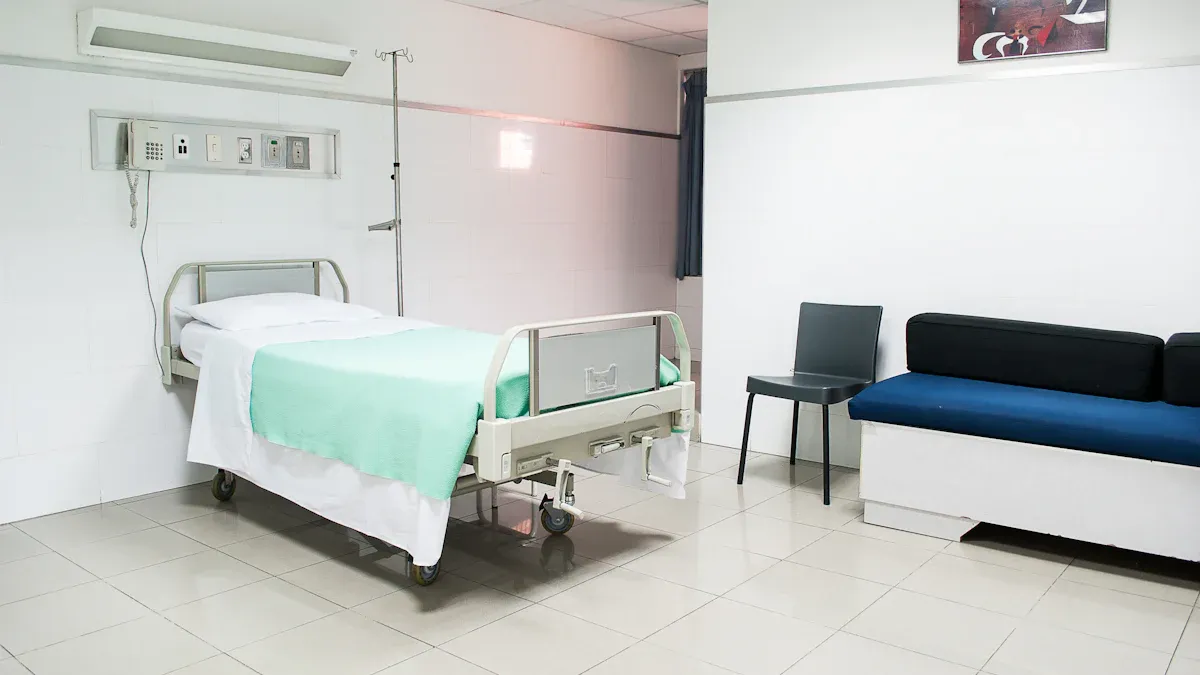
Disposable Hospital Curtains incorporate advanced antimicrobial technologies to address the persistent contamination risks found on high-touch surfaces. Manufacturers often use silver impregnation, combined with antibacterial and antimildew chemicals, to inhibit the growth of pathogens. These curtains typically consist of 100% polypropylene, enhanced with nanometer silver and other antimicrobial agents. Laboratory testing demonstrates that these materials create zones of inhibition against bacteria such as MRSA, VRE, Clostridium difficile, Enterococcus, Klebsiella, and Acinetobacter. In clinical settings, especially intensive care units, antimicrobial curtains show significantly reduced contamination. For example, studies report no detection of MRSA or carbapenem-resistant Enterobacteriaceae on sporicidal curtains during their recommended six-month lifespan.
| Aspect | Details |
|---|---|
| Antimicrobial Technology | Silver impregnation with antibacterial and antimildew chemicals |
| Curtain Material | 100% polypropylene with nanometer silver and other agents |
| Pathogens Tested | MRSA, VRE, C. difficile, Enterococcus, Klebsiella, Acinetobacter, fungi |
| Laboratory Effectiveness | Inhibition zones (0.5–5 mm), contact inhibition up to 6 months |
| Clinical Effectiveness (ICU) | No MRSA, CRE, or C. difficile detected on sporicidal curtains |
| Replacement Recommendation | Every 6 months in high-risk areas |
| Infection Control Role | Passive reduction of microbial contamination in ICU settings |
These features position Disposable Hospital Curtains as a passive yet powerful infection control measure, reducing the risk of healthcare-associated infections.
Ease of Installation and Replacement
Healthcare facilities benefit from the straightforward installation and replacement process of Disposable Hospital Curtains. Staff can replace these curtains in just minutes, compared to the hours required for traditional fabric curtains in multi-bed wards. Most disposable options fit existing curtain tracks and use snap-in carriers, eliminating the need for hardware upgrades. This efficiency minimizes workflow disruption and reduces staff exposure to potential injuries during curtain changes.
Staff at leading hospitals, such as the Royal Hospital in London and New York's Central Medical Center, report that disposable curtains improve workflow efficiency and daily operations. Administrators also note reduced cleaning costs and maintenance efforts.
The ease of use encourages more frequent curtain changes, supporting consistent hygiene compliance and reducing the risk of cross-contamination.
Reducing Cross-Contamination and Outbreaks
Disposable Hospital Curtains play a critical role in breaking the chain of infection. Their single-use nature ensures that each patient receives a fresh, uncontaminated barrier. Hospitals that switch to disposable curtains observe significantly lower bacterial contamination after ten days and minimal recontamination rates within a week. In contrast, traditional cotton curtains show high contamination and a 92% recontamination rate. Disposable curtains maintain high antimicrobial activity for up to two years, effectively neutralizing pathogens such as MRSA and Clostridium difficile.
Facilities report fewer outbreaks and improved infection control outcomes after adopting disposable curtains, especially in high-risk units like ICUs and operating rooms.
This proactive approach leads to fewer healthcare-associated infections and supports safer patient care environments.
Cost Savings and Operational Efficiency
Disposable Hospital Curtains offer substantial cost and operational advantages. While the initial cost per unit ranges from $27.25 to $101.40, these curtains eliminate ongoing laundering and maintenance expenses. Traditional curtains require regular washing and antimicrobial treatments, which increase labor and downtime costs. Over a one-year period, disposable curtains prove more cost-effective due to savings on maintenance and infection control.
| Curtain Type | Initial Cost per Unit (USD) | Maintenance & Laundering Costs | Other Cost Factors |
|---|---|---|---|
| Disposable Curtains (Treated) | $55.09 – $101.40 | None | No laundering; reduces labor and downtime |
| Disposable Curtains (Untreated) | $27.25 – $33.10 | None | Single-use; eliminates infection risk |
| Traditional Curtains | Higher (exact range N/A) | Regular laundering and treatments required | Higher ongoing maintenance and labor costs |
Operational efficiency also improves. For example, City Medical Center reduced cleaning and sterilization time between procedures by implementing disposable drapes. This change increased patient throughput and minimized room downtime. Staff can focus more on patient care and less on curtain maintenance, further enhancing hospital performance.
Environmental Considerations and Best Practices
The widespread use of Disposable Hospital Curtains raises important environmental concerns. Their single-use nature contributes to waste accumulation and increased landfill pressure. Manufacturing and shipping also consume resources and energy. However, innovations in material science are addressing these challenges. Biodegradable materials and recycling programs are being explored to reduce environmental impact. Proper disposal methods and staff education play a vital role in minimizing harm.
Best practices for sustainable use include:
- Establishing recycling programs for curtains made from recyclable materials.
- Using biodegradable materials to ensure natural breakdown.
- Exploring waste-to-energy conversion technologies.
- Collaborating with suppliers who prioritize eco-friendly production.
- Training staff on responsible disposal practices.
- Continuously assessing and improving sustainability initiatives.
Hospitals can balance infection control with environmental responsibility by adopting these best practices and supporting ongoing innovation in curtain design and disposal.
Disposable Hospital Curtains provide a practical solution for infection control. Hospitals report improved patient safety, faster curtain changes, and reduced cross-contamination.
- Automated compliance tracking ensures regular replacements.
- Antimicrobial properties and single-use design lower infection rates.
- Staff experience less workload, and facilities achieve cost savings and regulatory compliance.
FAQ
How often should hospitals replace disposable hospital curtains?
Most facilities recommend replacing disposable curtains every six months or immediately after contact with infectious patients. Regular replacement supports optimal infection control.
Are disposable hospital curtains compatible with existing curtain tracks?
Disposable curtains fit standard tracks. Staff can install them using snap-in carriers. No special hardware or tools are required.
Can hospitals recycle disposable hospital curtains?
Hospitals can recycle some disposable curtains if made from recyclable materials. Facilities should check with suppliers and follow local recycling guidelines.
