

 Send Email
 whatsapp


Antimicrobial Disposable Curtains Drive the Future of Hospital Infection Control

Antimicrobial disposable hospital curtains actively reduce microbial contamination on surfaces. They significantly minimize healthcare-associated infections (HAIs), a persistent global challenge. These curtains enhance hospital infection control. HAIs often link to contaminated environmental surfaces. A hospital curtain, such as a blue hospital curtain or other disposable cubicle curtains, offers a proactive solution. A hospital partition curtain, including disposable hospital curtains or a hospital privacy curtain, provides crucial protection.
Key Takeaways
- Antimicrobial Disposable curtains actively fight germs. They reduce harmful bacteria on surfaces. This helps stop infections from spreading in hospitals.
- These curtains make hospitals safer for patients. They also save money over time. Hospitals avoid laundry costs and lower infection rates.
- Disposable curtains are easy to use. Staff can quickly replace them. This helps hospitals follow cleanliness rules and keeps everyone healthier.
The Persistent Challenge of Hospital-Acquired Infections

Understanding HAI Impact in Healthcare
Healthcare-associated infections (HAIs) present a significant and ongoing challenge within healthcare systems globally. These infections compromise patient safety and increase healthcare costs. The annual economic burden of HAIs on healthcare systems in the United States ranges from an estimated $28.4 billion to $45 billion in direct treatment costs. This substantial financial impact underscores the urgent need for effective infection control strategies. HAIs also prolong hospital stays, increase morbidity, and contribute to patient mortality. Addressing HAIs remains a top priority for hospitals and public health organizations.
Limitations of Traditional Hospital Curtains
Traditional fabric hospital curtains often become reservoirs for harmful pathogens. These curtains frequently come into contact with patients, visitors, and staff. Studies show rapid contamination of these surfaces. A study by Ohl et al. (2012) found 92% of new privacy curtains showed contamination within one week. Furthermore, 95% of all curtains were contaminated at least once. Pathogens like Methicillin-resistant Staphylococcus aureus (MRSA) and Vancomycin-resistant enterococci (VRE) commonly reside on these surfaces.
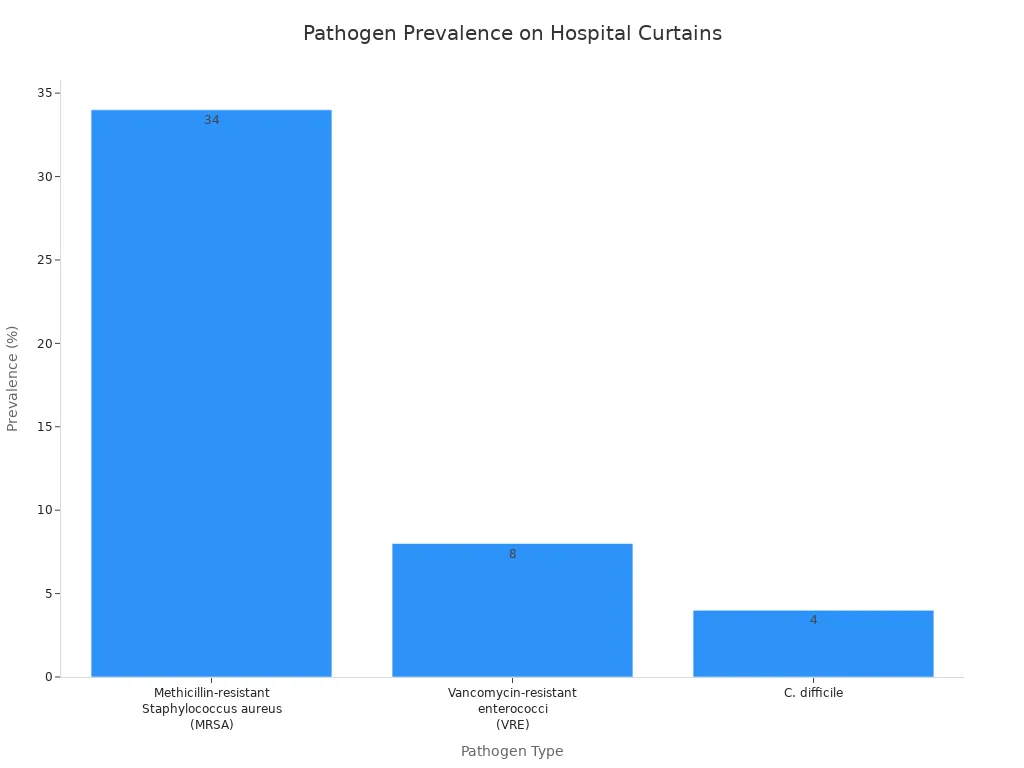
Cleaning traditional fabric curtains poses a significant logistical challenge. Their removal, laundering, and reinstallation are expensive, labor-intensive, and time-consuming. This process often leads to less frequent cleaning compared to other high-contact surfaces. Consequently, a traditional hospital curtain can harbor bacteria for extended periods, increasing the risk of cross-contamination. This limitation highlights a critical gap in current infection control practices.
What Are Antimicrobial Disposable Hospital Curtains?

Antimicrobial disposable hospital curtains represent a significant advancement in infection control. These specialized curtains actively inhibit microbial growth on their surfaces. They offer a crucial barrier against pathogen transmission in healthcare environments.
Composition and Key Differences
These innovative curtains are made from 100% polypropylene non-woven materials. This composition provides a stark contrast to traditional polyester curtains, which often become breeding grounds for pathogens. The non-woven fabric structure inherently offers a less hospitable surface for microbial attachment and growth. Furthermore, these antimicrobial disposable hospital curtains are constructed from 100% recyclable material, promoting environmental sustainability within healthcare. Products like 'Non-Woven Anti-microbial Hospital Curtain' and 'SMS/SMMS Non-Perforated White Surgical Drapes Disposable' exemplify the use of non-woven materials in their construction, ensuring both hygiene and ecological responsibility.
The Science of Antimicrobial Agents
Antimicrobial agents are substances that kill or inhibit the growth of microorganisms, including bacteria, fungi, and viruses. In the context of hospital curtains, these agents are integrated directly into the fabric during manufacturing. Silver-based compounds are a common and highly effective type of antimicrobial agent used in these curtains. Silver ions possess broad-spectrum antimicrobial properties, making them ideal for combating a wide range of hospital-acquired pathogens.
How Antimicrobial Agents Work
Silver-based antimicrobial agents employ multiple mechanisms to neutralize bacteria effectively:
- Silver ions release from nanoparticles. They adhere to bacterial cell walls and cytoplasmic membranes. This often occurs due to their affinity for sulfur proteins and electrostatic attraction.
- This attachment increases cell permeability. It leads to the disruption of the bacterial envelope.
- Once inside the cell, silver ions deactivate respiratory enzymes. They also interrupt ATP production.
- The generation of reactive oxygen species (ROS) is a key factor. It causes DNA modification and further cell membrane disruption.
- Silver ions interact with sulfur and phosphorus in DNA. This hinders DNA replication and cell reproduction, potentially leading to bacterial termination.
- Protein synthesis can be inhibited through the denaturation of ribosomes by silver ions.
Direct Impact on Infection Control
Antimicrobial disposable curtains significantly enhance infection control within healthcare settings. They directly address key areas of concern, from reducing microbial presence on surfaces to improving overall patient safety.
Reducing Microbial Load on Hospital Curtains
Antimicrobial disposable curtains actively reduce the number of harmful microorganisms on their surfaces. This reduction is a critical step in preventing the spread of infections. A clinical evaluation demonstrated the effectiveness of these curtains. MAP-1-coated patient privacy curtains showed a 96.8% reduction in total viable bacteria. They also achieved a 99.3% reduction in MRSA compared to uncoated privacy curtains. This high level of effectiveness remained consistent over four-week periods. Reductions exceeded 95% for both bacteria and MRSA throughout this time. This consistent performance highlights their role in maintaining a cleaner environment.
Minimizing Cross-Contamination Risks
Reducing microbial load directly translates to minimizing cross-contamination risks. These curtains act as a barrier, preventing pathogens from transferring between patients, staff, and visitors. Disposable sporicidal privacy curtains have shown antimicrobial activity against C. difficile and 13 other bacterial pathogens. This broad-spectrum activity is crucial in a hospital environment where various pathogens pose threats. The following table illustrates the zone of inhibition for specific pathogens, indicating the effectiveness of antimicrobial agents:
| Pathogen | Zone of Inhibition (mm) |
|---|---|
| Micrococcus spp. | 5 |
| E. faecium (VRE) | 0.5 |
| C. difficile spores | Scanty to moderate growth over time |
This data confirms the ability of these curtains to inhibit microbial growth, thereby reducing the potential for pathogens to spread from the curtain surface to other areas.
Enhancing Patient Safety Outcomes
Antimicrobial disposable curtains contribute to improved patient safety outcomes by creating a cleaner environment. Hospitals using these curtains have observed lower microbial loads in patient care areas by up to 40%. They have also seen a reduction in infection rates by as much as 30%. Some studies report up to a 93% reduction in bacterial contamination on curtain surfaces. The single-use nature of these curtains further reduces the risk of infection and cross-contamination. Their antimicrobial properties actively inhibit the growth of harmful microorganisms, ensuring a consistently clean environment. This approach simplifies cleaning protocols for staff. It allows them to focus more on direct patient care, leading to better resource allocation and improved patient outcomes.
While these curtains clearly reduce microbial burden, researchers continue to study the direct link between this reduction and a decrease in healthcare-associated infections (HAIs). Textiles impregnated with various antimicrobial agents, such as copper, silver, zinc oxide, titanium, and silver-doped titanium, have shown promise in reducing microbial load and/or HAI rates. However, some studies indicate that more research is necessary to definitively prove that reduced bacterial burden on curtains directly causes a reduction in HAIs. For example, one randomized controlled trial found weak evidence of benefit for controlling bacteria other than MRSA. It compared MRSA contamination, not patient outcomes, between standard and halamine-impregnated antimicrobial curtains. Further long-term studies and randomized controlled trials are essential to fully evaluate the impact of these curtains on HAI rates and pathogen transmission. Despite these ongoing research needs, antimicrobial disposable curtains serve as a proactive measure. They significantly contribute to a safer patient environment by reducing environmental contamination.
Improving Environmental Hygiene Proactively
Antimicrobial disposable curtains represent a proactive approach to environmental hygiene. They do not merely wait for contamination to occur; they actively work to prevent it. By continuously inhibiting microbial growth, these curtains maintain a higher standard of cleanliness in patient rooms and common areas. This constant antimicrobial action reduces the overall bioburden in the hospital environment. It creates a safer space for everyone. This proactive strategy is a fundamental shift from reactive cleaning methods. It ensures that critical surfaces, like a hospital curtain, remain less contaminated between cleaning cycles. This continuous protection helps to break the chain of infection, making the entire healthcare facility a healthier place.
Operational and Economic Benefits for Hospitals
Hospitals gain significant operational and economic advantages by adopting antimicrobial disposable curtains. These benefits range from simplifying daily tasks to achieving substantial long-term cost savings and improving overall safety.
Streamlined Replacement and Disposal
Antimicrobial disposable curtains simplify hospital operations significantly. Their single-use design eliminates the complex logistics associated with traditional fabric curtains. Staff no longer need to remove, transport, launder, and rehang soiled curtains. This process saves considerable time and effort. Eliminating laundering and maintenance efforts for disposable curtains can save 5–7 staff hours weekly. This reduction in labor allows environmental services teams to focus on other critical cleaning tasks, improving overall efficiency. Once a disposable hospital curtain becomes soiled or reaches its replacement schedule, staff simply remove and discard it, ensuring a fresh, clean barrier for the next patient.
Cost-Effectiveness of Disposable Hospital Curtains
While the initial purchase price of disposable curtains might seem higher, they offer significant long-term cost-effectiveness. The elimination of laundering costs, including water, electricity, detergents, and labor, contributes to substantial savings. Switching to disposable hospital curtains can lead to significant long-term savings by reducing labor costs and resource consumption due to the elimination of laundering. This also alleviates the burden on healthcare staff, allowing them to dedicate more time to patient care.
Consider the comparative cost analysis over a one-year period:
| Aspect | Reusable Curtains | Disposable Curtains |
|---|---|---|
| Annual Cost | $25,000 | $66,000 |
| Cost per Unit | N/A | $25.00 |
| Laundry Rate | $10.00 per wash | N/A |
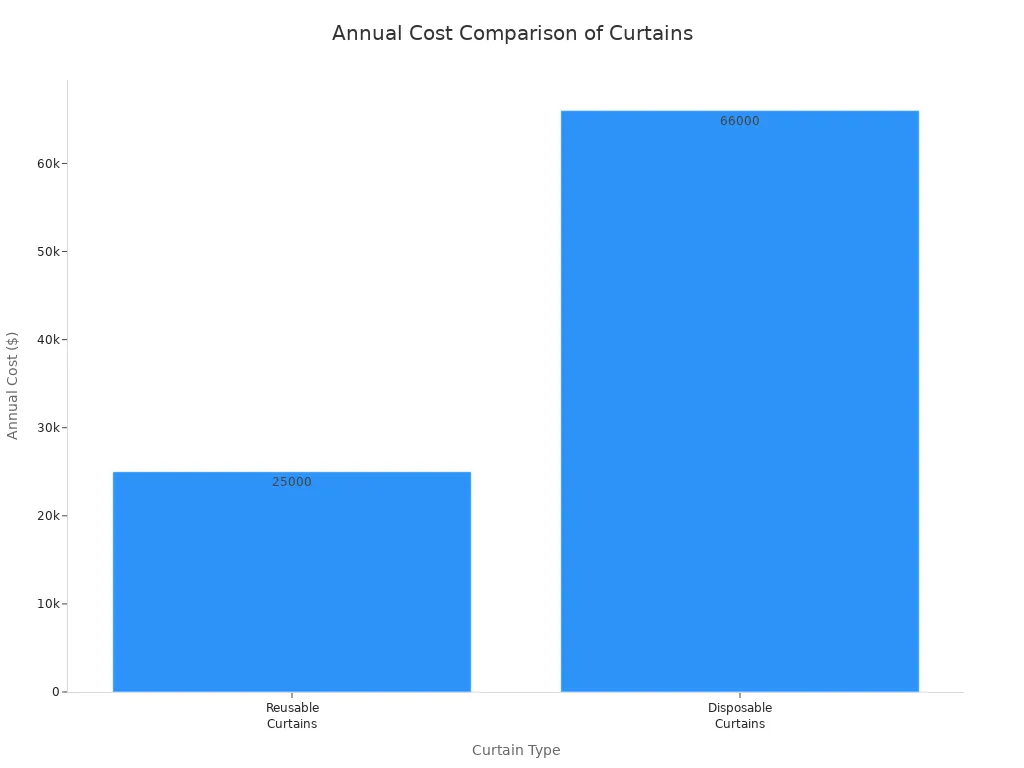
While the bar chart indicates a higher annual cost for disposable curtains in this specific comparison, this calculation often focuses solely on procurement without fully accounting for the hidden costs of reusable curtains, such as labor for handling, tracking, and the environmental impact of laundering. The long-term savings achieved through reduced infection rates can effectively offset these expenses. Hospital-acquired infections (HAIs) impose an annual cost burden on the USA ranging from $28 billion to $45 billion, affecting approximately 2 million patients and leading to an estimated 90,000 deaths each year. These figures highlight the critical need for effective infection control measures. In Canada, HAIs are responsible for over 8,000 deaths annually and contribute an additional $1 billion in healthcare costs. Implementing robust Infection Prevention and Control (IPAC) programs can significantly reduce these costs and improve patient outcomes.
Antimicrobial curtains contribute to these savings by reducing HAIs. Hospitals can achieve estimated annual cost savings of $20,079.38 and reduce environmental services by 66.95 hours through their implementation.
Meeting Infection Control Regulations
Hospitals face stringent regulations regarding infection control and environmental hygiene. Antimicrobial disposable curtains help hospitals comply with environmental hygiene standards because they are often treated with antimicrobial properties, which minimize harmful bacteria and odors. Their consistent cleanliness and active pathogen inhibition ensure facilities meet or exceed these standards. The ability to regularly replace curtains also supports compliance with guidelines for maintaining clean patient environments, reducing the risk of regulatory penalties and enhancing the hospital's reputation for safety.
Boosting Staff Efficiency and Safety
Disposable curtains significantly enhance staff efficiency and safety. Staff handle potentially contaminated traditional curtains less often, reducing their exposure risk. Disposable hospital curtains are designed for single use and are discarded after each patient interaction or when soiled. This eliminates the need for staff to handle potentially contaminated traditional curtains for cleaning and ensures a fresh, clean barrier for each patient. Many disposable curtains also feature antimicrobial properties that prevent bacterial growth, further reducing the risk of contamination and staff exposure during handling. This streamlined process frees up valuable staff time. Nurses and other healthcare professionals can dedicate more attention to direct patient care, improving the quality of service and patient satisfaction. A safer working environment also boosts staff morale and reduces the potential for staff-acquired infections.
Integrating Antimicrobial Disposable Curtains into Future Healthcare
Role in Modern Infection Prevention
Antimicrobial disposable curtains play a crucial role in modern infection prevention strategies. Fabric privacy curtains frequently become widely contaminated with resistant organisms. Hospitals address this by removing or replacing these curtains with disposable options. This measure significantly enhances infection control. These curtains integrate with existing hospital cleaning and disinfection protocols. Embedded antimicrobial agents inhibit the growth of bacteria and other pathogens. They are easy to maintain; staff can quickly wipe them down with hospital-approved disinfectants. This eliminates the need for frequent laundering. This improved workflow reduces the time and effort required for curtain changes. Healthcare staff can then focus on patient care.
| Method | Uncoated Fabric CFU | Coated Fabric CFU |
|---|---|---|
| Swabbing (Method 1) | 16 | 39 |
| Sonicating (Method 2) | 132 | 0 |
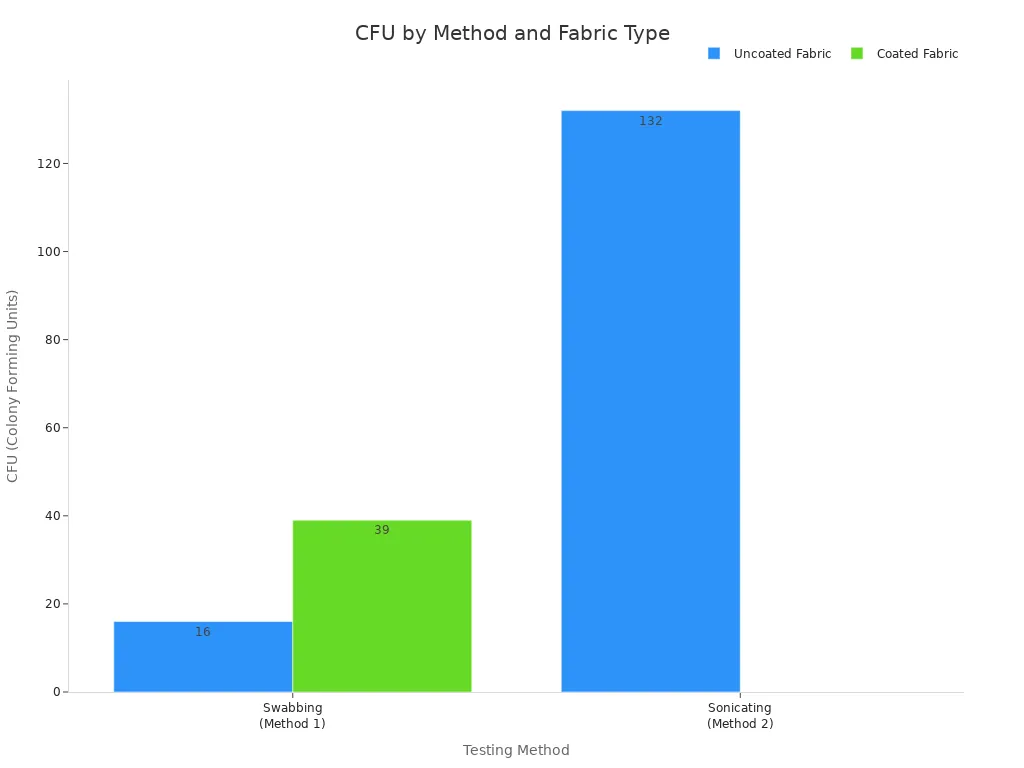
This data indicates coated fabrics, particularly with sonication, eliminate detectable bacteria. They support infection prevention by reducing microbial loads and the risk of hospital-acquired infections.
Considerations for Widespread Adoption
Widespread adoption of antimicrobial disposable curtains faces several considerations. High cost presents a primary barrier. Antimicrobial curtains are more expensive than standard curtains. This limits their adoption, especially in facilities with tight budgets. Limited awareness also exists, particularly in low-income regions. People often lack understanding regarding the benefits of these curtains and their role in infection control. Challenges in maintaining efficacy also arise. Antimicrobial properties can diminish over time, especially with frequent washing. However, hospitals consider several key factors when evaluating implementation:
- Enhanced Infection Control: Disposable curtains significantly reduce infection transmission.
- Cost-Effectiveness: They eliminate ongoing laundering, repair, and replacement expenses.
- Compliance with Infection Control Guidelines: Using disposable curtains aligns with strict regulations.
- Eco-Friendly Options: Some manufacturers offer sustainable and biodegradable materials.
Future Innovations in Antimicrobial Hospital Curtains
Future innovations promise even more effective antimicrobial hospital curtains. Researchers develop washable copper-embedded antimicrobial fabrics. These fabrics weave virus-destroying copper into organic materials like cotton, bamboo, hemp, and linen. They offer antibacterial, antifungal, and antiviral properties that persist after multiple washes. Other innovations include washable tannic acid-integrated antibacterial and anti-odor textiles. These fabrics maintain antimicrobial and anti-odor properties even after ten washes. Amorphous carbon also shows promise for imparting antibacterial properties to gas-permeable sheets. Metal-ion polymer films can be incorporated into textiles for antibacterial activity. The market for antimicrobial hospital curtains shows significant growth. Increasing concern about microorganism transmission and rising HAIs drive this trend. Continuous research and development in textile technology lead to enhanced antimicrobial properties and durable materials.
| Source | Forecasted Market Value | Forecast Period | CAGR |
|---|---|---|---|
| FutureWise | US$ 6.32 billion | 2025-2033 | 5.6% |
| Data Bridge Market Research | USD 5,375.75 million | 2021-2028 | 5.33% |
These forecasts indicate a robust future for antimicrobial disposable curtains.
Antimicrobial disposable curtains represent a fundamental shift in hospital infection control. They offer a proactive, effective, and sustainable method to combat healthcare-associated infections (HAIs). These innovative curtains ensure a safer future for patients and healthcare providers. Hospitals enhance patient outcomes and environmental hygiene through their adoption.
FAQ
How effective are antimicrobial disposable curtains in reducing hospital-acquired infections (HAIs)?
These curtains significantly reduce microbial load on surfaces. Studies show up to a 96.8% reduction in bacteria and 99.3% in MRSA, actively minimizing cross-contamination risks.
Are antimicrobial disposable curtains a cost-effective solution for hospitals?
Yes, they are. While initial costs may be higher, they eliminate laundering expenses and reduce HAI-related costs, leading to significant long-term savings.
What makes these curtains a sustainable choice for healthcare facilities?
Manufacturers produce them from 100% recyclable polypropylene non-woven materials. This composition supports environmental sustainability within healthcare operations. ♻️
