

 Send Email
 whatsapp


Disposable Hospital Curtains: A Cost-Effective Solution for Hospital Hygiene
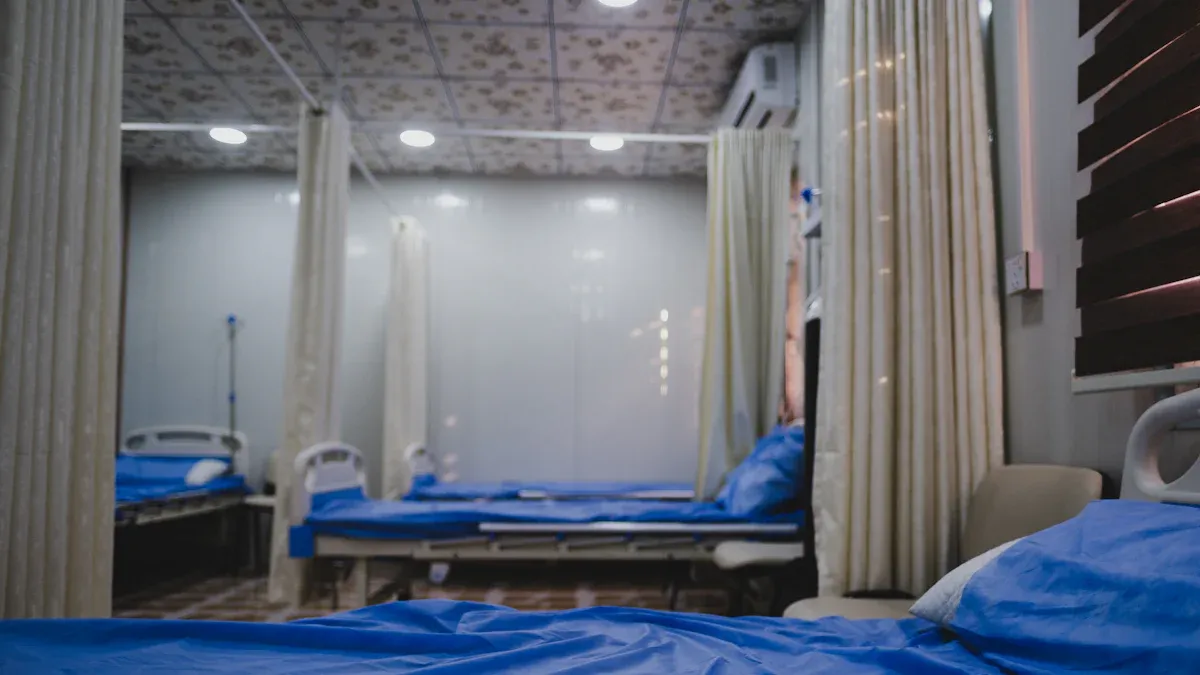
Disposable hospital curtainsserve as a practical solution for maintaining hygiene in healthcare settings, including the use of hospital privacy screens. Thesehealthcare curtains play a crucial role in reducing the risk of cross-contamination and infection. Recent studies show that over 72% of hospitals have adopted disposable options, particularly antimicrobial variants, which are also popular in medical curtains Australia. This trend highlights their financial advantages for hospital administrators, making them a smart choice for any curtain clinic.
Key Takeaways
- Disposable hospital curtains significantlyreduce the risk of cross-contamination and infection, making them essential in high-risk areas like ICUs and ORs.
- Switching to disposable curtains can lead to substantial cost savings by eliminating laundering expenses and reducing labor costs, enhancing overall hospital efficiency.
- Customization options for disposable curtains improve both functionality and aesthetics, contributing to patient comfort and satisfaction while maintaining high hygiene standards.
Infection Prevention with Hospital Curtains

Infection prevention is a critical concern in healthcare settings. Disposable hospital curtains play a significant role in minimizing the risk of cross-contamination. These curtains are designed to be replaced regularly, which helps eliminate the survival of pathogens. Research indicates that they are particularly effective in high-risk areas such as Intensive Care Units (ICUs), Operating Rooms (ORs), Emergency Departments (EDs), and Isolation Wards.
Studies have shown that traditional reusable curtains often harbor harmful pathogens. For instance, 95% of standard reusable curtains exhibited contamination at least once, with 21% testing positive for Methicillin-resistant Staphylococcus aureus (MRSA). In contrast, disposable hospital curtains demonstrate antimicrobial properties that significantly reduce microbial load over time. They inhibit bacterial growth, which leads to lower levels of pathogens like Pseudomonas aeruginosa and MRSA, even after prolonged use.
The pathogens that disposable hospital curtains help prevent include:
- Clostridium difficile
- Methicillin-resistant Staphylococcus aureus
- Carbapenem-resistant Enterobacteriaceae
- Vancomycin-resistant enterococci
Additionally, these curtains can prevent the transfer of various bacteria, including:
- Gram-negative bacteria such as Escherichia coli and Pseudomonas aeruginosa
- Gram-positive bacteria like Staphylococcus aureus and Enterococcus faecalis
- Spore-forming pathogens, notably Clostridium difficile
To maintain optimal hygiene standards, healthcare facilities should establish protocols for replacing disposable hospital curtains. Regular replacement minimizes cross-contamination and enhances safety for both patients and healthcare staff.
| Feature | Description |
|---|---|
| Material | 100% polypropylene, non-woven fabric – 120gsm |
| Fire Safety | Fire retardant (AS 2755.2-1985) – Failed to Burn |
| Antibacterial Properties | Impregnated with anti-bacterial and anti-mildew chemicals, including nanometer silver |
| Infection Control | Proven ability to inhibit bacterial growth, reducing the frequency of curtain changes compared to untreated reusable curtains |
Ease of Maintenance for Hospital Curtains

Maintaining hospital curtains can be a demanding task, especially in busy healthcare environments. Disposable hospital curtains offer a significant advantage in this regard. They eliminate the need for laundering, which saves both time and resources. Healthcare facilities can simply dispose of these curtains after use, streamlining the cleaning process.
| Curtain Type | Cleaning Requirements | Maintenance Requirements |
|---|---|---|
| Disposable Curtains | No laundering required; simply disposed of after use. | No maintenance needed; replaced as needed. |
| Reusable Curtains | Requires regular laundering and adherence to cleaning protocols to ensure hygiene. | Must be inspected regularly and replaced as part of a management plan. |
The use of disposable hospital curtains significantly alleviates the burden on healthcare staff. By removing the necessity for laundering and intricate cleaning procedures, staff can dedicate more time to patient care. This shift enhances the overall efficiency of hospital operations.
Additionally, disposable curtains enhance hygiene by being replaced frequently. This regular replacement reduces infection risks, ensuring a safer environment for patients and staff alike.
Cost-Effectiveness of Disposable Hospital Curtains
The cost-effectiveness of disposable hospital curtains stands out as a compelling reason for healthcare facilities to consider their adoption. When comparing the costs associated with disposable curtains to those of reusable options, the financial benefits become evident.
Direct Cost Comparison
Disposable hospital curtains typically cost around $25.00 per unit. In contrast, reusable curtains incur a laundering cost of approximately $10.00 per wash. This difference highlights the immediate savings associated with disposable options.
| Curtain Type | Cost per Unit | Laundry Rate |
|---|---|---|
| Disposable | $25.00 | N/A |
| Reusable (Washable) | N/A | $10.00 |
| Annual Cost Savings | 70% less | N/A |
Long-Term Savings
Switching to disposable hospital curtains can lead to significant long-term savings. The convenience of not needing to launder curtains reduces labor costs and resource consumption. The following table summarizes the pros and cons of each option:
| Pros of Disposable Drapes | Cons of Reusable Drapes |
|---|---|
| Sterility: Reduces infection risk | Sterility Challenges: Difficult to maintain after multiple uses |
| Convenience: Saves time and resources | Labor-Intensive: Requires significant cleaning and sterilization |
| Cost-Effective: Lower long-term costs due to reduced labor and maintenance | Storage Space: Needs space for washing and sterilization |
Comprehensive Cost Analysis
A comprehensive analysis reveals that the annual cost of maintaining reusable curtains can reach approximately $25,000. In contrast, the total cost for disposable curtains is around $66,000. While this figure may seem higher, it is essential to consider the waste reduction and environmental impact associated with reusable curtains.
| Aspect | Reusable Curtains | Disposable Curtains |
|---|---|---|
| Annual Cost | $25,000 | $66,000 |
| Waste Reduction | 254,000 pounds | N/A |
| CO2 Emissions | 1/3 of disposables | N/A |
| Carcinogenic Emissions | 1/16 of disposables | N/A |
| Infection Prevention | Equivalent | Equivalent |
Lifespan Considerations
The average lifespan of disposable hospital curtains is typically limited to a single use or up to three months, while reusable curtains can last up to seven years with proper maintenance. However, the ongoing costs of laundering and maintaining reusable curtains can offset their longer lifespan.
| Parameter | Disposable Curtains | Reusable Curtains |
|---|---|---|
| Average Lifespan | Single use or up to 3 months | Up to 7 years (with maintenance) |
Environmental Considerations for Hospital Curtains
Disposable hospital curtains present significant environmental challenges, particularly concerning waste generation. For instance, if hospitals in NHS England change their curtains twice a year, they dispose of approximately 235 tonnes of curtains. Changing curtains weekly escalates this issue, resulting in about 6,106 tonnes of waste from around 6.7 million curtains. A typical 6-bay ward that disposes of curtains every four weeks generates around 2,125 kg of CO₂ annually, equivalent to the emissions from 13 flights from London to Glasgow.
Despite these challenges, some manufacturers are addressing environmental concerns by producing disposable curtains from recyclable or biodegradable materials. For example, certain eco-friendly options consist of 100% recyclable material and are biodegradable. Notably, On The Right Track offers the only recyclable cubicle curtains that meet the chemical-free standards established by the Healthier Hospitals organization.
To mitigate the environmental impact of disposable curtains, hospitals can implement several strategies:
- Recycling Programs: Establish dedicated recycling programs for disposable drapes made from recyclable materials.
- Biodegradable Materials: Explore the use of biodegradable materials for disposable drapes.
- Waste-to-Energy Conversion: Investigate waste-to-energy technologies that convert medical waste into energy.
- Supplier Collaboration: Collaborate with suppliers committed to sustainable practices.
- Education and Training: Provide education and training programs for healthcare staff on responsible disposal practices.
- Continuous Improvement: Implement a framework to regularly assess and enhance sustainability initiatives.
By adopting these practices, healthcare facilities can reduce their environmental footprint while maintaining high hygiene standards.
Installation Efficiency of Hospital Curtains
The installation efficiency of disposable hospital curtains significantly enhances operational workflows in healthcare settings. These curtains can be installed and replaced quickly, which directly impacts patient room turnover rates.
Healthcare facilities benefit from tools designed to streamline the installation process. For instance, the Grabber tool allows staff to exchange curtains in under one minute. This tool eliminates the need for hooks or chains, improving operational efficiency. Additionally, the Changeout Curtain Tracking app utilizes QR codes for real-time tracking of curtain status. This automation simplifies compliance management and reporting.
| Tool/System | Description |
|---|---|
| Grabber tool | Facilitates curtain exchanges in under one minute, improving operational efficiency without the need for hooks or chains. |
| Changeout Curtain Tracking app | Utilizes QR codes for real-time tracking of curtain status, automating compliance management and reporting. |
The speed and ease of use associated with disposable curtains enhance room turnover rates. Facilities experience reduced downtime since there is no need for laundering or restocking. This efficiency facilitates faster patient flow, ultimately improving overall care delivery.
| Evidence | Explanation |
|---|---|
| Speed and ease of use | Disposable curtains can be replaced quickly, enhancing room turnover rates. |
| Reduced downtime | Eliminates the need for laundering and restocking, facilitating faster patient flow. |
| Improved inventory control | Bulk purchasing leads to lower costs and fewer shortages, aiding in operational efficiency. |
By adopting disposable hospital curtains, healthcare facilities can optimize their installation processes, leading to improved patient care and operational effectiveness.
Customization Options for Hospital Curtains
Customization options for disposable hospital curtains enhance both functionality and aesthetics in healthcare settings. Hospitals can select from a variety of features to meet their specific needs. Common customization options include:
- Fabric Patterns: Options like Stormy Weather and Beach Glass add visual appeal.
- Sizes: Available dimensions include 69" w x 84" h and 69" w x 96" h.
- Colors and Patterns: Facilities can choose from dozens of colors and patterns, ensuring that safety does not compromise aesthetic appeal.
Additionally, hospitals can opt for antimicrobial or eco-friendly fabric options. Configurable curtain tracks can accommodate various spatial requirements, enhancing usability. Custom decorative options and linen management solutions further improve the functionality of these curtains.
Branding plays a significant role in customization. Healthcare facilities can incorporate their logos and branding elements into the curtains. This practice reinforces the facility's identity while enhancing the overall aesthetic appeal. Customization also contributes to patient satisfaction and comfort.
- Personal Space: Customized curtains provide essential privacy during treatment.
- Psychological Barrier: They reduce anxiety and stress by minimizing visual distractions.
- Communication Facilitation: Privacy curtains support open communication between patients and healthcare providers.
The disposable nature of these curtains enhances hygiene and infection control, crucial for patient safety. By investing in customized disposable hospital curtains, healthcare facilities can create a more welcoming and safe environment for patients and staff alike.
Disposable hospital curtains represent a smart investment for healthcare facilities prioritizing hygiene and cost savings. Their advantages extend beyond infection control, enhancing financial and operational efficiencies. Hospitals that adopt these curtains often report a 30% reduction in infection rates and significant labor cost savings. Encouraging the use of disposable curtains can lead to improved patient outcomes and overall satisfaction.
FAQ
What are the main benefits of using disposable hospital curtains?
Disposable hospital curtains enhance hygiene, reduce infection risks, and save time and labor costs compared to reusable options.
How often should disposable hospital curtains be replaced?
Healthcare facilities should replace disposable hospital curtains regularly, ideally after each patient discharge or at least every three months.
Are disposable hospital curtains environmentally friendly?
Some manufacturers produce eco-friendly disposable curtains made from recyclable or biodegradable materials, helping to mitigate environmental impact.
