

 Send Email
 whatsapp


Eco-Friendly Disposable Curtains: A Sustainable Choice for Healthcare Facilities

Eco-friendly disposable hospital curtains significantly enhance infection control in healthcare facilities. They reduce the risk of bacteria accumulation by being replaced regularly. Unlike traditionalcubicle curtains, which may harbor pathogens due to infrequent laundering, disposable options often feature antimicrobial coatings. This sustainable choice not only promotes hygiene but also minimizes environmental impact, making it an ideal solution for surgery curtainsand hospital Privacy Curtains. Additionally, the use of ahospital partition curtain can further improve patient privacy and comfort in shared spaces.
Key Takeaways
- Eco-friendly disposable curtains enhance infection control by reducing bacteria buildup, promoting a safer environment for patients.
- These curtains save time and effort for healthcare staff, allowing for quick changes that minimize contamination risks.
- Using sustainable materials in disposable curtains supports environmental goals, making them a responsible choice for healthcare facilities.
Importance of Infection Control
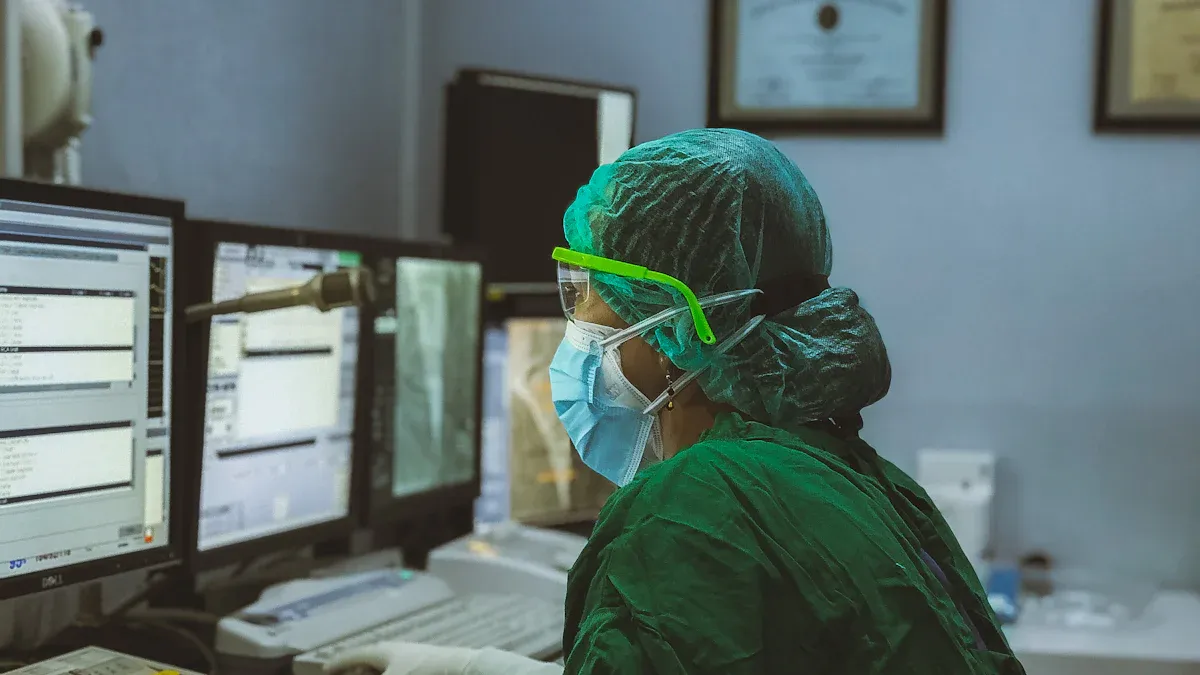
Infection control plays a critical role in maintaining patient safety and overall healthcare quality. Healthcare-associated infections (HAIs) pose significant risks to patients, leading to prolonged hospital stays, increased healthcare costs, and even mortality. Eco-friendly disposable curtains contribute to infection control efforts by minimizing the risk of pathogen transmission in healthcare settings.
Role in Preventing Healthcare-Associated Infections
Healthcare facilities often encounter various sources of HAIs. Common culprits include:
- Methicillin-resistant Staphylococcus aureus (MRSA)
- Clostridium difficile (C. difficile)
- Urinary tract infections (UTIs)
- Surgical site infections
- Poor hand hygiene
- Contaminated medical instruments
The use of disposable hospital curtains significantly reduces the likelihood of these infections. Antimicrobial curtains, treated with agents like silver nanoparticles, effectively inhibit microbial growth on surfaces. Studies indicate that these curtains decrease bacterial counts after installation in acute care and maternal child units. They also increase the time to first contamination compared to standard curtains, providing a practical solution for enhancing infection control.
Compliance with Health Regulations
Compliance with health regulations is essential for healthcare facilities. Organizations such as the Centers for Disease Control and Prevention (CDC) and the World Health Organization (WHO) recommend the use of disposable curtains to minimize cross-contamination risks. These curtains serve as a practical alternative to traditional options, which require regular laundering.
The implementation of disposable curtains aligns with infection control protocols that emphasize the need for regular cleaning of hospital surfaces, including curtains. Hospitals that adopt these eco-friendly solutions report lower infection rates. For instance, the mean bacterial count on disposable curtains remains below 1 CFU, significantly lower than that of cloth curtains. This reduction in bacterial presence helps prevent the spread of pathogens like MRSA and vancomycin-resistant Enterococcus (VRE), ultimately enhancing patient safety.
Features and Benefits of Disposable Curtains
Convenience and Ease of Use
Eco-friendly disposable curtains offer significant advantages in convenience and ease of use for healthcare staff. Their design ensures that they can be deployed quickly and efficiently, minimizing the time spent on curtain changes. For instance, staff can change disposable curtains in 30 seconds or less, a stark contrast to the lengthy processes associated with traditional curtains. This rapid replacement not only enhances workflow but also reduces the risk of contamination during handling.
The following table highlights key features that make disposable curtains more convenient compared to reusable options:
| Feature | Disposable Curtains | Reusable Curtains |
|---|---|---|
| Sterility | Guaranteed sterility at point of use | Risk of residual contamination |
| Handling | Limited handling reduces contamination risk | Requires multiple handling steps |
| Preparation Time | Ready for immediate use | Requires laundering and sterilization |
| Storage Efficiency | Compact packaging reduces clutter | Requires space for laundering equipment |
| Operational Burden | Lowers operational burdens | Higher operational demands |
By eliminating the need for laundering and maintenance, disposable curtains enhance overall efficiency in healthcare settings. They allow staff to focus on patient care rather than time-consuming cleaning tasks.
Cost-Effectiveness in Healthcare Settings
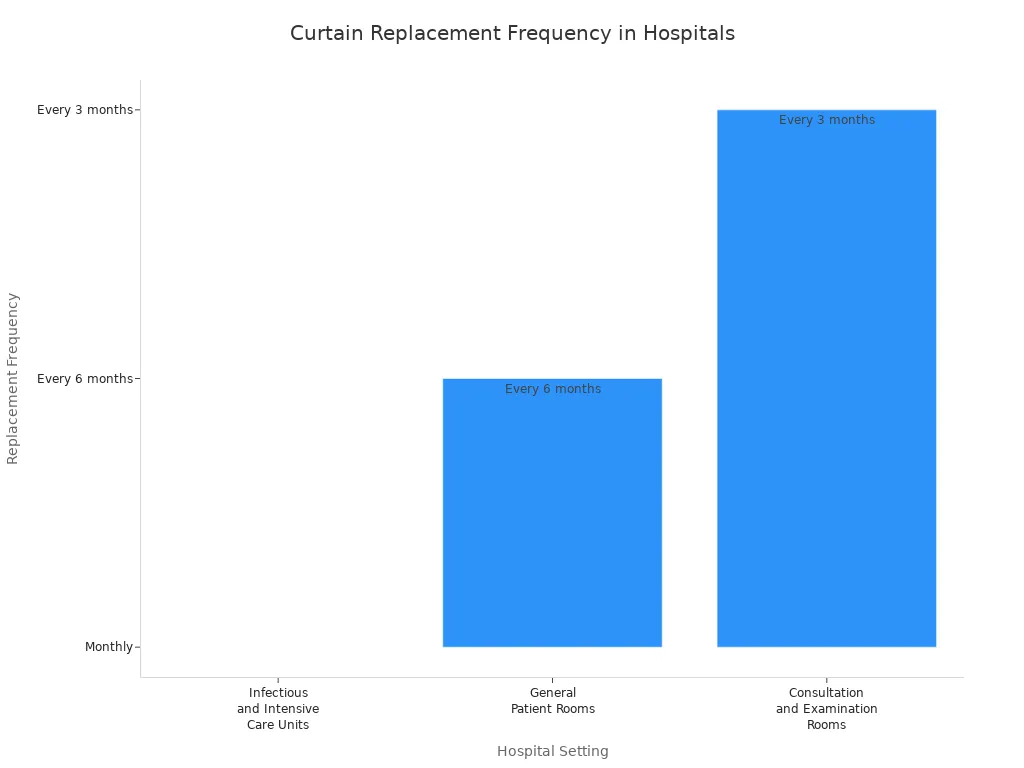
While eco-friendly disposable curtains may seem more expensive at first glance, they can lead to long-term cost savings in healthcare facilities. The average lifecycle cost of reusable curtains can be significantly higher due to laundering and maintenance expenses. For example, reusable curtains typically require replacement every six months, leading to a total lifecycle cost of approximately $115,750 over seven years. In contrast, disposable curtains, which are replaced monthly, incur a total lifecycle cost of around $224,000 over the same period.
| Type of Curtain | Lifespan | Replacement Frequency | Total Lifecycle Cost (7 years) |
|---|---|---|---|
| Reusable Curtains | Up to 7 years | Every 6 months | $115,750 |
| Disposable Curtains | 1 use to 3 months | Monthly | $224,000 |
Despite the higher upfront costs, disposable curtains can reduce laundering costs, lower labor expenses associated with cleaning, and decrease water consumption. Additionally, using biodegradable materials aligns with sustainability goals, making them a responsible choice for environmentally conscious healthcare facilities.
Eco-Friendly Aspects

Materials and Manufacturing Processes
Eco-friendly disposable curtains utilize sustainable materials that significantly reduce environmental impact. Commonly used materials include:
- Biodegradable curtain variants
- Recyclable curtain variants
These materials decompose naturally, minimizing long-term harm to the environment. The manufacturing processes for these curtains also prioritize sustainability. The following table outlines key eco-friendly practices in production:
| Eco-Friendly Practice | Description |
|---|---|
| Sustainable Materials | Transitioning to biodegradable and recycled fabrics that decompose easily, reducing long-term harm. |
| Reducing Waste | Efficient production processes that minimize material wastage, lowering resource consumption. |
| Recycling Programs | Initiatives to collect and repurpose used drapes, preventing landfill accumulation. |
| Innovative Sterilization | Techniques like electron beam sterilization that reduce harmful chemicals and environmental impact. |
| Energy Efficiency | Adoption of energy-efficient processes to lower carbon emissions during production. |
Impact on Waste Reduction
The implementation of eco-friendly disposable curtains contributes significantly to waste reduction in healthcare facilities. Effective recycling and composting programs play a crucial role in this effort. Key components of these programs include:
- Education and training: Staff education on proper disposal and recycling is essential for effective waste management.
- Partnerships with recycling facilities: Collaborating with local recycling centers ensures proper handling of materials.
- Sustainable practices: Implementing sustainability programs helps reduce overall waste and promotes recycling efforts.
By adopting these practices, healthcare facilities can align with global sustainability goals while enhancing their operational efficiency. The shift towards eco-friendly materials and processes reflects a growing awareness of the need for environmentally responsible products in the healthcare sector.
Comparison with Traditional Hospital Curtains
Hygiene and Maintenance Differences
Hygiene protocols differ significantly between disposable and traditional hospital curtains. Disposable curtains can be replaced at set intervals or when visibly soiled, minimizing contamination risks. In contrast, traditional curtains require regular laundering, which can lead to the retention of antimicrobial properties after multiple washes. Staff training on proper handling and hygiene practices is essential for both types.
The following table summarizes the key differences in hygiene and maintenance:
| Feature | Disposable Curtains | Traditional Curtains |
|---|---|---|
| Cleaning Method | Replaced when soiled; regular vacuuming required | Laundered regularly; vacuumed between washes |
| Maintenance Requirements | Must be replaced if visibly soiled; not washed | Requires laundry services; can withstand multiple washes |
| Infection Control Measures | Recommended to change frequently, especially in outbreaks | Antimicrobial properties survive multiple washes |
In critical care areas, disposable curtains may not be cost-effective due to frequent changes. However, their ability to reduce contamination risk makes them a preferred choice in many healthcare settings.
Environmental Impact Assessment
The environmental impact of disposable curtains raises important considerations. Research indicates that while disposable curtains require frequent changes, they can lead to higher waste and costs in the long run. Traditional curtains, although reusable, often contribute to significant water and energy consumption during laundering.
Sustainable designs, such as Silentia's privacy screens, prioritize hygiene and durability, lasting over ten years. This longevity significantly reduces environmental impact compared to traditional curtains, which may need frequent replacement.
Ultimately, healthcare facilities must weigh the benefits of infection control against the environmental implications of their curtain choices.
Eco-friendly disposable curtains represent a practical choice for healthcare facilities. They enhance infection control by significantly reducing the risk of cross-contamination. Key benefits include:
- Convenience and Hygiene: Their single-use design eliminates laundering needs, ensuring a consistently sterile environment.
- Cost-Effectiveness: Although initial costs may be higher, they lead to long-term savings by removing ongoing maintenance expenses.
- Environmental Responsibility: Many options utilize sustainable materials, aligning with eco-friendly initiatives.
Adopting these curtains can improve patient outcomes and promote a commitment to sustainability in healthcare. 🌱
FAQ
What are eco-friendly disposable curtains made from?
Eco-friendly disposable curtains often use biodegradable or recyclable materials, reducing environmental impact while ensuring hygiene and safety in healthcare settings.
How often should disposable curtains be replaced?
Healthcare facilities typically replace disposable curtains every month or when visibly soiled to maintain optimal hygiene and infection control standards.
Are disposable curtains cost-effective for hospitals?
While initial costs may be higher, disposable curtains can lead to long-term savings by eliminating laundering and maintenance expenses associated with traditional curtains.
