

 Send Email
 whatsapp


From Traditional to Disposable: The Growing Trend in Hospital Curtain Use
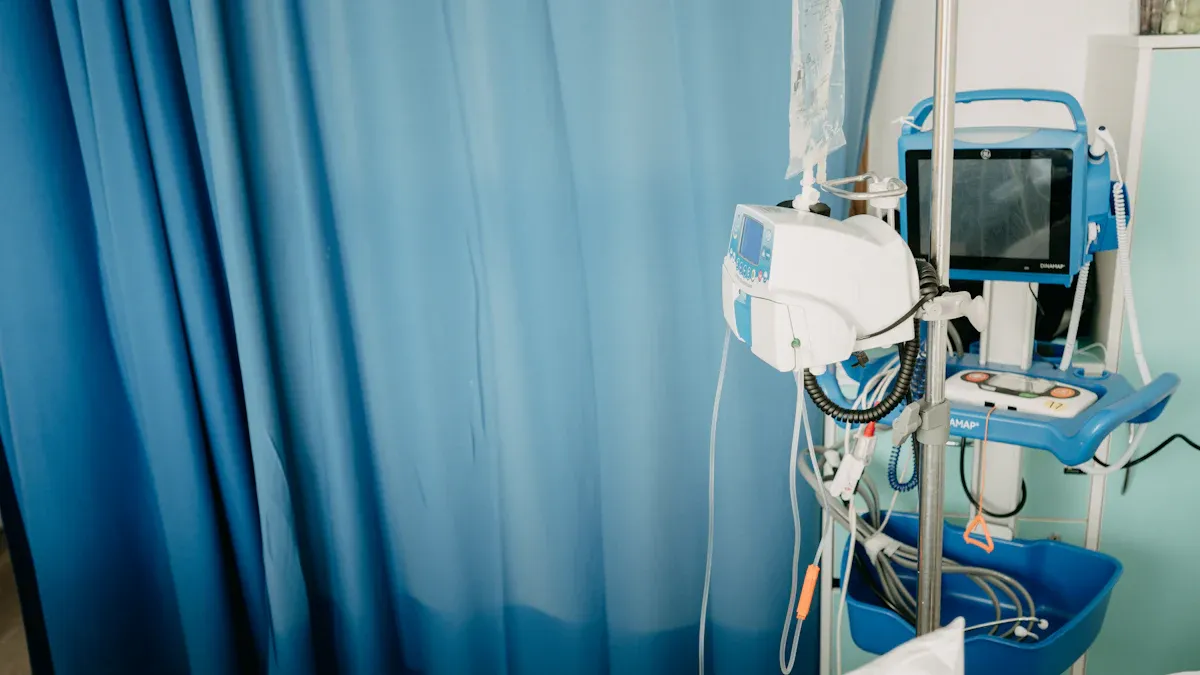
Hospitals now prioritize patient safety by replacing traditional cubicle curtains with disposable hospital curtains. Recent studies show that disposable options, including hospital cubicle curtains and hospital partition curtain products, significantly reduce bacterial contamination and infection rates. The table below highlights key findings:
| Evidence Aspect | Data / Finding |
|---|---|
| Bacterial contamination comparison | Disposable curtains show significantly lower contamination after 10 days; traditional cotton curtains have a 92% recontamination rate |
Key Takeaways
- Disposable hospital curtains greatly reduce infection risks by limiting bacterial contamination and allowing frequent replacement without laundering.
- Switching to disposable curtains saves hospitals time and labor costs through quick installation and less maintenance, improving overall efficiency.
- Hospitals face environmental challenges with disposable curtains but can adopt recycling and sustainable materials to balance hygiene and eco-friendliness.
Hospital Curtain Types: Traditional vs. Disposable
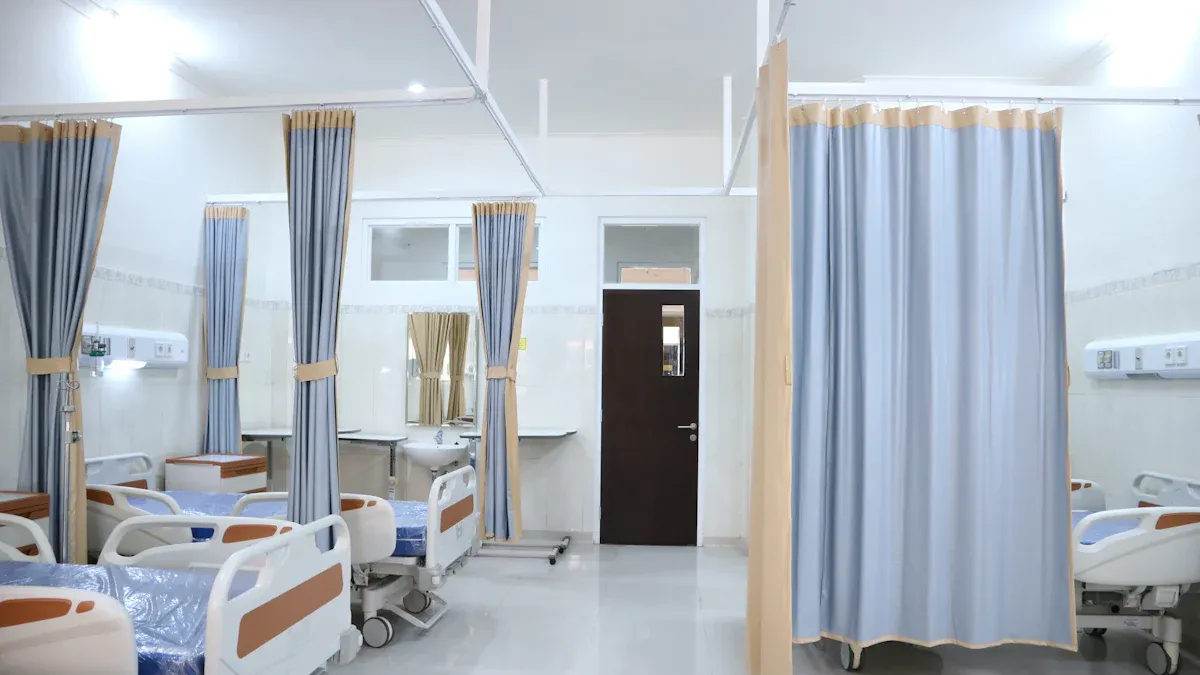
Traditional Hospital Curtain Features and Drawbacks
Traditional hospital curtains have long served as a barrier for patient privacy. Most of these curtains use fabric materials that require regular laundering. However, studies show that these curtains often become contaminated with bacteria such as MRSA and Group A Streptococcus. Even after washing, some pathogens can persist, making infection control a challenge.
- Traditional hospital curtains:
- Frequently harbor potentially harmful bacteria.
- Require frequent washing and maintenance.
- Can act as vectors for infection transmission due to frequent handling by staff and patients.
- Present maintenance challenges, including inconsistent cleaning schedules and difficulty in achieving full disinfection.
A typical hospital curtain may need replacement up to four times a year. Many facilities struggle to maintain this schedule because of labor and budget constraints. The need for frequent laundering increases operational costs and labor demands.
Note: While antimicrobial fabric curtains resist contamination longer, they may introduce concerns about toxicity and environmental impact.
Disposable Hospital Curtain Advantages
Disposable hospital curtains address many of the drawbacks found in traditional options. Manufacturers use lightweight, durable, and often antimicrobial materials for these curtains. Each disposable curtain provides a fresh, clean surface for every patient, reducing the risk of cross-contamination.
- Advantages of disposable hospital curtains:
- Single-use design eliminates the reuse of contaminated materials.
- Antimicrobial properties actively inhibit bacterial growth.
- No laundering required, saving time and resources.
- Customizable features, such as antibacterial or flame-resistant coatings.
- Some models use eco-friendly or biodegradable materials.
Disposable curtains, such as antimicrobial curtains, can remain in place for up to two years without losing their protective properties. This extended lifespan, combined with reduced labor and maintenance costs, makes them a cost-effective and hygienic solution for modern healthcare environments.
Drivers Behind the Shift to Disposable Hospital Curtains
Infection Control and Cross-Contamination Prevention
Hospitals face constant pressure to reduce healthcare-associated infections (HAIs). Infection control remains the primary reason for adopting disposable hospital curtains. Studies reveal that 92% of reusable curtains become contaminated with dangerous bacteria such as MRSA and VRE within one week. This contamination poses a significant risk to patients and staff. Disposable curtains offer a solution by allowing frequent replacement, even between patients, which interrupts the cycle of germ transmission. Antimicrobial disposable curtains show near-zero contamination after 20 weeks, far outperforming traditional options.
The World Health Organization estimates that over 1.4 million people worldwide suffer from HAIs at any given time. The Centers for Disease Control and Prevention (CDC) reports that 1 in 31 hospital patients in the United States acquires an HAI daily. These statistics highlight the urgent need for effective infection prevention strategies.
Disposable products, including microfiber cloths and mops, prevent cross-contamination between patient areas. In high-risk zones such as isolation rooms and operating rooms, single-use disposable items ensure a sterile environment every time. Disposable operating room linens also reduce lint and particulates, helping to prevent surgical site infections. Hospitals increasingly cite regulatory guidelines and infection prevention benefits as central reasons for switching to disposable curtains.
Regulatory and Compliance Demands
Regulatory agencies set strict standards for hospital curtain use. Manufacturers must follow guidelines from organizations such as the CDC, FDA, OSHA, and The Joint Commission. These standards focus on infection control, patient safety, and the use of antimicrobial and flame-retardant materials. Disposable curtains undergo rigorous manufacturing processes to ensure sterility, safety, and quality. Each curtain is individually packaged in sterile conditions and comes with documentation to verify compliance.
- Regulatory requirements include:
- Use of hypoallergenic and non-reactive materials.
- Adherence to fire safety and antimicrobial standards.
- Regular assessment and recommended quarterly replacement.
- Compliance with CDC laundry and cleaning guidelines.
- Implementation of modern tracking technologies, such as RFID, for inventory and hygiene assurance.
The COVID-19 pandemic has intensified the focus on hygiene and patient safety. Regulatory bodies now emphasize the importance of frequent curtain changes and improved barrier properties. These evolving standards encourage healthcare facilities to adopt disposable curtains, which support both compliance and innovation.
Operational Efficiency and Labor Savings
Switching to disposable hospital curtains delivers measurable improvements in operational efficiency. Hospitals benefit from faster and easier installation, often using quick-change track systems. Staff no longer need to spend time laundering and reinstalling curtains, which reduces labor and maintenance costs. Disposable curtains minimize replacement frequency and streamline processes, reducing downtime between procedures and improving patient throughput.
- Key operational benefits:
- Curtain exchange time drops from up to 45 minutes per room to under 2 minutes.
- No need for ladders or specialized equipment.
- Staff can focus more on patient care rather than curtain maintenance.
- Facilities report significant reductions in labor costs and time spent on curtain changes.
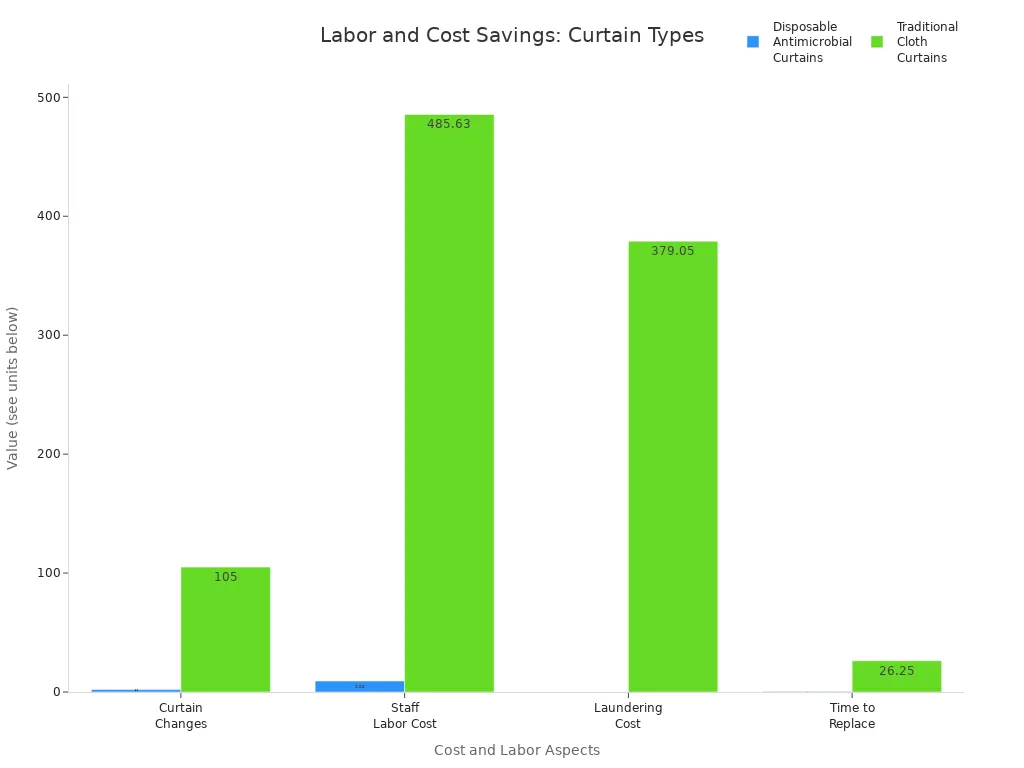
A recent study found that disposable antimicrobial curtains reduced staff labor costs by nearly $476 per study period and eliminated laundering expenses, saving an additional $379. The total cost savings exceeded $7,700 during the study period, with projected annual savings over $20,000. Hospitals also saved almost 67 hours of staff time annually. These savings allow healthcare facilities to allocate resources more efficiently and maintain a higher standard of hygiene.
Innovations in Hospital Curtain Technology
Antimicrobial and Recyclable Materials
Manufacturers have introduced advanced antimicrobial fabrics and coatings to address the persistent challenge of infection control in healthcare settings. These materials contain agents such as quaternary ammonium chlorides and polyorganosiloxane, which actively reduce contamination by multidrug-resistant organisms. Hospital curtains made with these compounds limit the survival of pathogens like MRSA and C. difficile, lowering the risk of hospital-acquired infections. Scientific testing shows that Gram-negative bacteria do not survive beyond one day on disposable polypropylene curtains treated with biostatic agents, while Gram-positive bacteria disappear within ten days. However, spore-forming pathogens may persist longer, highlighting the need for ongoing innovation.
Sustainability has also become a priority. Many manufacturers now use recyclable or biodegradable materials, supporting environmental policies and reducing medical waste. These eco-friendly options align with patient safety standards and help hospitals meet regulatory requirements.
Antimicrobial curtains delay contamination and maintain lower microbial loads, reducing the frequency of laundering and extending product life.
Smart Hospital Curtain Features
Recent technological advancements have led to the development of smart curtain solutions. These hospital curtain systems integrate sensors and automation for real-time hygiene monitoring. For example, the Curtain Change Management System (CCMS) uses a web-based dashboard to track and manage curtain changes. Environmental services technicians can log changes using multiple devices, ensuring timely replacement and compliance with infection prevention protocols.
| Innovation Type | Description | Impact |
|---|---|---|
| Smart curtain solutions | Sensors and automation for hygiene monitoring | Improves infection control and efficiency |
| CCMS | Web-based curtain change tracking | Ensures compliance and operational gains |
These innovations enhance operational efficiency, support regulatory compliance, and improve patient safety in modern healthcare environments.
Hospital Curtain Sustainability and Environmental Impact
Medical Waste and Environmental Concerns
Disposable curtains have transformed infection control but introduced new environmental challenges. Hospitals in the United States discard nearly 28.8 million polypropylene curtains each year. This volume adds significantly to landfill accumulation and increases the need for incineration. Incinerating these curtains releases large amounts of carbon dioxide. For example, a single 6-bay ward that disposes of curtains every four weeks generates about 2,125 kg of CO₂ annually—comparable to the emissions from 13 short-haul flights.
Hospitals must also manage the classification of disposable curtains as clinical waste, which requires special handling and disposal. While reusable curtains generate less solid waste due to their longer lifespan (up to 100 uses), they require ongoing laundering. This process consumes water, energy, and detergents, which also impacts sustainability. Both disposable and reusable options create packaging waste that needs proper disposal.
Hospitals face a trade-off: disposable curtains increase waste volume, while reusable curtains demand more resources for cleaning.
Greener Solutions and Recycling Initiatives
Healthcare facilities now adopt greener solutions to address these environmental concerns:
- Launch recycling programs for curtains made from 100% recyclable polypropylene.
- Use biodegradable materials to reduce long-term landfill impact.
- Implement waste-to-energy conversion for non-recyclable materials.
- Partner with suppliers who prioritize sustainable manufacturing and packaging.
- Train staff on responsible disposal and recycling practices.
- Regularly review and improve sustainability initiatives.
| Aspect | Description |
|---|---|
| Material | Curtains made from recyclable #5 polypropylene resin, including recyclable grommets. |
| Recycling Process | Supplier take-back programs collect used curtains, process them into resin pellets, and remanufacture new products. |
| Environmental Impact | Recycling and waste-to-energy reduce landfill burden and emissions. |
| Staff Education | Training ensures proper disposal and supports sustainability goals. |
Hospitals that embrace these initiatives report lower waste volumes, cost savings, and improved compliance with environmental standards.
Challenges in Adopting Disposable Hospital Curtains
Cost Considerations
Hospitals encounter several financial hurdles when transitioning to disposable curtains. The initial purchase price for disposable options often exceeds that of reusable curtains. However, lifecycle cost analysis reveals savings of 30–40% when factoring in reduced laundering, storage, and replacement expenses. Facilities with limited budgets, especially in public healthcare systems, must weigh recurring costs against operational needs. Currency fluctuations and supply chain disruptions can further complicate budgeting, sometimes increasing import costs by 15–20% during procurement cycles. Advanced features, such as antimicrobial or biodegradable materials, command price premiums of up to 35%. Environmental sustainability requirements also add to overall costs. Performance variability and lack of standardization may result in 10–15% waste from incorrect orders, while infection control professionals express skepticism about inconsistent product quality.
| Cost Factor | Description & Impact | Quantitative Details / Examples |
|---|---|---|
| Upfront Cost | Higher initial purchase price for disposable curtains. | 30–40% lifecycle cost savings with reduced laundering, storage. |
| Budget Constraints | Recurring expenses compete with operational budgets. | Immediate savings prioritized over long-term benefits. |
| Currency Fluctuations | Affect import costs, causing price volatility. | 15–20% increase mid-cycle. |
| Lifecycle Cost Savings | Eliminates laundering and maintenance efforts. | 5–7 staff hours saved weekly. |
| Price Premiums for Advanced Materials | Premium pricing for antimicrobial or biodegradable curtains. | 30–35% higher for antimicrobial; 25–30% for biodegradable. |
| Supply Chain Vulnerabilities | Raw material price volatility and supply disruptions. | 18–22% annual price fluctuation; longer lead times. |
| Environmental Sustainability | Higher costs for biodegradable materials and regulatory compliance. | 25–30% more for biodegradable; added regulatory costs. |
| Standardization and Performance Variability | Quality differences lead to waste and skepticism. | 10–15% waste; 30–35% express concerns about performance. |
Waste Management Strategies
Hospitals must address the increased waste generated by disposable curtains. Many facilities implement sustainable disposal practices and formal staff training to ensure proper installation, removal, and disposal. Staff education emphasizes responsible disposal and environmental impact awareness. Hospitals update operational policies to include new waste management procedures. Waste-to-energy technologies and partnerships with eco-friendly suppliers help reduce landfill burden. Some facilities adopt a mixed approach, using both washable and disposable curtains to balance cost, infection control, and waste management.
- Hospitals use recycling programs for polypropylene curtains.
- Staff receive training on responsible disposal.
- Facilities collaborate with suppliers for sustainable materials.
- Waste-to-energy solutions convert non-recyclable curtains.
- Mixed-use strategies optimize infection control and sustainability.
Tip: Regular review of waste management policies helps maintain compliance with environmental standards.
Staff Training and Implementation
Effective adoption of disposable curtains depends on comprehensive staff training. Training programs teach staff to identify soiled curtains and replace them promptly. Education covers hospital policies for cleaning and disposal, as well as proper handling to prevent cross-contamination. Staff learn to install and remove curtains using quick-change track systems and technological tools like QR code or RFID tracking. Training also supports sustainability efforts, such as recycling and responsible disposal. Ongoing education ensures adherence to infection control and regulatory standards.
- Staff learn to recognize when curtains need replacement.
- Training covers proper installation and removal techniques.
- Education emphasizes infection control and sustainability.
- Technological tools enhance compliance and efficiency.
Note: Continuous training improves operational outcomes and supports patient safety.
Comparing Hospital Curtain Options: Pros and Cons
Summary Table of Benefits and Drawbacks
Healthcare facilities face important decisions when selecting privacy solutions. Each hospital curtain type presents unique advantages and challenges. Peer-reviewed research highlights several key points:
- Hospital curtains often act as high-risk surfaces for cross-contamination. Studies from the University of Manitoba show that frequent touching and infrequent changing allow MRSA and other pathogens to persist.
- Disposable curtains, when changed after every patient, reduce infection spread. However, this practice increases hospital waste and disposal costs.
- Reusable curtains can last up to 10 years with proper laundering, offering long-term cost-effectiveness and sustainability. Still, laundering requires significant employee time and resources.
- Disposable options provide initial savings but may become less cost-effective over time due to frequent replacement and waste management.
- Reusable curtains improve patient comfort and reduce environmental impact but may retain stains and require strict cleaning policies.
- The pandemic has increased the need for frequent curtain changes, making disposable curtains less sustainable and more expensive.
- Innovative alternatives, such as antimicrobial wipe-clean curtains, combine the benefits of both types.
| Factor | Traditional (Reusable) Curtains | Disposable Curtains |
|---|---|---|
| Cost | Lower long-term, higher maintenance | Lower initial, higher ongoing |
| Infection Control | Moderate, needs strict laundering | High, if changed frequently |
| Environmental Impact | Lower waste, higher resource use | Higher waste, recyclable options exist |
| Patient Comfort | High | Moderate |
| Ease of Use | Manual, more labor | Quick-change, less labor |
| Regulatory Compliance | Requires strict schedules | Easier to meet with frequent changes |
Facilities often weigh these factors against their budget, hygiene priorities, and patient comfort to select the most suitable hospital curtain solution.
Future Trends in Hospital Curtain Use
Emerging Technologies and Market Growth
Healthcare facilities continue to adopt advanced solutions to improve infection control and operational efficiency. The Cintas Hospital Privacy Curtain System demonstrates how innovation can transform daily routines. This system reduces curtain change-out time from 30 minutes to under 30 seconds. Staff benefit from ergonomic designs that lower injury risk, while durable materials withstand repeated industrial laundering. Hospitals report improved patient safety and streamlined workflows after implementing these systems.
Modern cubicle curtains now feature antimicrobial fabrics and disposable options. These advancements enhance infection control and support hygiene compliance. Wipeable hand shield curtains allow cleaning in place, eliminating the need for frequent laundering. Hospitals achieve better compliance with hygiene protocols and reduce laundry costs. These curtains also minimize exposure to contaminated surfaces, protecting both patients and staff.
New designs focus on patient privacy, comfort, and safety. Features such as fire resistance and sound insulation improve the patient experience. Curtain track systems now reduce noise and improve usability, contributing to a quieter healing environment.
The global market for disposable hospital curtains shows strong growth. The following table highlights key projections for the next decade:
| Metric | Value | Timeframe | Notes |
|---|---|---|---|
| Global disposable curtain market size | USD 2.5 billion | 2024 | Base year valuation |
| Projected market size | USD 4.7 billion | 2033 | CAGR 7.5% from 2026 to 2033 |
| Alternative projection | USD 1.2 billion | 2030 | CAGR 6.8% from 2025 to 2030 |
| Regional fastest growth | Asia-Pacific, Middle East | Next decade | Driven by infrastructural development |
| Growth drivers | Infection control awareness, hygiene regulations, healthcare infrastructure expansion, product innovations | - | Includes antimicrobial coatings, biodegradable materials |
| North America & Europe | Strong demand | Next decade | Driven by infection control mandates and healthcare standardization |
The antimicrobial hospital curtains segment is expected to reach USD 1.34 billion by 2034, growing at a compound annual rate of 7.6%. Increased awareness of healthcare-associated infections, stricter hygiene regulations, and expanding infrastructure drive this growth. Hospitals in Asia-Pacific and the Middle East lead regional expansion, while North America and Europe maintain strong demand due to regulatory mandates.
Healthcare facilities now prioritize infection control and operational efficiency by adopting innovative hospital curtain solutions. They select antimicrobial, recyclable, and easy-to-clean materials, partner with reliable suppliers, and implement systems that reduce labor and environmental impact. Sustainable privacy screens and quick-change track systems further support hygiene and cost management.
- Reliable suppliers ensure consistent quality and compliance.
- Eco-friendly materials and quick-change systems lower costs and waste.
FAQ
What is the recommended replacement frequency for disposable hospital curtains?
Healthcare facilities should replace disposable curtains after each patient discharge or when visibly soiled. This practice supports infection control and regulatory compliance.
Are disposable hospital curtains recyclable?
Many disposable curtains use recyclable polypropylene. Facilities should check with suppliers for recycling programs and follow local waste management guidelines.
Do disposable curtains offer the same privacy as traditional fabric curtains?
Disposable curtains provide equivalent privacy and visual barriers. Manufacturers design them to meet hospital standards for patient dignity and confidentiality.
