

 Send Email
 whatsapp


Are Disposable Hospital Curtains Eco-Friendly? Exploring Sustainable Options

Hospitals generate substantial waste from disposable cubicle curtains, with a single 200-bed facility producing up to 7 tons annually. The World Health Organization reports that healthcare systems create over 2 million tons of waste each year. To address this, many hospitals are turning to disposable hospital curtains and eco-friendly hospital partition curtain options to reduce their environmental footprint.
Key Takeaways
- Eco-friendly disposable hospital curtains use recyclable or biodegradable materials that reduce waste and support infection control.
- Hospitals can lower environmental impact by choosing curtains with certifications, recycling used curtains, and adopting smart waste management practices.
- Disposable curtains offer quick replacement and strong hygiene but create more waste, while reusable curtains last longer and save costs but need laundering and maintenance.
What Makes Disposable Cubicle Curtains Eco-Friendly?
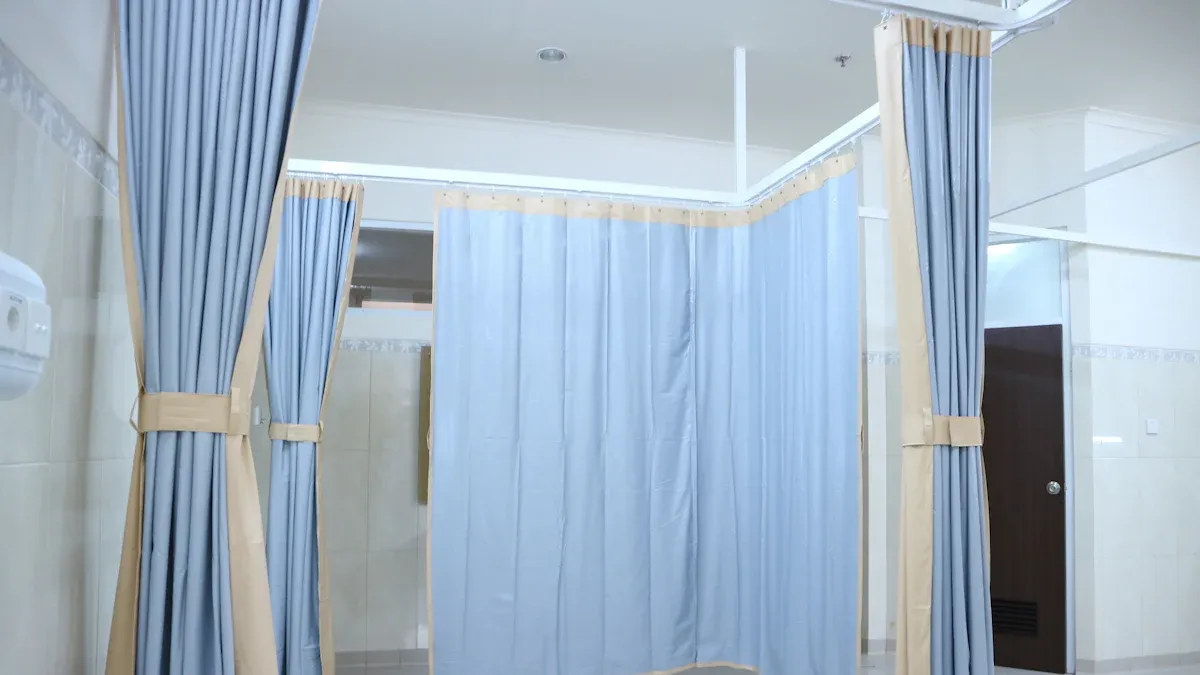
Defining Eco-Friendliness for Hospital Curtains
Eco-friendliness in hospital curtains refers to how products minimize harm to the environment while maintaining safety and hygiene. Hospitals look for curtains that support infection control and reduce waste. Several features define eco-friendly curtains:
- Use of recycled materials in production, which lowers environmental impact and cost.
- Design that prevents bacterial growth, supporting hygiene without relying on harsh chemicals.
- Ability to recycle the curtains after use, which helps conserve resources and reduce landfill waste.
- Quick and simple changing process, which saves resources and reduces labor needs.
- Focus on quality and safety, ensuring that eco-friendly options do not compromise patient care.
These qualities help hospitals balance environmental responsibility with strict hygiene standards.
Criteria for Sustainable Disposable Cubicle Curtains
Sustainable disposable Cubicle Curtains must meet specific criteria to qualify as eco-friendly. Manufacturers often use 100% recyclable or biodegradable materials, such as polypropylene, to ensure minimal environmental impact. Many curtains receive treatment withantimicrobial agents, which helps reduce bacteria and odors while supporting infection control policies.
Hospitals and suppliers also look for certifications and standards that confirm sustainability and safety. The following table highlights key certifications:
| Certification/Standard | Description |
|---|---|
| ISO 9001 | Quality management system certification |
| ISO 14001 | Environmental management system certification |
| BS 5867 Fire classification | Fire safety standard, FR: Part 2: Type C |
| NHS Approval | Approval relevant for hospital infection control |
| Material | 100% recyclable polypropylene, antibacterial |
By choosing curtains that meet these standards, healthcare facilities can reduce laundering and labor costs while supporting environmental goals.
Environmental Impact and Sustainable Alternatives for Disposable Cubicle Curtains
Materials and Manufacturing Processes
Manufacturers have traditionally produced disposable cubicle curtains from polypropylene and other synthetic fabrics. These materials offer durability and cost-effectiveness, but they also contribute to environmental challenges. Each year, hospitals dispose of nearly 28.8 million polypropylene curtains, which often end up in landfills or incinerators. This disposal process increases pollution and adds to the global waste burden.
Recent innovations have shifted the focus toward 100% recyclable and biodegradable materials. Companies like Construction Specialties now offer curtains made from recyclable polypropylene and biodegradable polymers. These materials allow for recycling and biodegradation, reducing the environmental harm associated with traditional curtains. Manufacturers treat many of these curtains with antimicrobial agents, which help prevent bacterial growth and support infection control in critical care areas.
Material science continues to drive sustainability improvements. New formulations of polypropylene and polyester enhance antimicrobial properties and durability. Biodegradable polymers and composites are emerging as eco-friendly alternatives, aiming to reduce the environmental footprint while maintaining performance. These advancements support the production of disposable cubicle curtains that are both high-performing and more sustainable.
Usage, Disposal, and Waste Management
Hospitals replace disposable cubicle curtains frequently, especially in high-turnover or high-risk areas. This practice supports infection control but generates significant medical waste. Disposable curtains require special handling and often undergo incineration, which increases landfill burden and emissions.
Effective waste management strategies can help minimize environmental impact. Many healthcare facilities now implement recycling programs for curtains made from recyclable materials. Suppliers offer take-back programs, collecting used curtains and processing them into resin pellets for remanufacturing. Some hospitals adopt waste-to-energy conversion technologies, harnessing energy from medical waste and reducing landfill contributions.
Regulatory requirements in North America and Europe mandate strict infection control and disposal standards. These regulations influence material selection and disposal methods, driving demand for sustainable alternatives. Hospitals must collaborate with manufacturers and waste management providers to establish efficient recycling infrastructure. Staff education on responsible disposal practices ensures that curtains are handled safely and sustainably.
Tip: Hospitals can further reduce their environmental footprint by tracking curtain usage with smart textile technologies like RFID, optimizing replacement cycles, and minimizing unnecessary waste.
Recyclable and Biodegradable Disposable Cubicle Curtains
The latest disposable cubicle curtains use 100% recyclable polypropylene, specifically #5 polypropylene resin. Manufacturers design these curtains to prevent bacterial growth and transmission, making them suitable for critical care and isolation areas. The fabric is lightweight, durable, and fire retardant, meeting safety standards such as NFPA 701.
Recyclable components, including grommets, allow the entire curtain to enter recycling streams alongside other medical products like blue wraps and gowns. The recycling process involves collecting used curtains, processing the polypropylene into resin pellets, and remanufacturing them into new healthcare products. This closed-loop system supports sustainability and hygiene in healthcare settings.
Hospitals that switch to biodegradable disposable curtains report several environmental benefits:
- Use of eco-friendly materials reduces long-term environmental impact.
- Recycling programs conserve resources and minimize waste.
- Waste-to-energy initiatives harness energy from medical waste.
- Collaboration with sustainable suppliers and continuous improvement frameworks enhance overall sustainability.
These initiatives help healthcare facilities align with environmental goals and reduce their overall waste footprint.
Comparing Disposable and Reusable Curtain Options
Healthcare administrators must weigh the benefits and drawbacks of disposable and reusable cubicle curtains. The following table summarizes key differences:
| Parameter | Disposable Curtains | Reusable Curtains |
|---|---|---|
| Average Lifespan | Single use or up to 3 months | Up to 7 years (with maintenance) |
| Replacement Frequency | Every 3 months | Every 6-12 months (laundering) |
| Annual Cost per Curtain | Higher (frequent replacement) | 70% less than disposables |
| Laundry Cost | None | $10.00 per laundering |
| Staff Labor for Change-Out | Lower | Higher |
| Infection Control | High (if replaced regularly) | High (with antimicrobial fabrics) |
Disposable cubicle curtains offer convenience, quick replacement, and strong infection control, especially in high-risk areas. They reduce staff workload and eliminate laundering costs. However, they generate more waste and have higher annual costs due to frequent replacement.
Reusable curtains provide a more sustainable option over time. Hospitals can launder and reuse them for several years, reducing waste and long-term costs. Antimicrobial reusable curtains resist contamination longer and may offer superior infection control if properly maintained. However, laundering requires significant water and energy, and standard laundering may not fully eliminate pathogens.
Note: Hospitals often select curtain types based on infection control needs, operational efficiency, and sustainability goals. Many facilities now combine both options, using disposables in high-risk areas and reusables elsewhere.
While traditional disposable cubicle curtains present environmental challenges, hospitals now achieve measurable reductions in waste and cost by adopting recyclable or biodegradable options. Facilities should:
- Evaluate suppliers for compliance, material quality, and environmental certifications.
- Educate staff through formal training on sustainable disposal.
- Track reductions in laundering, contamination, and costs.
| Aspect | Measurable Benefit |
|---|---|
| Bacterial Reduction | 93% decrease on disposable curtains |
| Cost Savings | $31,000 annually |
| Material Sustainability | 100% recyclable materials |
The market continues to shift toward smart, eco-friendly curtain solutions.
FAQ
What materials make disposable hospital curtains eco-friendly?
Manufacturers use recyclable polypropylene or biodegradable polymers. These materials reduce landfill waste and support recycling programs in healthcare facilities.
Can hospitals recycle used disposable cubicle curtains?
Hospitals can recycle curtains made from #5 polypropylene. Many suppliers offer take-back programs, turning used curtains into resin pellets for new products.
How do eco-friendly disposable curtains compare to reusable ones?
Eco-friendly disposables reduce waste and labor. Reusable curtains last longer and lower long-term costs. Facilities often choose based on infection control needs and sustainability goals.
