

 Send Email
 whatsapp


Disposable Hospital Curtains: Fast Safety for Emergency Wards

Disposable Hospital Curtains enable rapid patient turnover in emergency wards. They significantly reduce healthcare-associated infection risks. This type of hospital curtain, often serving as cubicle curtains, also functions as a crucial hospital partition curtain. The hospital privacy curtain design streamlines workflow for medical staff.
Key Takeaways
- Disposable hospital curtains help emergency rooms quickly prepare for new patients. They make patient turnover faster.
- These curtains stop germs from spreading. They keep patients safe from infections.
- Disposable curtains save money over time. They cut down on cleaning costs and staff work.
The Urgent Need for Speed in Emergency Wards

Rapid Patient Turnover with Disposable Hospital Curtains
Emergency wards operate under constant pressure to manage patient flow efficiently. Rapid patient turnover is crucial for accommodating new arrivals and preventing overcrowding. Disposable Hospital Curtains significantly contribute to this speed. High-occupancy facilities, such as ERs and ICUs, typically implement quarterly replacement cycles for these curtains. This streamlined process supports rapid turnover. Medical staff can quickly remove and replace these curtains between patients, ensuring the cubicle is ready for the next individual without delay. This practice leads to faster room turnover times.
Optimizing Emergency Ward Workflow
Efficient workflow is paramount in emergency settings. Disposable curtains simplify the process of preparing patient areas. Staff no longer spend valuable time on laundering or deep cleaning traditional curtains. This efficiency allows medical personnel to focus on direct patient care. The quick changeover of curtains reduces non-clinical tasks, thereby optimizing the overall emergency ward workflow.
Minimizing Downtime for Cubicle Readiness
Minimizing downtime for patient cubicles directly impacts an emergency ward's capacity. Traditional curtains require removal, transport to laundry, cleaning, and reinstallation, which can take hours or even days. Disposable curtains eliminate this lengthy process. A fresh, clean curtain can be installed in minutes. This immediate readiness is vital for infection control, preventing cross-contamination risks. A European hospital reported a 30% decrease in hospital-acquired infections after switching to disposable antibacterial curtains, highlighting their role in maintaining a safe and ready environment.
Elevating Safety: A Primary Concern for Emergency Wards
Infection Control with Disposable Hospital Curtains
Emergency wards prioritize infection control to protect vulnerable patients. Disposable hospital curtains significantly reduce bacterial cross-contamination. These curtains help control healthcare-associated infections (HAIs). Specific bacteria likeClostridium difficile (C. diff), Vancomycin-resistant Enterococci (VRE), and Methicillin-resistant Staphylococcus aureus (MRSA) pose significant threats. MRSA infections are particularly common and increase hospitalization periods. The most frequent types of HAIs include surgical site infections, urinary tract infections, pneumonia, bloodstream infections, and gastrointestinal infections. Regular replacement of these curtains directly combats the spread of these pathogens.
Preventing Cross-Contamination Risks
Preventing cross-contamination is critical in high-traffic medical environments. Studies recommend the use of regularly replaced disposable curtains to prevent cross-contamination. Antimicrobial disposable curtains show significantly reduced bacterial contamination over extended periods. One study found antimicrobial/sporicidal curtains had almost no contamination (0.56 CFU) after 20 weeks, compared to 32.6 CFU on standard curtains. Researchers concluded these curtains offer a 'passive infection prevention' benefit. They advocate for widespread adoption to mitigate infection risks effectively. This proactive approach minimizes the transfer of harmful microorganisms between patients and staff.
Material Safety and Patient Well-being
The materials used in hospital curtains directly impact patient well-being. Manufacturers design disposable curtains from safe, non-toxic materials. These materials meet stringent healthcare standards. They do not release harmful chemicals or allergens into the environment. This ensures a safe atmosphere for patients, especially those with compromised immune systems or respiratory sensitivities. The inherent safety of these materials supports a healthier recovery process and reduces potential adverse reactions.
The 'Speed and Safety' Synergy of Disposable Hospital Curtains
Quick Installation and Removal Benefits
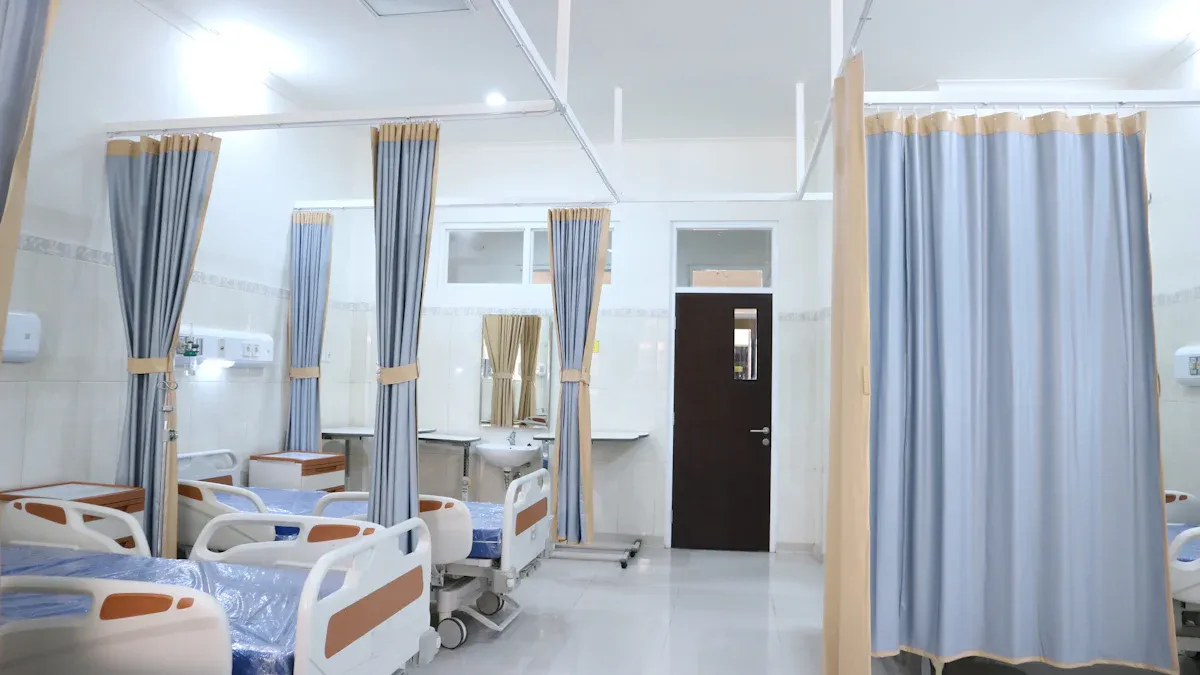
Emergency wards demand swift action and efficient resource management. Disposable Hospital Curtains offer significant advantages through their quick installation and removal. Medical staff can rapidly deploy a fresh curtain in a patient cubicle, preparing the space for the next patient in minutes. This eliminates the time-consuming process of handling traditional fabric curtains, which require laundering and re-hanging. The ease of changeover directly contributes to faster patient throughput, allowing emergency departments to manage high volumes more effectively. This operational agility ensures patient care remains uninterrupted and facilities maintain readiness.
Built-in Antimicrobial Properties for Enhanced Protection
Beyond their rapid deployment, many modern disposable curtains incorporate advanced antimicrobial technologies. These features provide an extra layer of defense against harmful pathogens. Manufacturers embed agents such as silver ions, copper compounds, or quaternary ammonium compounds directly into the fabric. These agents offer long-lasting protection against a broad spectrum of bacteria, fungi, and viruses.
Consider the effectiveness of specific antimicrobial agents:
| Antimicrobial Agent | Efficacy Against Pathogens (Reduction in Contamination) |
|---|---|
| Quaternary ammonium chlorides (QAC) plus polyorganosiloxane (Antimicrobial curtain B) | Highly effective in reducing bioburden (1 vs 57 CFU/100 cm²); significantly lower MDRO contamination: MRSA (0.5% vs 24%), carbapenem-resistant Acinetobacter spp (0.2% vs 22.1%), multidrug-resistant Acinetobacter spp (0% vs 13.2%). Median time to first MDRO contamination was 138 days vs 5 days for standard curtains. |
| Built-in silver (Antimicrobial curtain A) | Not effective in reducing microbial burden or MDRO contamination. |
Some products, like Endurocide® Antimicrobial Plus Curtains, utilize patented liquid formulations. These formulations are sporicidal, antimicrobial, and virucidal. They actively trap and kill pathogens, including spores, bacteria, fungi, mycobacteria, and enveloped viruses. This built-in protection significantly enhances infection control efforts, safeguarding both patients and healthcare workers from potential contamination.
Cost-Effectiveness Beyond Initial Purchase
While the initial purchase price of disposable items sometimes raises questions, Disposable Hospital Curtains often prove more cost-effective in the long run. Hospitals realize significant savings by eliminating expenses associated with traditional curtains.
Here is a breakdown of cost factors:
| Cost Factor | Multiplier (vs. Screens) |
|---|---|
| Cleaning Curtains | 7.5 times as much |
| Replacing Disposable Curtains | 6.4 times as much |
| Total Cost (Disposable Curtains over 6 years) | 68.9% higher than medical privacy screens |
However, a broader view reveals substantial benefits:
- Labor Savings: Disposable curtains eliminate the need for extensive cleaning processes. This streamlines workflow and reduces labor associated with washing, sterilizing, and storing reusable drapes.
- Laundry Savings: Hospitals remove laundering costs and the need for reusable drapes. This leads to more efficient resource allocation and reduced water and energy consumption.
- Infection Control: The single-use nature ensures a sterile environment. This significantly reduces the risk of cross-contamination and surgical site infections. Minimizing downtime between procedures optimizes operational workflows and supports higher patient throughput.
- Cost-Effectiveness: While initial costs might appear similar to washable types, disposable drapes become more cost-effective over time due to reduced labor and maintenance expenses.
- Environmental Considerations: Concerns exist regarding waste, but advancements in biodegradable materials and proper disposal practices aim to mitigate environmental impact.
These long-term savings, coupled with enhanced infection control, demonstrate the true economic value of disposable curtains in a busy emergency ward.
Practical Advantages of Disposable Hospital Curtains
Ideal for High-Traffic, High-Infection Areas
Disposable Hospital Curtains offer significant benefits in hospital environments with high patient traffic and elevated infection risks. These areas include Emergency Rooms, waiting areas, and outpatient clinics, where many people pass through daily. They are also crucial in high-risk patient rooms such as Intensive Care Units (ICUs), isolation wards, and COVID-19 treatment areas. Patients in these units are often more vulnerable to infections. Surgical units, including operating rooms and post-operative recovery areas, also require a sterile environment. Maternity wards benefit from these curtains to maintain cleanliness for newborns and new mothers. Regular replacement of these curtains in such critical locations significantly lowers the chance of cross-contamination.
Durability of Disposable Hospital Curtains Materials
The materials used in disposable curtains ensure both safety and practical durability. Manufacturers typically construct them from 100% recyclable polypropylene non-woven fabric. This material often features a thickness of 120 GSM (grams per square meter), though options range from 100g to 300g for varying needs. Key durability features include a flame-retardant finish, which enhances safety. Many curtains also incorporate an antibacterial treatment. Some advanced curtains offer an extended hang-time, remaining effective for up to 24 months. These products often possess antimicrobial and sporicidal properties, protecting against cross-contamination from various hospital pathogens. They are tested against serious threats like C. Difficile (spore), MRSA, VRE, H1N1, E.coli, Pseudomonas aeruginosa, and C.albicans.
Preventing Pathogen Retransmission
Disposable Hospital Curtains play a vital role in preventing pathogen retransmission within healthcare settings. Their single-use nature ensures that each patient receives a fresh, clean barrier. This eliminates the risk of transferring microorganisms from one patient to the next via shared curtain surfaces. The built-in antimicrobial and sporicidal properties of many disposable curtains actively trap and kill spores and bacteria. This proactive approach significantly reduces the microbial load in patient areas. By regularly replacing these curtains, hospitals create a cleaner environment. This directly contributes to lower rates of healthcare-associated infections.
Implementation and Best Practices for Disposable Hospital Curtains
Seamless Integration into Existing Systems
Hospitals can easily integrate disposable curtains into their current operational frameworks. These curtains often feature universal hanging systems, allowing them to fit existing tracks without requiring costly modifications. This compatibility ensures a smooth transition for healthcare facilities. Staff can quickly adopt the new system, minimizing disruption to daily routines. The straightforward nature of disposable curtains supports efficient adoption across various hospital departments.
Staff Training for Proper Handling
Effective staff training ensures the proper handling and disposal of disposable hospital curtains. Training programs should cover correct installation techniques and safe removal procedures. Staff must understand the importance of replacing curtains regularly to maintain infection control standards. Proper training also emphasizes the correct disposal protocols, which are crucial for both hygiene and environmental responsibility. Well-informed staff contribute significantly to the overall effectiveness of these curtains.
Environmental Considerations and Disposal
The environmental impact of disposable hospital curtains requires careful consideration. The NHS disposes of approximately 133,000 tonnes of plastic annually, with only about 5% being recyclable. A standard disposable curtain contains around 2kg of polypropylene plastic. Incinerating plastic releases toxic gases, and landfills cause plastic to degrade slowly, releasing harmful chemicals. Both methods negatively affect the environment and incur significant costs.
Hospitals can adopt several strategies to mitigate these concerns:
| Concerns | Eco-Friendly Alternatives & Advancements |
|---|---|
| Environmental Impact | Disposable drapes contribute to waste. |
| Material Composition | Explore biodegradable materials for eco-friendly options. |
| Disposal Methods | Proper disposal practices to mitigate environmental impact. |
| Recycling Initiatives | Support recycling programs for disposable drapes. |
| Advancements | Explore innovative materials with minimal environmental impact. |
An end-to-end recycling program collects used disposable curtains, repurposing them instead of sending them to incineration or landfill. This approach reduces environmental impact and saves healthcare providers disposal costs. Some sustainable disposable curtains feature patented designs that save up to 100 grams of plastic per curtain by removing unnecessary plastic eyelets. These curtains are 100% recyclable and use recycled cardboard for packaging, which is also collected for reuse or recycling.
Disposable Hospital Curtains are essential for modern emergency wards. They deliver a powerful combination of operational speed and enhanced patient safety. These curtains significantly contribute to better patient outcomes. They also foster a more efficient healthcare environment. Their implementation supports both rapid patient turnover and robust infection control.
FAQ
What are the primary advantages of disposable hospital curtains?
Disposable hospital curtains offer rapid patient turnover and significantly reduce healthcare-associated infection risks. They also streamline workflow for medical staff, enhancing overall efficiency in emergency wards.
How do disposable curtains contribute to infection control?
Disposable curtains prevent cross-contamination by providing a fresh barrier for each patient. Many feature built-in antimicrobial properties that actively kill pathogens, reducing the spread of bacteria and viruses.
Are disposable hospital curtains a cost-effective solution?
Yes, disposable curtains prove cost-effective over time. They eliminate laundry expenses and labor costs associated with traditional curtains. This leads to long-term savings and improved infection control.
