

 Send Email
 whatsapp


Case Study: How One Hospital Reduced Infections with Disposable Curtains
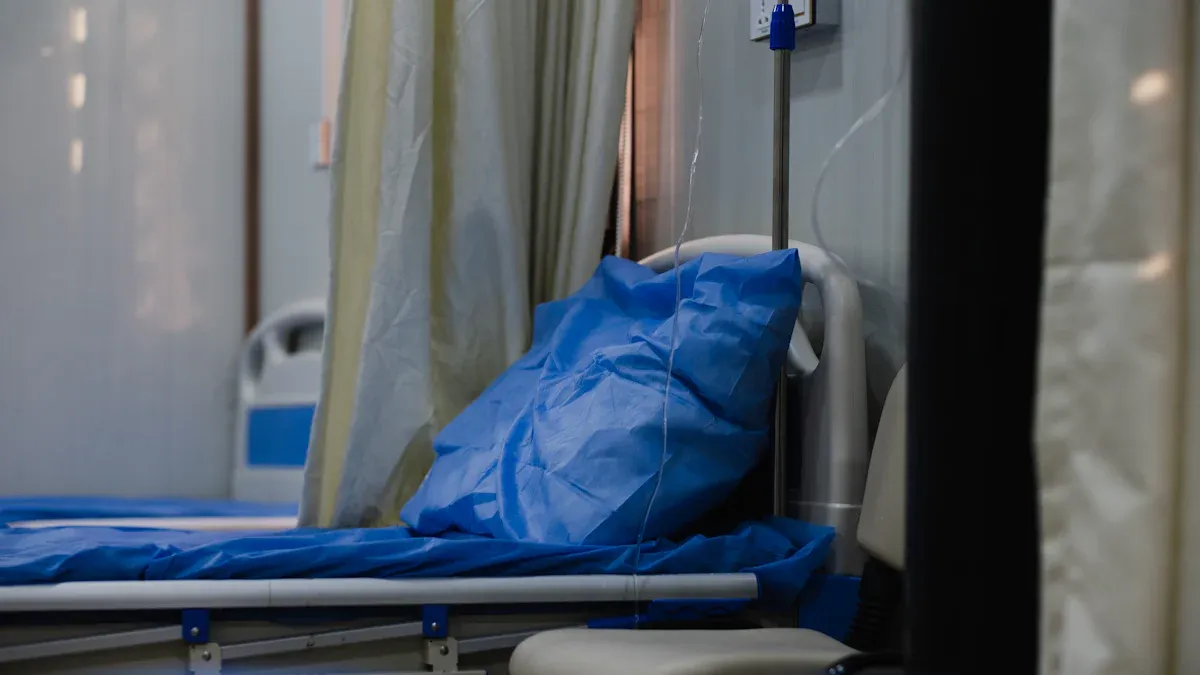
A leading hospital improved patient safety by switching from traditional hospital curtainoptions to Disposable curtains. Staff noticed fewer infections after the change.Disposable cubicle curtains, a type of medical curtain, helped address ongoing risks. Clinical curtains like these provide a practical solution for infection control.
Key Takeaways
- Traditional hospital curtains often carry harmful bacteria that can cause infections, making frequent cleaning difficult and ineffective.
- Disposable curtains reduce infection risks by allowing quick replacement, saving staff time and lowering ongoing costs without laundering.
- The hospital saw fewer infections and improved workflow after switching to disposable curtains, but also addressed new waste challenges with sustainable practices.
Disposable Curtains: Addressing Infection Control Challenges
Infection Risks with Traditional Hospital Curtains
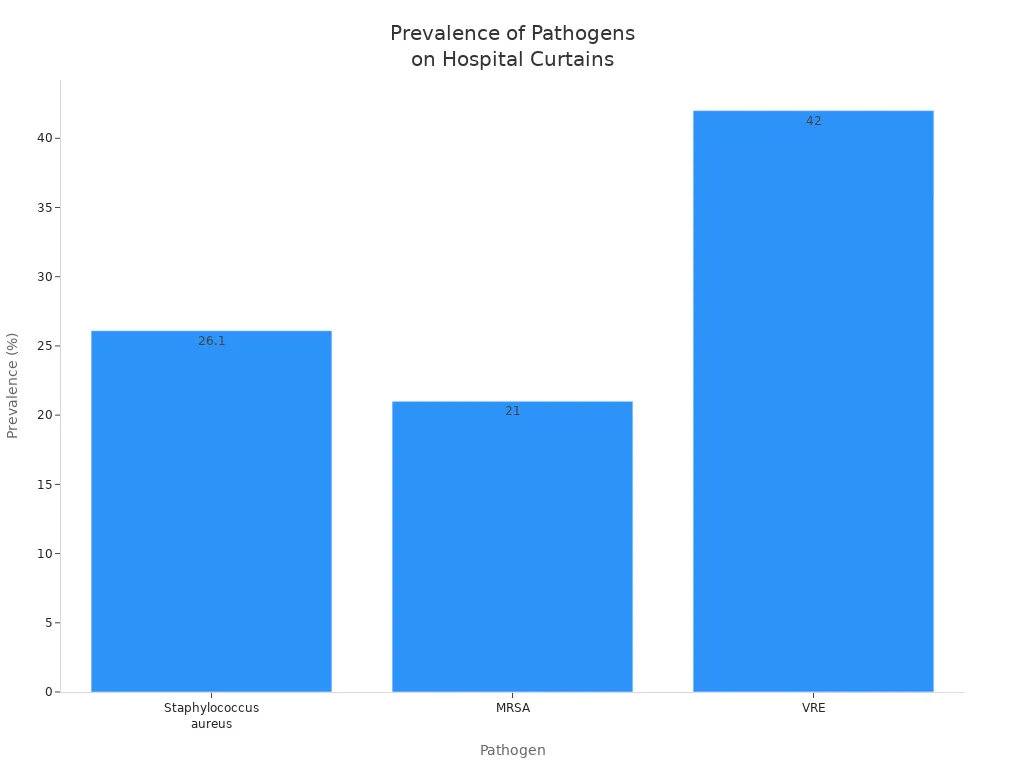
Traditional hospital curtains present a significant infection control challenge. Studies show that these curtains become rapidly contaminated with healthcare-associated pathogens. Within one week, 92% of newly placed curtains test positive for at least one pathogen. The following table highlights the most common pathogens found on hospital curtains:
| Pathogen | Prevalence on Curtains (%) | Notes on Contamination and Persistence |
|---|---|---|
| Staphylococcus aureus | 26.1% | Detected in 47 of 180 cultures; rapid contamination after curtain placement |
| Methicillin-resistant S. aureus (MRSA) | 21% | Found on 21% of curtains; persistence and recontamination confirmed by PFGE typing |
| Enterococcus species | Not explicitly quantified | Includes vancomycin-resistant enterococcus (VRE) found on 42% of curtains |
| Vancomycin-resistant enterococcus (VRE) | 42% | Multiple time points contamination; persistence and recontamination observed |
| Aerobic gram-negative rods | Not explicitly quantified | Detected by standard microbiologic methods |
| Clostridium difficile spores | Not quantified in this study | Known to persist on curtains; resistant to some biocidal treatments |
Research links contaminated curtains to outbreaks of hospital-acquired infections. For example, one study found that 87.5% of privacy curtains in a burn unit tested positive for MRSA by day 14, even when no patients had MRSA. Healthcare workers can transfer bacteria from curtains to their hands, increasing the risk of cross-contamination. Traditional curtains are typically laundered once a month, but high-risk areas require more frequent cleaning. Despite these efforts, frequent recontamination remains a problem.
Why the Hospital Chose Disposable Curtains
The hospital selected disposable curtains to address these persistent risks. Several factors influenced this decision:
- Disposable curtains reduce cross-contamination risk because staff replace them after each use.
- Quick installation saves staff time, especially in high-infection zones like ICUs.
- Minimal maintenance is required, eliminating the need for laundering and rehanging.
- Lower upfront costs and no laundering expenses make them cost-effective in high-risk areas.
- Antimicrobial properties and colorful designs create a welcoming environment for patients.
Note: Disposable curtains offer a practical solution for infection control, supporting both operational efficiency and patient safety.
Implementation and Results of Disposable Curtains
Steps for Introducing Disposable Curtains
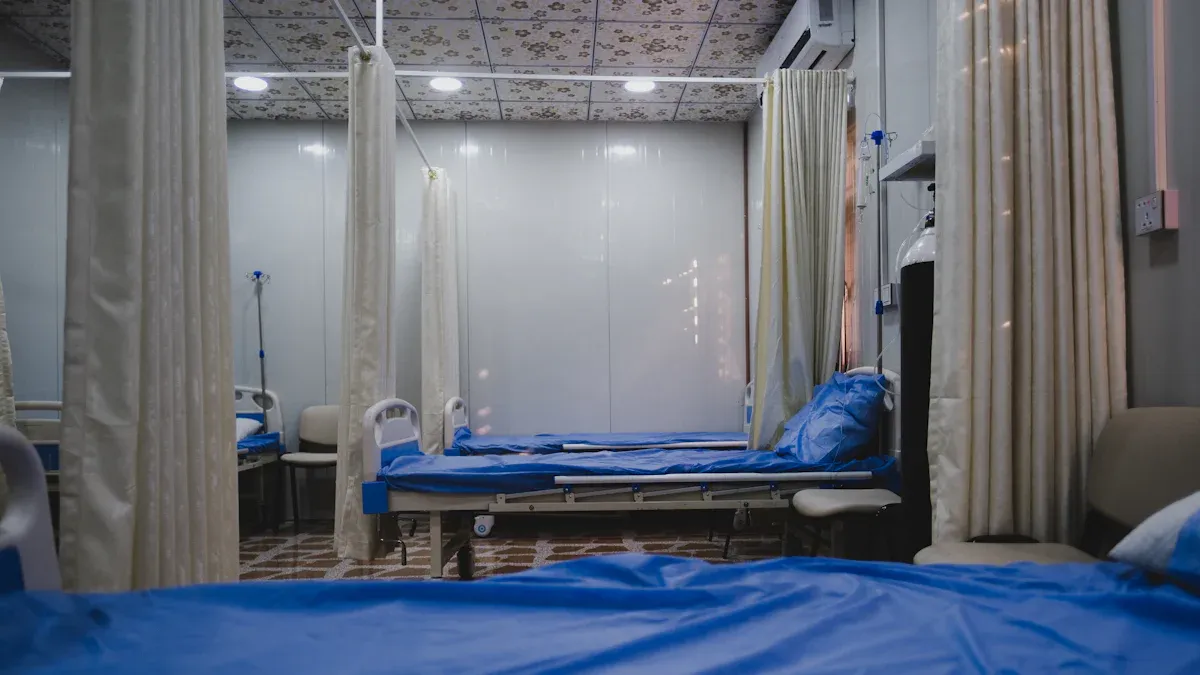
The hospital began the transition by assessing existing curtain tracks and retrofitting them to accommodate disposable curtains. Facility managers created a replacement schedule tailored to each department. For example, staff replaced curtains in intensive care units monthly, while general patient rooms followed a six-month schedule. The hospital updated administrative policies to align with infection control standards and regulatory requirements.
To streamline the process, the hospital adopted quick-change systems and tracking methods, such as QR codes and RFID tags. These technologies improved efficiency and ensured compliance with replacement schedules. Eliminating laundering reduced labor and resource demands, but the hospital also addressed new waste management challenges.
Tip: Hospitals considering a similar transition should evaluate long-term performance, antimicrobial technology, change-out efficiencies, sustainability, cost, and curtain placement before making a decision.
Staff Training and Operational Logistics
Hospital leadership recognized that proper staff training was essential for maintaining hygiene and safety. Staff received education on the correct use and disposal of disposable curtains. Training emphasized sustainable disposal practices and environmental standards. The hospital also included staff education as part of efforts to reduce waste and maintain compliance with infection control protocols.
- Hospitals provided formal training on sustainable disposal of disposable curtains.
- Staff learned new installation, removal, and disposal procedures.
- Training programs included evaluation of suppliers and tracking reductions in contamination and costs.
- Education addressed responsible disposal and environmental impacts.
Operationally, the hospital updated policies to reflect new procedures. Staff adapted quickly to the new workflow, aided by the simplicity of the quick-change curtain systems. The hospital also integrated continuous improvement frameworks to regularly assess and enhance sustainability efforts.
Infection Rate Reduction and Measurable Impact
After implementing disposable curtains, the hospital observed a measurable reduction in hospital-acquired infection rates. The risk of cross-contamination decreased because staff replaced curtains more frequently and eliminated the need for laundering. This change led to indirect cost savings related to improved hygiene and fewer infections.
A comparison of cost factors highlights the benefits:
| Factor | Traditional Curtains | Disposable Curtains |
|---|---|---|
| Upfront Cost | Lower | Higher |
| Ongoing Costs | Laundering, repairs, replacement | Minimal (no laundering) |
| Infection Risk | Higher (due to recontamination) | Lower (frequent replacement) |
| Waste Management | Less complex | More complex |
| Environmental Impact | Lower (if laundered sustainably) | Higher (single-use plastics) |
The hospital also noted that eliminating laundering reduced labor and resource demands. However, the increase in medical waste required new strategies for responsible disposal. The hospital explored waste-to-energy technologies and collaborated with suppliers who prioritized sustainable materials.
Staff and Patient Perspectives
Staff reported that disposable curtains improved workflow and reduced the time spent on curtain changes. Quick-change systems allowed for efficient replacement, especially in high-turnover areas. Staff also appreciated the reduction in infection risk and the clarity of new protocols.
Patients noticed the clean appearance and frequent replacement of curtains. Many felt reassured by the hospital’s commitment to infection control. Some staff expressed concerns about the environmental impact of increased waste, but ongoing education and sustainability initiatives addressed these issues.
Note: The hospital recommends that other institutions consider a mixed approach, using both washable and disposable curtains based on specific departmental needs. This strategy optimizes performance, cost, and infection control.
Disposable Curtains played a key role in lowering hospital-acquired infections.
- Hospitals saw improved workflow and patient safety.
- Facilities reported easier compliance with hygiene standards.
While Disposable Curtains reduce contamination, experts recommend combining them with regular cleaning and antimicrobial materials for best results.
FAQ
How often should hospitals replace disposable curtains?
Hospitals typically replace disposable curtains every four to six months. High-risk areas, such as ICUs, may require more frequent changes to maintain infection control.
Do disposable curtains offer antimicrobial protection?
Many disposable curtains feature antimicrobial coatings. These coatings help reduce the growth of bacteria and support infection prevention efforts in clinical environments.
Are disposable curtains environmentally friendly?
Most disposable curtains use single-use plastics. Some manufacturers now offer recyclable or biodegradable options. Hospitals should evaluate sustainability features before purchasing.
