

 Send Email
 whatsapp


Disposable mop pads: Why you should use it?

I always choose a Microfiber Disposable Mop when I want my floors to look spotless. With mop disposable pads, I avoid spreading germs. I use a Disposable Floor Mopin my kitchen and ahospital disposable mop in clinics. Medical disposable mops help me maintain a clean environment every day.
Key Takeaways
- Disposable microfiber mop pads remove up to 99.99% of harmful microbes and prevent germs from spreading by using a fresh pad for each room.
- These pads save time and effort by cleaning faster, being lightweight, and eliminating the need to wash or dry after use.
- They work safely on many floor types and with most cleaning agents, delivering strong cleaning results without damaging surfaces.
How Microfiber Disposable Mop Pads Work
What Makes Them Different from Reusable Pads
When I use a Microfiber Disposable Mop, I notice a big difference compared to reusable pads. The Disposable Pads use 100% synthetic microfiber with very fine fibers. This design helps them trap and lock in dirt, dust, and even tiny microbes. I find that these pads remove up to 99.99% of harmful microbes, while reusable pads often leave more behind. The single-use design means I never worry about spreading germs from one room to another. After cleaning, I simply throw the pad away, which stops cross-contamination.
I appreciate how these pads hold and distribute more liquid than most reusable options. Each pad covers a large area, so I clean faster and more efficiently. The pads do not neutralize disinfectants, so I know my cleaning agents work as intended. I also like that the pads do not shed lint or retain bacteria after use.
Here is a quick comparison:
| Aspect | Disposable Microfiber Mop Pads | Reusable Pads / Traditional Methods |
|---|---|---|
| Microbial Removal | Removes up to 99.99% of harmful microbes | About 33% microbial reduction |
| Infection Rate Impact | 20% reduction in C. difficile infections | No comparable reduction |
| Cleaning Time (10 rooms) | 40 minutes | 90 minutes |
| Labor Efficiency | 23,000 sq ft per hour | 5,000 sq ft per hour |
| Bacterial Removal | About 90% on bathroom floors | Less than 10% |
Types of Microfiber Disposable Mop Pads
I have used several types of Microfiber Disposable Mop pads. Some are designed for wet cleaning, while others work best for dry dusting. Many pads fit flat mop frames and attach easily with hook and loop systems. I use pads made for hardwood, tile, vinyl, and even stone floors. These pads absorb spills quickly and pick up fine dust and debris.
Some pads have spinning wire edges to prevent hair loss, which keeps my floors cleaner. I choose single-use pads for sensitive areas like hospitals, gyms, and restrooms. The pads always fit securely and remove easily after use. I like that they work with many cleaning solutions and do not damage the pad or the floor. The high absorbency and strong cleaning power make them ideal for both home and professional settings.
Key Benefits of Microfiber Disposable Mop Pads

Superior Hygiene and Cross-Contamination Prevention
When I clean with a Microfiber Disposable Mop, I notice a big improvement in hygiene. I use a fresh pad for each room, which helps me stop germs from spreading. Hospitals and clinics trust this method because it reduces the risk of infection. I have seen studies that show microfiber materials can remove up to 99% of bacteria, while regular mops only remove about 30%. This difference matters, especially in places where cleanliness is critical.
Here is a table that shows how effective these cleaning systems are:
| Evidence Aspect | Details |
|---|---|
| Study Institution | University of California Davis Medical Center |
| Key Finding | Micro-fiber materials reduced bacteria by 99% vs. 30% reduction by conventional cleaning tools |
| Cross-contamination Prevention Method | One mop per room policy prevents reuse of contaminated mops |
| Impact | Improved infection control, reduced hospital-acquired infections (HAIs) |
I also read about tests comparing new and laundered mop pads. Both types showed a significant reduction in microbial counts compared to untreated controls, with no major difference between them. This means that using a new disposable pad each time keeps cleaning results consistent and safe.
Convenience and Time Savings
I always look for ways to save time when I clean. Microfiber Disposable Mop pads help me finish my chores faster. I do not need to wash or dry the pads after each use. I just throw them away and grab a new one. This makes my cleaning routine much easier.
- I spend less time cleaning floors compared to traditional mops.
- The pads are lightweight, so I do not feel tired or strained after cleaning.
- I have heard from an elderly couple who switched to smart mops and now clean pain-free.
- A busy friend of mine saves more free time by using these pads, finishing chores quickly.
- Some mops even let me set cleaning schedules or choose different cleaning modes.
Tip: If you want to make cleaning less of a chore, try using disposable pads. They help you clean more rooms in less time and keep your hands away from dirty water.
Compatibility with Cleaning Agents and Surfaces
I use Microfiber Disposable Mop pads on many types of floors, including hardwood, tile, and vinyl. I never worry about damaging the surface because these pads work well with most cleaning agents. I always check the manufacturer’s instructions to make sure the cleaning solution is safe for my floor.
Here is a table that shows how different cleaning products are tested for safety and effectiveness:
| Product Type | Testing or Guideline Description | Reference Test Method or Requirement |
|---|---|---|
| Metal Cleaning Products | Must achieve a Cleaning Effectiveness Factor (CEF) ≥ 0.80 | ASTM G122 |
| Oven Cleaning Products | Must remove at least 90% soil using test soils A or B | CSPA DCC-12 |
| Upholstery Cleaning Products | Tested for cleaning efficiency and resoiling resistance | Section 6.2 Alternative Performance Requirements |
| Spray Packaging Products | Must not contain fungal/mold species; airborne microorganism limits apply | A.I.S.E. Spray Protocol (2020) |
I always follow the instructions on the label for best results. This helps me avoid any problems with my floors or cleaning tools.
High Cleaning Performance
I trust Microfiber Disposable Mop pads because they deliver strong cleaning results every time. When I use them, I see less residue left behind compared to reusable pads. In tests, disposable pads had almost five times less leftover contamination than laundered mops. They also keep disinfectant levels steady, so I know my floors are truly clean.
A recent study showed that disposable mops achieved an average decontamination rate of 99.58%. This is almost the same as non-disposable mops, but with the added benefit of avoiding cross-contamination. I also learned that microfiber technology removes up to 96% of surface bacteria and cleans four times faster than cotton rags. The ergonomic design lets me cover more area quickly, which boosts my productivity and keeps my home or workplace safe.
Note: Disposable microfiber pads keep their cleaning power because they do not go through repeated laundry cycles. This means I get reliable results every time I clean.
Cost, Environmental Impact, and Best Use Cases
Cost Considerations
When I compare cleaning tools, I look at both the price and long-term savings. Microfiber Disposable Mop pads help me save money in several ways:
- I use less water and fewer chemicals than with cotton mops, which lowers my supply costs.
- Newer microfiber technologies clean more efficiently, so I replace pads less often.
- Polyester microfiber pads fit my budget and last longer than many alternatives.
- Many businesses choose microfiber pads because they clean large areas quickly, saving on labor costs.
Market research shows that more people now use microfiber mops because they work well and help save money over time. Even though I do not see direct cost studies for disposable pads, I notice that their popularity keeps growing in hospitals and offices.
Environmental Impact
I care about the environment, so I check how my cleaning choices affect the planet. Here is a table that compares disposable and reusable cleaning tools:
| Impact Metric | Disposable Paper Towels | Microfiber Reusable Cloths |
|---|---|---|
| Raw Material | Wood pulp (virgin) | Synthetic fibers |
| Water Usage | Very high (~2,500+ L/kg) | Much lower (~80 L/kg) |
| Energy Use | High | Medium |
| Waste Output | Single-use, non-recyclable | Recyclable at end of life |
| Lifespan | Single-use | 300–500 washes |
I see that reusable microfiber cloths reduce waste and use fewer resources. One cloth can replace about 1,500 paper towels. Many companies now prefer reusable options to meet sustainability goals.
Ideal Settings for Microfiber Disposable Mop Pads
I find that Microfiber Disposable Mop pads work best in places where hygiene matters most. Here are some examples:
- Hospitals and clinics use strict sorting and color-coding to prevent cross-contamination.
- Operating rooms benefit from microfiber pads combined with steam cleaning for top results.
- Accredited healthcare laundries keep high standards, making disposable pads very effective.
- Any setting with strict cleaning protocols, like gyms or schools, sees better results with disposable pads.
Tip: Use disposable pads in areas where infection control and cleanliness are critical.
I trust disposable microfiber mop pads for their cleaning power and hygiene. Studies show these pads leave fewer bacteria on floors than cotton mops. I see the difference in my own cleaning results. The chart below highlights how well these pads perform in reducing bacteria.
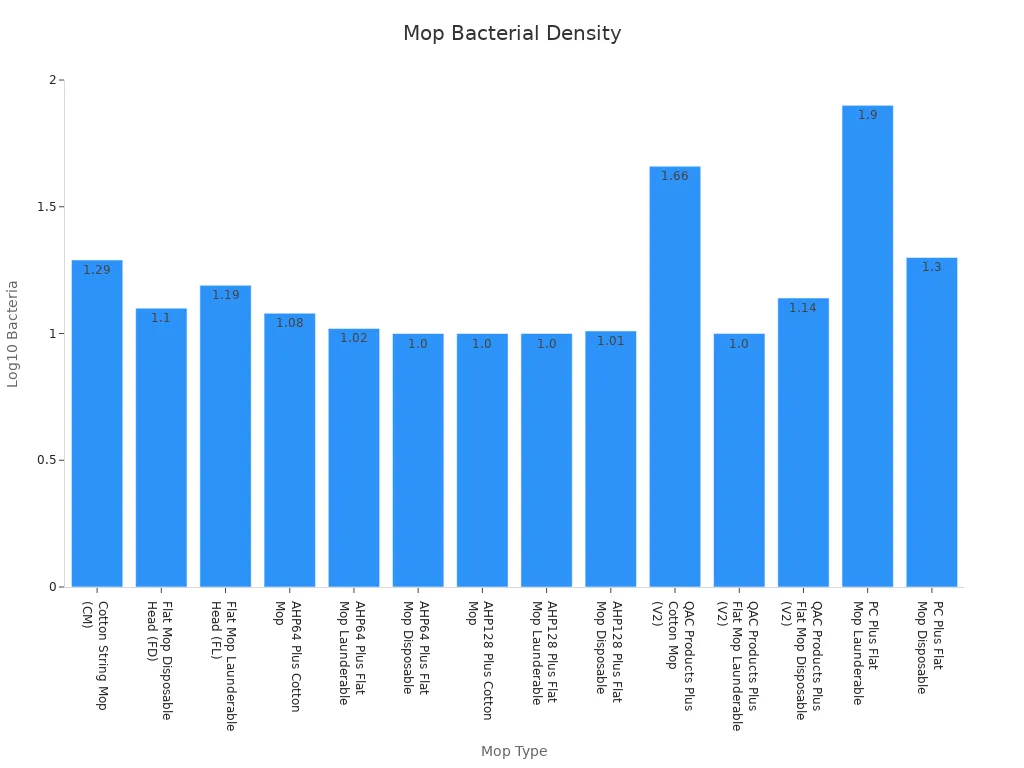
| Mop Type / Combination | Mean Log10 Bacterial Density (± SD) | Statistical Significance |
|---|---|---|
| Cotton String Mop (CM) | 1.29 ± 0.45 | Significantly higher bacteria than disposable flat mop (P = 0.0062) |
| Flat Mop Disposable Head (FD) | 1.10 ± 0.29 | No significant difference vs launderable flat mop (P = 0.2140) |
| Flat Mop Launderable Head (FL) | 1.19 ± 0.47 | - |
| AHP64 + Cotton Mop | 1.08 ± 0.14 | Comparable to flat mops with AHP64 (P = 0.2457) |
| AHP64 + Flat Mop Launderable | 1.02 ± 0.09 | - |
| AHP64 + Flat Mop Disposable | 1.00 ± 0.00 | - |
| AHP128 + Cotton Mop | 1.00 ± 0.00 | Comparable to flat mops with AHP128 (P = 0.3282) |
| AHP128 + Flat Mop Launderable | 1.00 ± 0.00 | - |
| AHP128 + Flat Mop Disposable | 1.01 ± 0.05 | - |
| QAC-based Products + Cotton Mop (V2) | 1.66 ± 0.68 | Higher bacteria than flat mops (P = 0.2113) |
| QAC-based Products + Flat Mop Launderable (V2) | 1.00 ± 0.00 | - |
| QAC-based Products + Flat Mop Disposable (V2) | 1.14 ± 0.27 | - |
| PC + Flat Mop Launderable | 1.90 ± 0.69 | Significantly higher bacteria than disposable flat mop (P = 0.0262) |
| PC + Flat Mop Disposable | 1.30 ± 0.54 | Lower bacteria than launderable flat mop (P = 0.0210) |
I recommend these pads for anyone who wants a reliable, sanitary, and easy way to keep floors clean.
FAQ
How often should I change disposable mop pads?
I change the pad after cleaning each room or area. This helps me prevent germs from spreading and keeps my floors as clean as possible.
Can I use disposable mop pads with any cleaning solution?
I always check the label first. Most disposable pads work with common cleaning agents. I avoid bleach unless the manufacturer says it is safe.
Are disposable mop pads safe for all floor types?
I use them on hardwood, tile, and vinyl. I test a small spot first to make sure the pad does not scratch or damage my floor.
