

 Send Email
 whatsapp


How Disposable Microfiber Mop Pads Help Prevent Healthcare-Associated Infections (HAIs)

I trust Disposable Microfiber mop pads in my daily cleaning routine because they trap and remove harmful germs. I use adisposable mop to keep each area safe. Medical disposable mops and disposable mop heads help me stop germs from moving between rooms. Patient safety matters most.
Key Takeaways
- Disposable microfiber mop pads trap and remove up to 99.99% of harmful germs, helping stop the spread of infections in healthcare settings.
- Using a new disposable pad for each room prevents cross-contamination, ensuring every cleaning starts fresh and safe.
- These pads save time and money by eliminating laundry needs, improving cleaning efficiency, and supporting strict infection control standards.
Why Disposable Microfiber Mop Pads Are Effective Against HAIs
How Microfiber Technology Removes Pathogens
I trust microfiber technology because it uses extremely fine fibers, much thinner than a human hair. These fibers, made from polyester and polyamide, trap and hold bacteria, viruses, and spores. When I clean with Disposable Microfiber Mop Pads, I see how the dense fibers pick up germs instead of just moving them around. Scientific studies show that microfiber can remove up to 98% of bacteria and 93% of viruses from surfaces using only water. Cotton mops, by comparison, remove only about 30% of bacteria and 23% of viruses. I always combine microfiber pads with the right cleaning agents to boost their effectiveness. This combination helps me reduce the risk of spreading dangerous pathogens in patient rooms and high-touch areas.
Note: Microfiber’s high absorbency and quick drying properties also help prevent microbial growth, making it a reliable choice for infection control.
Single-Use Design and Cross-Contamination Prevention
I rely on Disposable Microfiber Mop Pads because their single-use design gives me confidence that I am not spreading germs from one room to another. Each time I use a new pad, I know I am starting with a clean, hygienic tool. Laboratory tests show that these pads remove at least 99.93% of microorganisms, including tough bacteria and spores, even when I use only water. I have seen studies where 27% of laundered mop heads still carried pathogens, which worries me. Washing reusable pads does not always remove all germs and can damage the fibers, making them less effective over time. Disposable Pads solve this problem by ensuring every cleaning session starts fresh.
Here are some key benefits I have noticed:
- Each pad is used once, so there is no risk of carrying germs between rooms.
- The pads do not retain bioburden or spores, which means pathogens do not get a second chance to spread.
- Synthetic microfiber material keeps its scrubbing power and absorbency, even after heavy use.
- I can use these pads with disinfectants without worrying about losing cleaning strength.
| Evidence Aspect | Supporting Detail |
|---|---|
| Microbial Removal Efficiency | Removes ≥99.9% of microbes including VRE, C-DIFF, MRSA, E-Coli, TAC using water alone |
| Single-Use Design | Each use employs a new hygienic pad, eliminating cross-contamination risks |
| Bioburden and Spore Retention | Does not retain bioburden or spores, preventing pathogen carryover |
| Compatibility with Disinfectants | Does not neutralize disinfectants, maintaining cleaning efficacy |
| Material Properties | Synthetic microfiber inhibits microorganism growth, maintains scrubbing power |
| Application Settings | Used in hospitals, cleanrooms, laboratories, and other critical environments |
Consistent Cleaning Results and Compliance
I have found that Disposable Microfiber Mop Pads deliver consistent cleaning results every time. High-density microfiber traps more bacteria and dirt, achieving up to 98% bacterial and 93% viral removal with just water. This performance helps me meet the strict hygiene standards required in hospitals. I follow protocols that include using sterile, lint-free disposable mop covers and changing pads regularly. These steps help me comply with ISO, cGMP, USP, and FDA standards.
Studies show that using disposable cleaning products improves compliance among staff. When everyone uses a fresh pad for each room, we reduce the risk of cross-contamination and support infection control policies. The CDC has reported a 20% reduction in C. difficile infection rates in hospitals that improved their cleaning practices with tools like Disposable Microfiber Mop Pads. I have seen firsthand how these pads help my team maintain high standards and protect patients from healthcare-associated infections.
Practical Benefits of Disposable Microfiber Mop Pads in Healthcare
Supporting Infection Control Protocols
I follow strict infection control protocols every day. Disposable Microfiber Mop Pads help me meet these standards. They remove microbes and contaminants from hospital floors and surfaces. I use a fresh pad for each room, so I never worry about spreading germs. These pads work well with hand hygiene, PPE, and equipment disinfection. I see high removal rates for dangerous bacteria like C. difficile and MRSA. My hospital stays cleaner and safer because of these pads.
- Superior cleaning removes up to 99.97% of MRSA and 99.91% of C. difficile.
- Single-use design stops cross-contamination.
- No lint or residue left behind, meeting hospital standards.
Improving Staff Efficiency and Workflow
I notice my cleaning tasks go faster with disposable pads. I do not spend time laundering mop heads. My team uses a new pad for each area, which keeps our workflow smooth. We finish cleaning jobs quickly and avoid mistakes. The pads work with many disinfectants, so we keep high-risk areas like operating rooms safe.
- No laundry needed, so I focus on cleaning.
- Consistent cleaning results every time.
- Simple protocols make training easier for new staff.
Cost-Effectiveness and Reducing HAI-Related Expenses
I see cost savings in my facility. We spend less on laundry and avoid costs from healthcare-associated infections. When we prevent infections, we reduce patient treatment expenses and keep our hospital running smoothly.
| Benefit | Impact |
|---|---|
| Less laundry | Lower utility and labor costs |
| Fewer infections | Reduced patient care expenses |
| Reliable performance | Fewer workflow disruptions |
Environmental and Safety Considerations
I care about the environment and safety. Disposable Microfiber Mop Pads use less water and chemicals. I do not need buckets or wringers, which lowers injury risks. Studies show these pads remove over 99% of microbes with just water. In high-risk areas, single-use pads keep everyone safer by stopping cross-contamination.
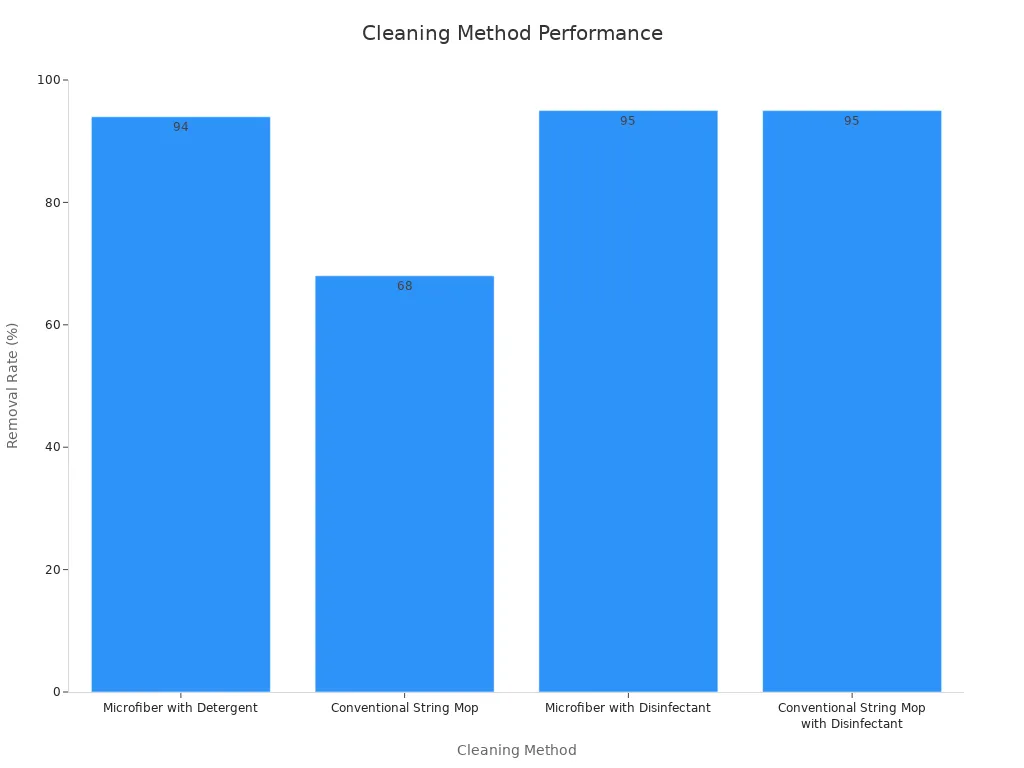
Note: While reusable mops create less waste, I choose disposable pads in critical areas to protect patients and staff.
I trust Disposable Microfiber Mop Pads to keep my hospital safe. These pads remove up to 99.99% of harmful microbes and stop cross-contamination. I see fewer infections and faster cleaning. Research shows disposable pads work better than laundered mops and help me meet infection control standards every day.
- Studies confirm disposable pads provide a fresh, uncontaminated surface for each use.
- CDC guidelines and hospital reports support their role in reducing infection rates.
FAQ
How often should I change disposable microfiber mop pads?
I always use a new pad for each room or area. This practice helps me prevent cross-contamination and keeps every space as clean as possible.
Can I use disposable microfiber mop pads with disinfectants?
Yes, I use these pads with most hospital-grade disinfectants. The microfiber material does not lose cleaning power or neutralize the disinfectant.
Tip: Always check the disinfectant label for compatibility with microfiber.
Are disposable microfiber mop pads safe for all floor types?
I trust these pads on tile, vinyl, and sealed wood floors. They do not scratch surfaces or leave lint behind.
- Safe for most hospital floors
- No residue left after cleaning
