

 Send Email
 whatsapp


Innovative Cleanroom Cleaning Mop Improves Hygiene and Efficiency in Controlled Environments

Advanced solutions are critical for cleanroom integrity. The cleanroom technology market, valued at $7.69 billion in 2024, continues its significant expansion. 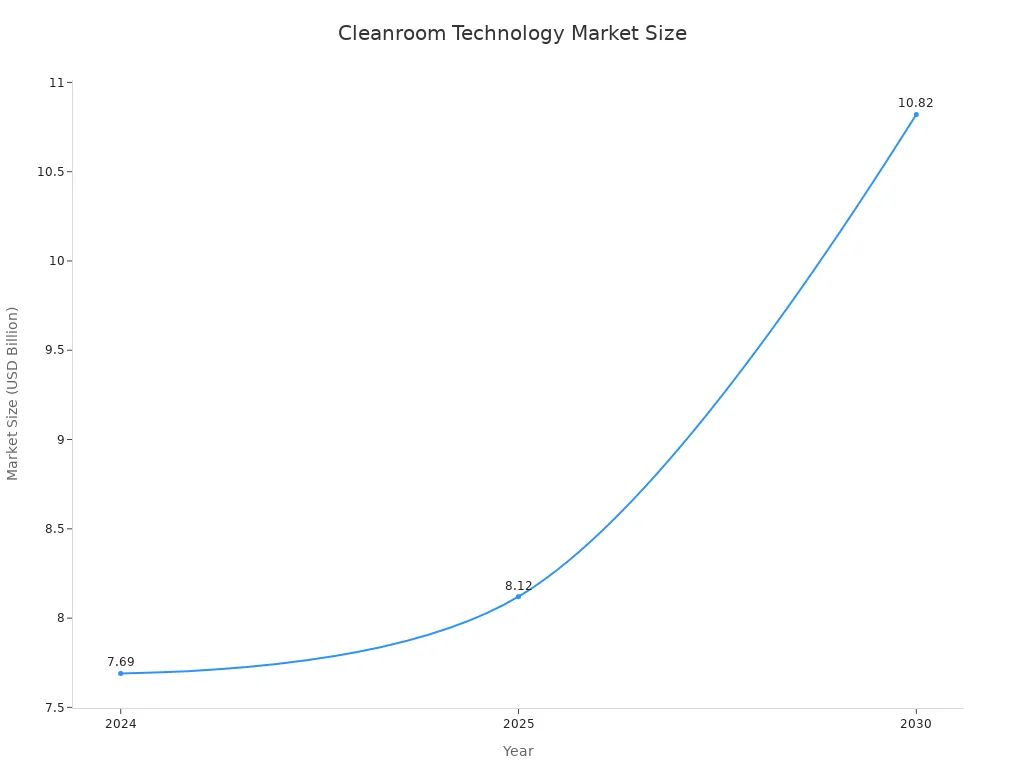 This growth highlights the demand for effective tools. A new generation of Cleanroom cleaning mop directly addresses contamination challenges. Innovativecleanroom mops, including specialized nonwoven cleanroom mops and medical cleanroom mops, offer superior performance. These advanced floor cleanroom mops feature an optimized cleanroom mop head, defining their excellence.
Key Takeaways
- New cleanroom mopsstop dirt from spreading. They use special materials and designs. This keeps cleanrooms very clean.
- These mops are easy to use. They help workers clean faster and with less effort. This makes cleaning more effective.
- The mops use disposable parts. This means each cleaning starts fresh. It stops germs from moving around.
Addressing Cleanroom Contamination with Advanced Mops

Limitations of Traditional Cleanroom Cleaning Mops
Traditional cleaning tools often present significant challenges in controlled environments. Traditional mops, for instance, can shed particles, inadvertently introducing contamination rather than solely removing it. This means the cleaning process itself can increase particle counts within a cleanroom if not executed correctly. Furthermore, traditional mops require human operation. Personnel are a significant source of contamination in cleanrooms due to particle shedding and the potential for human error. This contrasts sharply with autonomous robotic cleaners, which minimize human-induced contamination.
The Impact of Contamination on Controlled Environments
Contamination in cleanrooms carries substantial financial and regulatory consequences. In pharmaceutical cleanrooms, contamination, often from insufficient airflow or inappropriate finishes, directly leads to lost batches, reduced revenue, and potential product recalls. A 2012 industry study indicated that fixing complex failures can range from approximately $100,000 to over $2 billion for a consent decree. Regulatory fines and legal issues also arise; a pharmaceutical company might recall an entire product line for failing sterility assurance levels. For example, mold contamination in one cleanroom resulted in $18.2 million in criminal and civil penalties.
The semiconductor industry also faces stringent regulatory pressures. The EPA has established strict limits for PFOS and PFOA in drinking water, setting legal thresholds as low as 4 parts per trillion (ppt). By 2029, compliance with these thresholds is mandatory, necessitating advanced treatment solutions. The EPA also proposed designating PFOA and PFOS as hazardous substances under CERCLA in 2023. This designation would empower the agency to enforce cleanups and recover costs from responsible parties. Testing data from a U.S. semiconductor plant in 2022 revealed PFAS concentrations as high as 78,000 ppt in wastewater streams, significantly exceeding regulatory limits. This highlights the immense challenge for the semiconductor industry in managing PFAS-laden wastewater.
The Need for a Specialized Cleanroom Cleaning Mop
The inherent limitations of traditional cleaning methods and the severe repercussions of contamination underscore a critical need. Controlled environments require specialized tools that actively prevent contamination rather than contribute to it. An innovative Cleanroom Cleaning Mop offers a solution, designed to meet the rigorous demands of these sensitive settings. It addresses the shortcomings of conventional mops, ensuring superior hygiene and operational integrity.
Key Innovations in Cleanroom Cleaning Mop Design
Modern cleanroom operations demand more than basic cleaning tools. Manufacturers now develop specialized mops with advanced features. These innovations directly address the stringent requirements of controlled environments. They focus on contamination control, user efficiency, and superior cleaning performance.
Disposable and Sterile Cleanroom Cleaning Mop Systems
Disposable and sterile mop systems represent a significant leap in cleanroom hygiene. These systems prevent the transfer of microbes between different areas. Each cleaning session begins with a fresh, uncontaminated tool. This practice is crucial in high-risk environments. Unlike reusable mops, which can harbor bacteria and fungi, disposable pads ensure enhanced hygiene. They support stringent protocols and reduce the risk of healthcare-associated infections.
Scientific studies show that reusable laundered microfiber mops can retain disinfectant and detergent residues. These residues may inactivate disinfectant chemicals, such as quaternary ammonium compounds. Disposable microfiber mops, especially those made from polyester fibers, show minimal quat binding. This maintains disinfectant activity more effectively. Their single-use nature and low-linting properties also reduce cross-contamination risks. These systems provide a sterile mop head for each cleaning session. This significantly reduces potential contamination from previously used equipment. Such solutions help industries like pharmaceuticals, medical devices, and electronics meet strict hygiene and safety standards. This includes ISO, GMP, and FDA requirements, mitigating non-compliance penalties.
Ergonomic Features for Operator Efficiency
Operator fatigue can compromise cleaning effectiveness and efficiency. Innovative cleanroom mops incorporate ergonomic designs to address this issue. The ZeroGravity™ Score Mop Kit, for example, features a lightweight, ergonomic system. This design reduces operator fatigue, enhancing both efficiency and comfort during extended use. Its ZeroGravity™ Score Mop Handle provides proper ergonomics and safe mopping motion. It includes a camlock function for adjustable height, fitting various operators.
Similarly, the Valutek Butterfly Mop System reduces operator fatigue through its lightweight design. It features a low-profile aluminum swivel head and an adjustable stainless-steel handle. This design ensures effortless maneuverability. It particularly helps in hard-to-reach areas like corners, ceilings, and walls. These areas are often challenging with heavier, cumbersome mops. Other ergonomic elements further improve cleaning efficiency. Lightweight hardware ensures tasks are done efficiently with minimal strain. Maneuverability facilitates cleaning under and around equipment. Extendable handles eliminate the need for users to stretch for distant corners. Adjustable tools allow customization of equipment to individual comfort levels, preventing repetitive strain. Improved safety features, such as anti-slip grips and ergonomic handles, also minimize accident risk.
Enhanced Material Science in Cleanroom Cleaning Mop Heads
The material science behind cleanroom mop heads has also advanced significantly. Microfiber mop heads enhance cleaning performance through their specialized design. This design includes a textured, ribbed fabric over a Sahara foam core. Often, additional strips of Sahara foam are incorporated. This construction specifically engineers the mop head to improve cleaning effectiveness. It also ensures an even application of disinfectants. Such mops are particularly useful for intensive cleaning tasks. They effectively strip heavy soils and residues from various surfaces, including floors, walls, and stainless steel. The advanced materials ensure low particle shedding and high absorbency. This makes them ideal for maintaining ultra-clean environments. The innovative Cleanroom Cleaning Mop leverages these material advancements for superior results.
Achieving Superior Hygiene and Operational Efficiency with the Innovative Cleanroom Cleaning Mop

Reducing Cross-Contamination Risks
An innovative Cleanroom Cleaning Mop plays a pivotal role in significantly reducing cross-contamination risks within controlled environments. These advanced tools actively prevent the spread of contaminants. Esun Cleanroom Cleaning Mops, utilizing advanced microfiber materials, eliminate up to 99.7% of pathogens. Disposable mop pads achieve an average decontamination efficacy of 99.58%. Non-disposable options reach an impressive 99.86% decontamination efficacy. Microfiber pads remove up to 98% of bacteria.
The Esun mop's design enhances cleaning efficiency and reduces cross-contamination risks. Microfiber laminated versions effectively remove hardened biofilms and disinfectant residues. The mop's microfiber design effectively traps dirt, dust, and bacteria, ensuring a deeper clean. Residue-free cleaning capability minimizes the need for harsh chemicals, maintaining cleanliness. Utilizing water-only cleaning methods, the Esun mop maintains low particle counts, suitable for cleanroom settings.
Furthermore, specialized designs minimize particulate transfer between zones. The Vileda MI Duo Plus mop, designed for single-use, minimizes cross-contamination between controlled zones. This ensures a fresh mop for each area, crucial in sensitive environments. The Kingmax Microfiber Twist Loop Mop Pad features durable stitching or a polytape border. Optional color coding helps reduce cross-contamination by designating specific mops for different areas. Robust washability at high temperatures ensures hygiene and maintains fiber performance, further minimizing particulate transfer.
Streamlining Cleaning Protocols and Workflow
Innovative mop designs significantly streamline cleaning protocols and workflow. Their ergonomic features, combined with advanced materials, allow operators to complete tasks faster. The lightweight nature and maneuverability of these mops reduce physical strain. This translates into less time spent on cleaning cycles and more consistent results. Disposable systems eliminate the need for laundering and re-sterilization of mop heads. This saves valuable time and resources. The superior cleaning performance of microfiber means fewer passes are necessary to achieve desired cleanliness levels. This directly contributes to increased operational efficiency within the cleanroom. Standardized procedures become easier to implement and maintain with these specialized tools. Ultimately, an innovative Cleanroom Cleaning Mop becomes a critical asset for maintaining both hygiene and productivity.
The innovative Cleanroom Cleaning Mop represents a strategic investment. It delivers enhanced hygiene and significant operational gains. This tool ensures superior contamination control and efficiency. Cleanroom maintenance technology will continue to evolve, further optimizing these critical environments.
FAQ
What defines an innovative cleanroom cleaning mop?
An innovative cleanroom mop features advanced materials, ergonomic designs, and specialized systems. These elements ensure superior contamination control and operational efficiency. They actively prevent particle shedding.
How do disposable cleanroom mop systems enhance hygiene?
Disposable systems prevent cross-contamination by providing a fresh, sterile mop for each cleaning task. This eliminates the risk of transferring microbes between different cleanroom areas.
What advantages do ergonomic mop designs offer operators?
Ergonomic designs reduce operator fatigue and strain. This improves cleaning efficiency and comfort during extended use. Operators can maintain consistent cleaning performance.
