

 Send Email
 whatsapp


Microfiber Mop vs Traditional Mop: Which Cleans Better?
Recent studies show Microfiber Mops outperform traditional mops in removing dirt and bacteria, making them a superiorfloor cleaning mop. The table below highlights their cleaning efficiency:
| Mop Type | Percentage of Dirt and Bacteria Removed |
|---|---|
| Microfiber Mop | 95% to 98% |
| Traditional Mop | Approximately 68% |
A microfiber mop pad traps more particles, helping any floor mop deliver deeper cleaning.
Key Takeaways
- Microfiber mops clean floors better by trapping more dirt and bacteria than traditional mops, often using just water without harsh chemicals.
- They are lighter and easier to use, reducing physical strain and saving cleaning time, while their durable pads last much longer, cutting replacement costs.
- Using microfiber mops with proper cleaning routines and color-coded pads helps prevent germ spread and cross-contamination, making them ideal for homes and healthcare settings.
Microfiber Mop Cleaning Performance vs Traditional Mop
Dirt and Debris Removal
Microfiber mops excel at removing dirt and debris from floors due to their advanced fiber technology. Each microfiber strand measures only a few microns in diameter, creating a dense network that traps dust, dirt, and even microscopic particles. The positive charge of these fibers attracts negatively charged contaminants, ensuring effective cleaning with minimal effort. In contrast, traditional cotton mops rely on longer fibers that absorb liquids well but often push dirt around rather than capturing it.
Note: Microfiber mops can trap up to 99.9999999% of contaminants, while cotton mops may leave residues or redistribute dirt.
The following table highlights the differences in particle removal capability and cleaning mechanisms:
| Mop Type | Particle Removal Capability | Mechanism of Particle Trapping | Additional Benefits |
|---|---|---|---|
| Microfiber Mop | Excellent | Ultra-fine fibers form a dense network that traps dirt mechanically and electrostatically | Cleans effectively with just water; gentle on surfaces |
| Cotton Mop | Moderate | Longer fibers hold more liquid but less effective at trapping microscopic particles | Absorbs liquids well but may push dirt around |
| Sponge Mop | Low | Lower particle removal capabilities | Less allergen control |
Microfiber mop pads require less water and cleaning solution, making them more sustainable and hygienic. Many models feature built-in wringing mechanisms, which prevent hand contact with dirty water and further reduce the risk of spreading contaminants. Traditional string mops, while durable, often require repeated dipping into dirty water, increasing the likelihood of cross-contamination.
Bacteria and Germs Removal
The ability to remove bacteria and germs sets microfiber mops apart from traditional options. Scientific studies show that microfiber mops can eliminate up to 98% of bacteria using only water, compared to about 30% for cotton mops. The unique split fiber structure and electrostatic charge of microfiber mops enable them to trap and lock bacteria, dust, and microscopic particles, reducing the need for harsh chemicals.
| Method | Cleaning Effectiveness (cfu change) |
|---|---|
| Cotton + QUAT | Bacterial count increased after mopping |
| Microfiber + QUAT | Bacterial count decreased after mopping |
| Microfiber + HPD | Significant bacterial count reduction compared to cotton |
Healthcare and commercial cleaning environments have adopted microfiber mops due to their proven ability to reduce bacterial contamination and chemical usage. Single-use microfiber pads provide a fresh, uncontaminated surface for each cleaning session, further lowering the risk of cross-contamination. In contrast, reused cotton mop heads can retain pathogens and spread them between rooms or surfaces.
To maximize bacteria removal, experts recommend the following protocols:
- Attach a fresh disposable microfiber mop pad for each cleaning task or room.
- Pre-saturate mop pads with cleaning solution or use pre-saturated pads.
- Replace mop pads frequently during cleaning sessions.
- Use color-coded pads for different areas to prevent cross-contamination.
- Pair microfiber mops with disinfectants like hydrogen peroxide for enhanced microbial reduction.
Microfiber Mop systems not only improve cleaning effectiveness but also promote safer and more sustainable cleaning practices. Proper tool selection and adherence to cleaning protocols are critical for successful microbial removal and infection control.
Microfiber Mop Hygiene and Cross-Contamination
Reducing Germ Spread
Microfiber mops play a critical role in minimizing the spread of germs and bacteria, especially in healthcare and commercial environments. Disposable microfiber mop pads provide a fresh, uncontaminated cleaning surface for each use, which significantly lowers the risk of cross-contamination and healthcare-associated infections. Studies show that microfiber mops remove up to 99% of bacteria, while traditional wet mops only achieve a 30% reduction. This difference highlights the superior hygiene benefits of microfiber technology.
Tip: Color-coded microfiber mop systems help prevent cross-contamination by assigning specific mop heads to different areas.
Cleaning professionals recognize several advantages:
- Microfiber fibers reach into tiny crevices and surface pores, capturing more dirt and bacteria than cotton mops.
- The nylon component creates a static charge, attracting and locking in contaminants.
- Microfiber mops require less water and chemicals, reducing chemical exposure and slip hazards.
- Lightweight design improves cleaning efficiency and reduces worker injury risk.
A peer-reviewed study found that using two or more disposable microfiber mop heads per patient room significantly reduced the presence of pathogens like MRSA and C. difficile on floors. Hospitals that adopted color-coded microfiber systems also reported improved infection control and staff satisfaction.
Cleaning and Maintenance
Proper cleaning and maintenance of microfiber mops ensure continued hygiene and effectiveness. Cleaning professionals recommend the following best practices:
- Wash mop heads after each use with mild detergent in warm water.
- Avoid bleach and fabric softeners, which can damage fibers.
- Use gentle washing cycles and air-dry or tumble dry on low heat.
- Store mop heads in a dry, well-ventilated area, preferably hanging.
- Replace mop heads when fibers fray or odors persist.
Following these steps preserves the cleaning power of each Microfiber Mop and supports a hygienic environment.
Microfiber Mop Ease of Use and Efficiency
Weight and Maneuverability
Microfiber mops offer a significant advantage in weight compared to traditional mops. User experience studies show that microfiber dust mops weigh about five pounds less than conventional wet loop mops. This lighter design makes them easier to lift, carry, and maneuver across large floor areas. Cleaning professionals experience less physical strain, which leads to improved comfort and efficiency during long shifts.
- Microfiber flat mops are lightweight and easy to use.
- They reduce physical strain on cleaning professionals compared to traditional mops.
- This results in more efficient work and less bodily fatigue.
Occupational health research highlights that ergonomic features, such as spray control triggers and high-capacity backpacks, further enhance maneuverability. These features help distribute weight evenly and prevent spills, making the cleaning process safer and more comfortable.
Time and Effort Required
Microfiber Mop systems streamline the cleaning process and reduce the time needed for each task. Studies from the University of California Davis Medical Center found that switching to microfiber mops led to a 20% labor savings per day. Users spend 33% less time outside their preferred shoulder range of motion, which reduces fatigue and risk of injury.
Cleaning staff can cover more ground in less time, thanks to the efficient design and superior dirt-trapping ability of microfiber mops.
A 2002 EPA report also noted that these mops minimize repeated motions, lowering the risk of custodial staff injuries and workers’ compensation claims. The combination of lighter weight, ergonomic design, and effective cleaning action makes microfiber mops a practical choice for both residential and commercial settings.
Microfiber Mop Durability and Cost
Lifespan Comparison
Durability plays a crucial role in mop selection for both residential and commercial cleaning. Traditional cotton mops typically withstand about 50 wash cycles before showing significant wear. In contrast, microfiber mop pads can endure up to 500 washes, making them nearly ten times more durable. This extended lifespan means fewer replacements and less waste over time. The robust construction of microfiber pads allows them to maintain cleaning effectiveness even after repeated laundering, while cotton fibers tend to break down and lose absorbency much sooner.
| Cost Factor | Traditional Cotton Mop | Microfiber Mop |
|---|---|---|
| Durability (washes) | 50 | 500 |
| Chemical Cost (per day) | $1.32 | $0.055 |
| Water Cost (per day) | $0.48 | $0.02 |
| Labor Efficiency (sq ft/hour) | 5,000 | 23,000 |
Upfront and Ongoing Costs
Initial purchase prices for both mop types remain similar, but ongoing expenses differ significantly. Microfiber systems often require investment in reusable pads and, for some models, batteries or specialized cleaning solutions. Over time, these recurring costs can add up, especially in high-traffic environments. Traditional mops, while less expensive to maintain, demand more manual effort and frequent use of chemicals and water.
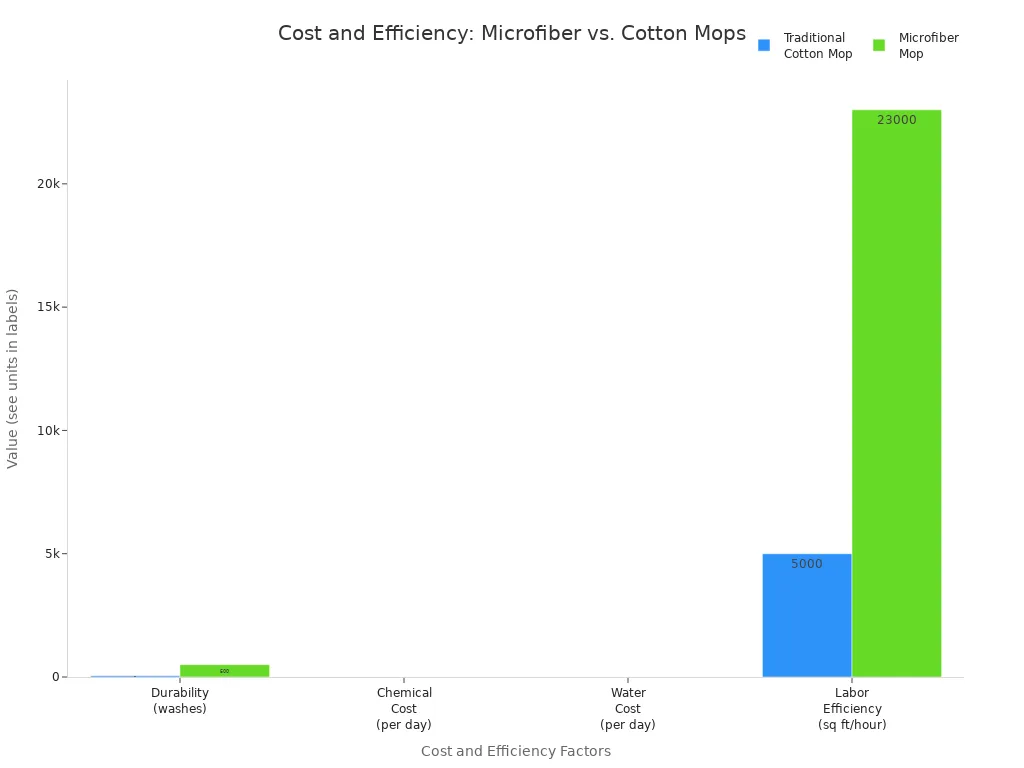
Despite higher ongoing costs for consumables, microfiber mops deliver savings through reduced chemical and water usage, improved labor efficiency, and fewer replacements. Facilities that switch to microfiber systems often report lower operational costs and enhanced productivity, making them a cost-effective choice in the long run.
Microfiber Mop Environmental Impact
Reusability and Waste
Reusable mop pads offer a significant advantage in reducing solid waste compared to disposable alternatives. Facilities that use reusable pads can decrease solid waste by 84% to 97%, as these pads last through 150 to 200 cleaning cycles. In contrast, disposable mop pads contribute to landfill accumulation and microplastic pollution, as each pad is discarded after a single use. The following table highlights key differences:
| Environmental Impact Aspect | Disposable Mop Pads | Reusable Mop Pads |
|---|---|---|
| Solid Waste Contribution | High; single-use leads to large waste volume and landfill accumulation | Reduced solid waste by 84% to 97% due to multiple reuse cycles |
| Product Lifespan | Single-use (1 cleaning cycle) | Last through 150–200 cleaning cycles |
| Waste Disposal Issues | Contributes to landfill accumulation and microplastic pollution | Reduces landfill waste and disposal costs |
Large facilities, such as hospitals, illustrate this impact clearly. A 500-bed hospital using disposable pads generates about 39 pounds of mop waste daily, increasing overall waste by 0.25%. Reusable mop heads, with their extended lifespan, help minimize this environmental burden.
Water and Chemical Usage
Reusable mop pads require laundering, which increases water and energy consumption. A Life Cycle Assessment by Contec Professional found that reusable pads have a greater environmental impact in categories like global warming potential, water usage, and smog production due to the resources needed for washing. Disposable pads, while generating more solid waste, may use fewer resources over their lifecycle. Both options present trade-offs, so facilities must weigh waste reduction against increased water and energy use when choosing a mop system.
Microfiber Mop Suitability for Different Floor Types
Hardwood and Laminate
Manufacturers and cleaning professionals agree that microfiber mops work well on most hardwood and laminate floors. They recommend the following best practices for these surfaces:
- Use a vacuum or soft-bristle broom before mopping to remove loose dirt.
- Clean in small sections with a cleaner designed for hardwood or laminate.
- Choose a flat mop with a detachable microfiber pad for gentle, effective cleaning.
- Avoid wet mopping; use only a damp mop to prevent water damage.
- Do not use vinegar or abrasive cleaners, as these can harm the finish.
- For hardwood floors with a urethane finish, microfiber mops provide safe and thorough cleaning.
- For waxed or oiled hardwood, cotton mops are preferred to avoid breaking down the finish.
Note: Always follow the flooring manufacturer’s care guidelines to maintain warranty and appearance.
Tile and Stone
Microfiber mops offer several benefits for tile and stone surfaces. Their non-abrasive fibers prevent scratches and reach into grout lines to lift dirt and bacteria. These mops absorb spills quickly and leave floors streak-free when paired with pH-neutral cleaners. Cleaning professionals highlight the following advantages:
- Lightweight and flexible design for easy maneuvering.
- Faster drying floors, reducing slip hazards.
- Less water and chemical use, supporting sustainability.
- Durable pads withstand hundreds of washes, lowering long-term costs.
Proper rinsing after detergent use prevents residue buildup and keeps tile surfaces shiny.
Vinyl and Other Surfaces
Vinyl and synthetic flooring benefit from microfiber’s deep-cleaning action. The mop pads contain thousands of microfibers that trap dust, dirt, and hair. These pads work for both dry and wet cleaning and can be washed and reused over 100 times. The swivel head design reaches under furniture and into corners, making cleaning efficient. Using recommended cleaners helps maintain a lasting shine and protects the floor’s surface.
Microfiber mops deliver superior cleaning, hygiene, and user satisfaction. They remain lighter, easier to maneuver, and more effective for most floors. However, traditional cotton mops excel with heavy spills, textured surfaces, and certain industrial tasks. Customer reviews consistently favor microfiber for versatility, quick cleaning, and maintenance ease.
FAQ
How often should someone replace a microfiber mop pad?
Most microfiber mop pads last through 100–500 washes. Replace the pad when it shows fraying, thinning, or persistent odors.
Can microfiber mops clean without chemicals?
Yes. Microfiber mops remove dirt and bacteria using only water. The split fibers trap particles, reducing the need for harsh cleaning agents.
Are microfiber mops safe for all floor types?
Microfiber mops work safely on hardwood, tile, laminate, and vinyl. Always check manufacturer recommendations for specialty flooring or delicate finishes.
