

 Send Email
 whatsapp


Why Do Hospitals Choose Esun’s Blue Disposable Curtains?
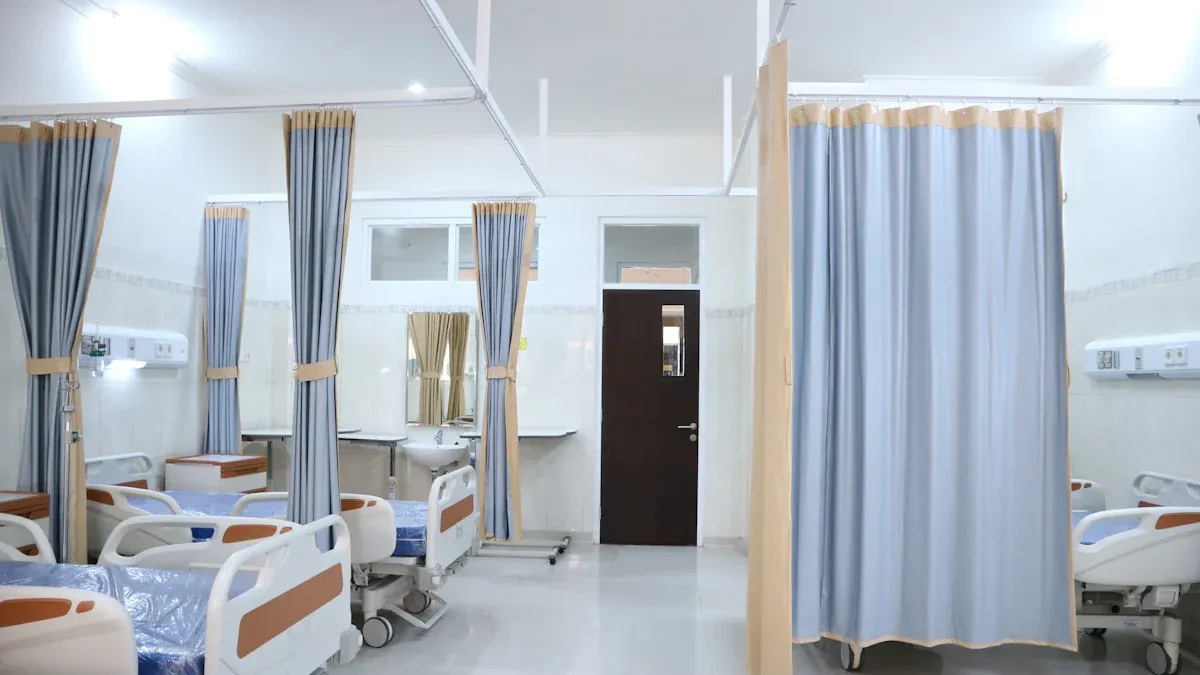
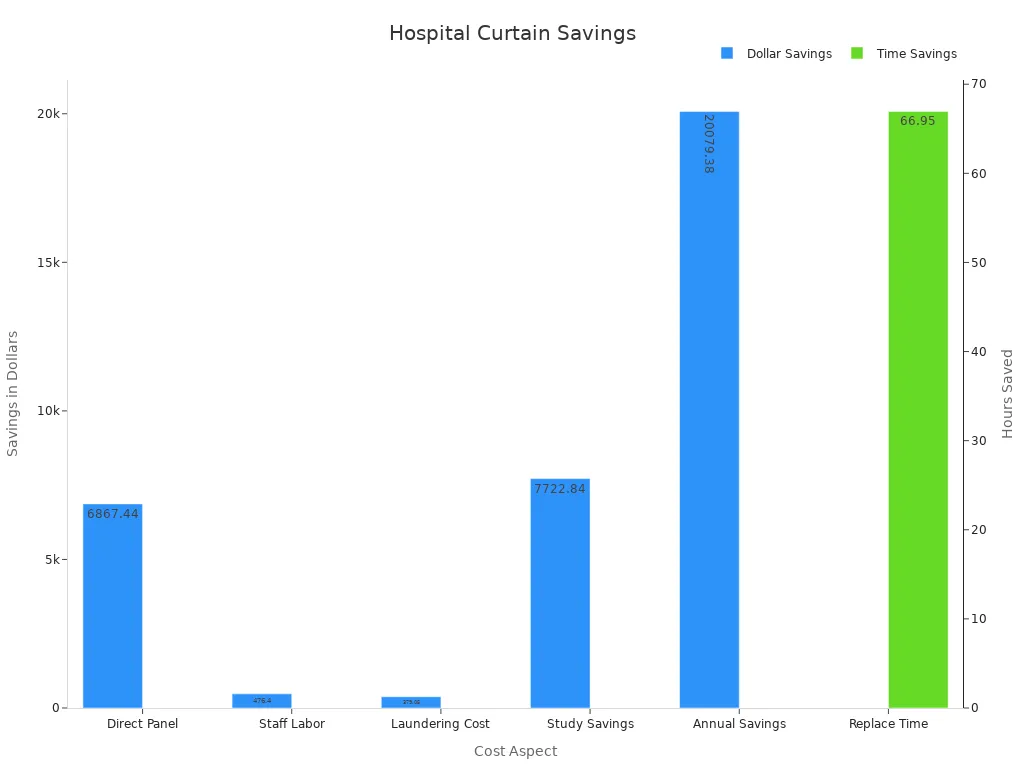
I see firsthand how hospital curtains impact both safety and budgets. Esun’s blue disposable medical curtain delivers measurable savings and efficient infection control. For example, switching from standard to antimicrobial panels saves over $7,700 per period and 66.95 hours annually:
| Cost Aspect | antimicrobial curtains | Standard Curtains | Savings/Benefit |
|---|---|---|---|
| Direct Curtain Panel Cost | Lower initial cost | Higher cost | $6,867.44 saved |
| Curtain Changes | 2 changes | 105 changes | Significant reduction in labor |
| Staff Labor Cost | $9.25 | $485.63 | $476.40 saved |
| Laundering Cost | $0 | $379.05 | $379.05 saved |
| Total Cost Savings (Study Period) | N/A | N/A | $7,722.84 |
| Projected Annual Cost Savings | N/A | N/A | $20,079.38 |
| Time to Replace Curtains | 0.5 hours | 26.25 hours | 66.95 hours saved annually |
I recommend blue disposable hospital partition curtain solutions for every facility, from hospitals to clinics using medical clinic curtains.
Key Takeaways
- Esun’s blue Disposable curtainsreduce infection risks by using antimicrobial fabrics that block harmful bacteria and fungi, helping keep patients safer.
- These curtains save hospitals time and money by cutting curtain change time from 45 minutes to under 2 minutes and eliminating laundering costs.
- Made from recyclable materials and meeting strict safety standards, these curtains support environmental goals and ensure patient and staff safety.
Hospital Curtains: Infection Control, Efficiency, and Cost Savings
Antimicrobial and Single-Use Protection
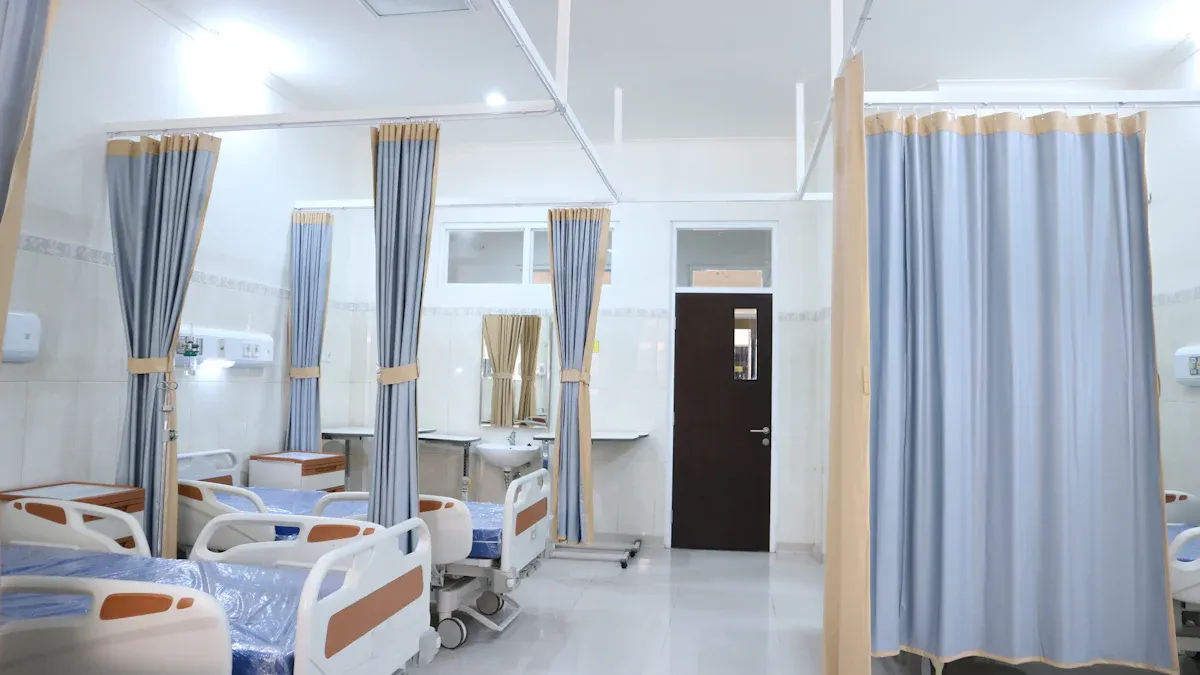
I have seen how single-use, antimicrobial hospital curtains transform infection control in healthcare settings. These curtains use advanced synthetic fabrics treated with antimicrobial agents, which actively inhibit the growth of bacteria and fungi. Laboratory tests confirm their effectiveness. For example, benchmark studies show that antimicrobial disposable curtains achieve a log10 reduction of 3.00 or greater for single microorganisms and 4.00 or greater for microbial mixtures, even under challenging conditions.
| Microorganism Type | Reduction Achieved (log10) | Testing Condition |
|---|---|---|
| Single microorganism | 3.00 or greater | Artificial soil |
| Microbial mixture | 4.00 or greater | Artificial soil |
I trust these results because they demonstrate that antimicrobial treatments on disposable curtains provide a strong barrier against pathogens. Microbiological swab tests after installation reveal a marked reduction in dangerous bacteria, such as ESKAPE pathogens. In my experience, only minimal growth of harmless skin bacteria appears on these curtains, even after months of use. This level of protection is difficult to achieve with traditional woven curtains, which can become contaminated quickly.
Reducing Healthcare-Associated Infections (HAIs)
hospital curtains play a critical role in reducing healthcare-associated infections. The CDC reports that about 1 in 31 hospital patients acquires an HAI each day. Curtains act as high-touch surfaces, often touched by patients, visitors, and staff. Traditional curtains can become contaminated within days, with studies showing 92% contamination within one week after cleaning. Disposable curtains, especially those with antimicrobial properties, break this cycle. I replace them after each patient or when soiled, ensuring a fresh, uncontaminated surface every time.
Clinical studies support this approach. In one ambulatory cancer center, disposable antimicrobial curtains remained bacteria-free for up to a year. No MRSA, VRE, or CP-CRE was detected on any curtain during the study period. This practice not only reduces infection risk but also aligns with CDC guidelines for environmental surface disinfection. The following table highlights the dramatic difference in pathogen reduction between antimicrobial disposable curtains and traditional options:
| Pathogen | Log Reduction on Antimicrobial Disposable Curtains | Notes on Traditional Curtains |
|---|---|---|
| Escherichia coli | ≥4.93 | 92% contamination within 1 week |
| MRSA | ≥5.04 / ≥5.00 | N/A |
| Clostridium difficile | ≥5.07 / 3.66 (box fresh) | Spores survive >5 months on traditional curtains |
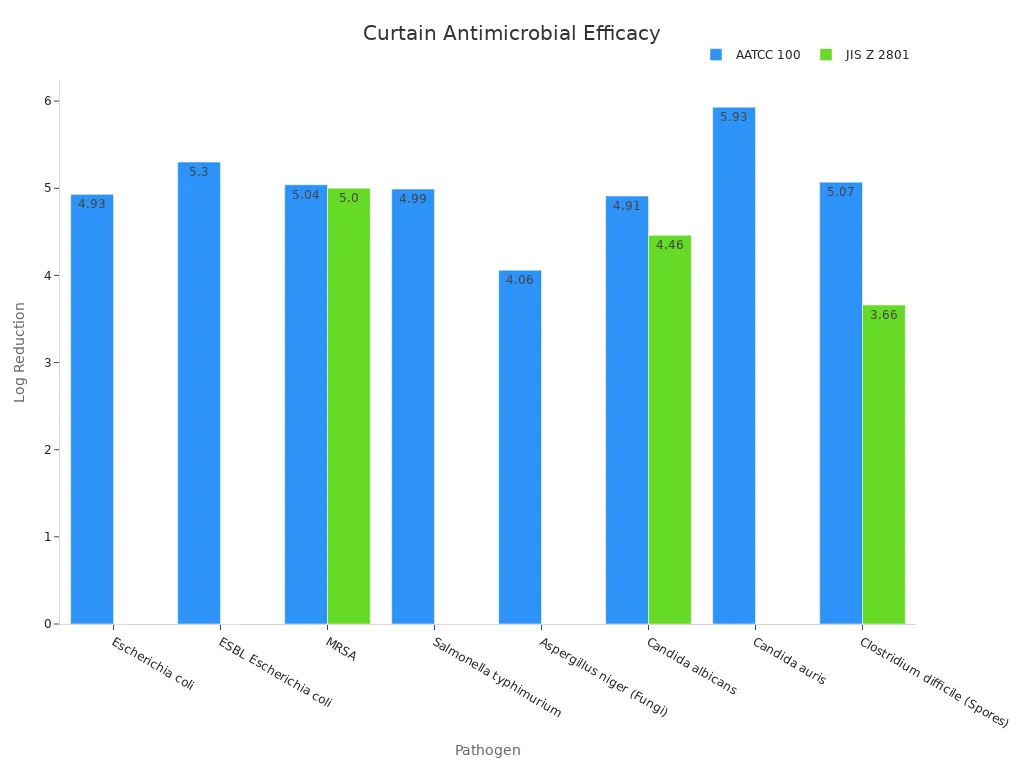
I have seen firsthand how these curtains help maintain low bacterial contamination in intensive care units, with antimicrobial activity lasting up to six months. This directly contributes to lower HAI rates and improved patient safety.
No Laundering and Quick Replacement
Switching to disposable hospital curtains eliminates the need for laundering, which saves significant time and resources. I remember when curtain exchanges required up to 45 minutes per patient room, including removing, laundering, and rehanging. Now, I can hang a disposable curtain in under two minutes, often without using a ladder. This streamlined process means I can focus more on patient care and less on logistics.
- Curtain exchanges with laundering: up to 45 minutes per room
- Disposable curtain install time: under 2 minutes, ladder-free
- Up to 90% reduction in curtain change time
At my facility, we eliminated laundry-related tasks and ladder use by standardizing on hookless disposable curtains. The transition finished six months ahead of schedule, and patient care continued without disruption. This efficiency not only benefits staff but also ensures that fresh, hygienic curtains are always available.
Saves Staff Time and Resources
I have noticed a dramatic reduction in staff workload since adopting disposable hospital curtains. Previously, some staff members spent much of their day climbing ladders and processing curtains for laundering. Now, curtain changes happen quickly and safely, without the need for specialized equipment or dedicated personnel.
A white paper by Arc-Com compares the economics of disposable and woven antimicrobial curtains. While disposable curtains have a lower initial cost, woven X-Static curtains offer about 50% lower lifetime cost of ownership over several years due to less frequent laundering and continuous antimicrobial protection. However, the operational efficiency of disposables—especially the time saved on laundering and installation—cannot be overlooked. For facilities with high patient turnover, the ability to replace curtains rapidly and maintain strict infection control protocols outweighs the long-term cost difference.
Tip: By reducing labor and eliminating laundering, I can reallocate staff to more critical patient care tasks, improving overall efficiency and morale.
Hospital Curtains that combine antimicrobial protection, single-use convenience, and quick replacement deliver measurable benefits in infection control, operational efficiency, and cost savings.
Hospital Curtains: Environmental Responsibility, Compliance, and Experience
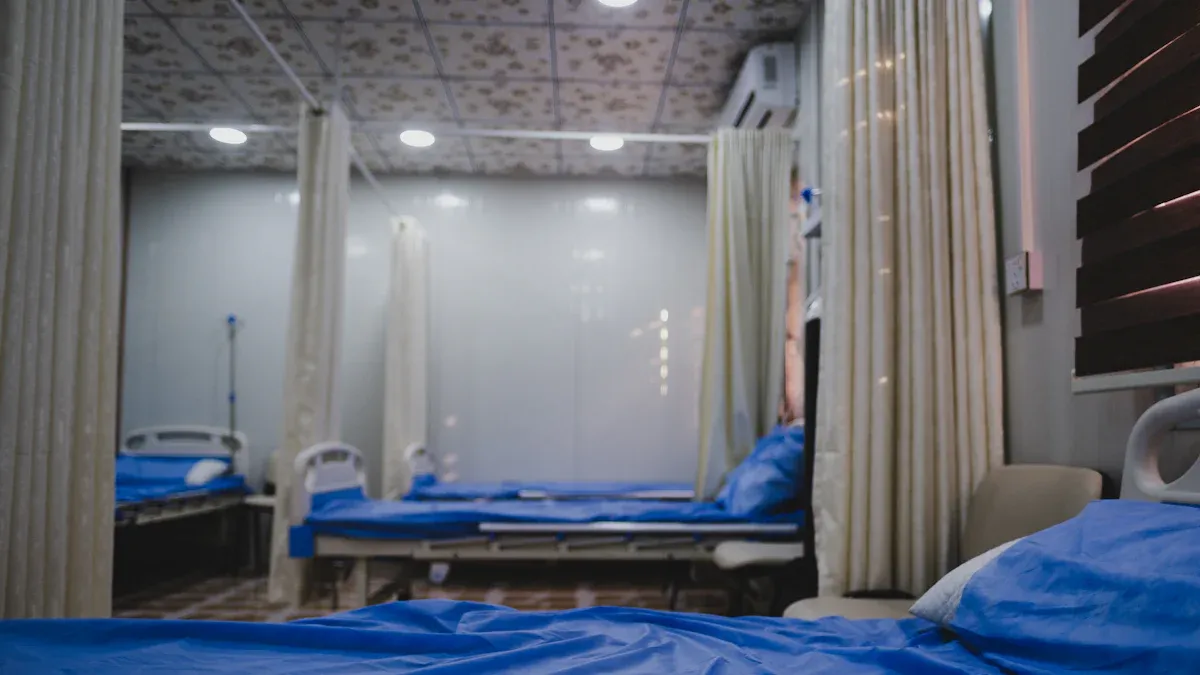
Recyclable and Eco-Friendly Materials
I always look for ways to reduce environmental impact in healthcare settings. Esun’s blue disposable curtains use recyclable synthetic materials, which helps facilities minimize landfill waste. I appreciate that these curtains do not require water or harsh chemicals for laundering. This approach conserves resources and supports sustainability goals. Many hospitals now prioritize products that align with green initiatives, and I find that choosing recyclable curtains demonstrates a commitment to environmental responsibility.
Meets Safety and Healthcare Regulations
I never compromise on safety or compliance. Esun’s blue disposable curtains meet strict healthcare standards, which gives me peace of mind. I rely on regulatory data to confirm that these curtains pass rigorous fire safety, smoke control, infection control, and biocompatibility tests. The following table summarizes the key compliance areas and how these curtains perform:
| Compliance Area | Standard/Requirement | Evidence Details |
|---|---|---|
| Fire Safety | NFPA 701 | Curtains self-extinguish within 2 seconds; flame spread ≤4 inches; tested with 1.5-inch flame for 12 seconds |
| Smoke Control | EU Euroclass B-s1,d0 | Fabrics emit minimal smoke and no flaming droplets, suitable for operating rooms and burn units |
| Infection Control | Clinical trial at Massachusetts General Hospital | Disposable polyethylene curtains reduced cross-contamination risks by 40% |
| Biocompatibility | FDA 510(k) clearance, ISO 10993 testing | Antimicrobial textiles undergo rigorous biocompatibility testing before approval |
| Case Study | NYU Langone Health fire safety retrofit | Retrofitted 8,000 rooms with NFPA 701-certified curtains, reducing fire risks by 60% |
I trust these certifications because they ensure patient and staff safety while supporting infection prevention protocols.
Fire Retardant and Mesh Top Design
Fire safety remains a top priority for me. Esun’s blue disposable curtains are fire retardant, self-extinguishing within two seconds and limiting flame spread to less than four inches. I have seen how this feature reduces fire risks in patient rooms and critical care areas. The mesh top design also plays a crucial role. Mesh tops allow air to circulate freely above the curtain, which improves ventilation and supports infection control guidelines. I notice that rooms with mesh-top curtains feel less stuffy and maintain better air quality.
- Stratum ventilation combined with mesh-top curtains increases contaminant removal efficiency by 2.12 to 3.22 times compared to other ventilation methods.
- This setup reduces health risks by up to 53.7%.
- Mesh tops also enable quick visual checks during emergencies, which enhances patient safety.
I value these design features because they create a safer, healthier environment for everyone.
Enhanced Privacy, Comfort, and Aesthetics
Patient privacy and comfort matter to me. Esun’s blue disposable curtains provide full visual separation, which helps patients feel secure during exams and treatments. The soft, nonwoven fabric reduces noise and creates a calming atmosphere. I have received positive feedback from patients who appreciate the soothing blue color and the sense of personal space these curtains provide. The design also complements modern hospital interiors, making the environment more welcoming.
Note: A comfortable and private setting can improve patient satisfaction and support faster recovery.
Simple Installation and Use
I always look for solutions that save time and reduce complexity. Esun’s curtains feature a hookless design, which allows me to install or replace them in under two minutes. I do not need ladders or special tools. This simplicity reduces the risk of staff injuries and ensures that fresh curtains are always available. I can quickly respond to patient turnover or contamination events, which keeps operations running smoothly.
- Easy installation process
- No need for laundering or specialized equipment
- Staff can focus on patient care instead of logistics
I find that this user-friendly approach improves workflow and supports high standards of cleanliness.
I recommend Esun’s blue disposable Hospital Curtains for any facility seeking superior results.
- I save on laundry costs and reduce curtain replacement frequency.
- I replace curtains in under two minutes, which improves efficiency.
- I lower infection risks and support recycling programs.
These Hospital Curtains meet health and safety standards.
FAQ
How often should I replace Esun’s blue disposable curtains?
I recommend replacing curtains after each patient discharge or when visibly soiled. This practice maintains infection control and ensures a clean environment.
Can I recycle Esun’s blue disposable curtains?
Yes, I can recycle these curtains. I always check local recycling guidelines to confirm proper disposal methods for synthetic medical textiles. ♻️
Are Esun’s curtains compatible with standard hospital curtain tracks?
I have installed Esun’s curtains on most standard tracks without issues. The hookless design fits common systems and allows quick, tool-free installation.