

 Send Email
 whatsapp


Are Disposable Mops Eco-Friendly? Exploring Sustainable Cleaning Options

disposable mop options, like theDisposable Floor Mop and Disposable Dust Mop, often use recycled materials and help reduce water and chemical use. Microfiber Disposable Mop products, including medical disposable mops, lower laundering needs and support responsible waste management. Choosing sustainable cleaning methods benefits both users and the environment.
Key Takeaways
- Choose Disposable mops made from biodegradable or recycled materials to reduce environmental harm and support sustainability.
- Reusable Mops save water, energy, and chemicals but require laundering, whiledisposable mops create more waste but need less washing.
- Use eco-friendly cleaning products and reusable mop pads to lower waste, improve hygiene, and protect both your home and the planet.
What Makes a Disposable Mop Eco-Friendly?
Materials and Manufacturing
The materials and manufacturing process play a crucial role in determining whether a disposable mop is eco-friendly. Manufacturers often use microfiber, cotton, and synthetic fibers for disposable mop heads. Microfiber offers high absorbency and versatility, making it popular for both wet and dry cleaning tasks. However, traditional microfiber is not biodegradable, which raises concerns about its long-term environmental impact. In response, some companies have developed biodegradable disposable mop heads using natural cotton fibers. These biodegradable options break down more easily in landfills and reduce environmental harm without sacrificing cleaning performance.
Eco-friendly disposable mops may also incorporate recycled plastics, organic cotton, bamboo, or wood. Bamboo handles, for example, provide a sustainable alternative because bamboo grows quickly and renews itself efficiently. Some brands, such as TekniMop, offer fully recyclable disposable mop products, while others use high percentages of recycled content in their mop heads. The table below highlights the recyclability status of several popular brands:
| Product Brand | Recyclability Status | Recycled Content (%) | Notes |
|---|---|---|---|
| TekniMop | Fully recyclable (100%) | N/A | Explicitly stated as 100% recyclable |
| Rubbermaid | Not recyclable | 0% | No recycled content or recyclability |
| Boardwalk (Dust Mop) | Not recyclable | 0% | No recycled content or recyclability |
| Boardwalk (Cut End) | Not recyclable | 95% recycled content | High recycled content but not recyclable |
Note: Choosing disposable mops with biodegradable or recycled materials and eco-certifications, such as Green Seal or EPA Safer Choice, supports sustainability goals.
Reusability and Waste
Reusability and waste generation are key factors in evaluating the eco-friendliness of a disposable mop. While reusable mop pads can reduce the number of products sent to landfills, their laundering process consumes significant amounts of water and energy. Studies show that single-use disposable microfiber mop pads may have a lower overall environmental footprint compared to laundered reusable pads. The energy and emissions associated with frequent washing, drying, and transporting reusable pads can outweigh the benefits of reusability.
Disposable mops designed with high cleaning capacity and proper usage protocols help minimize waste. Some products use plant-based fibers or recycled components, which further reduce their environmental impact. Packaging that minimizes plastic and waste also contributes to a more sustainable product lifecycle.
- Features that support eco-friendliness:
- Use of biodegradable or recycled materials
- High cleaning efficiency to reduce the number of mop heads needed
- Packaging designed to minimize waste
- Environmental certifications
Microplastics and Chemical Use
Microplastics and chemical use present additional challenges for disposable mop sustainability. Microfiber, a common material in disposable mop heads, can shed tiny plastic particles during use and disposal. These microplastics may enter waterways and contribute to pollution. Manufacturers address this issue by developing mop heads with natural fibers or biodegradable alternatives, which do not release microplastics.
Chemical use also affects the environmental profile of disposable mops. Some products require fewer cleaning chemicals due to their high absorbency and cleaning power. This reduction in chemical use benefits both indoor air quality and the broader environment. Selecting disposable mops that work effectively with eco-friendly cleaning solutions further enhances their sustainability.
Tip: Look for disposable mop products that advertise low chemical requirements and use natural or biodegradable fibers to reduce microplastic pollution.
Disposable Mop vs. Reusable Mop: Environmental Impact
Waste and Landfill Concerns
Waste generation remains a major concern when comparing disposable mop and reusable mop systems. Disposable mop heads, designed for single use, contribute directly to landfill waste. In large facilities, such as hospitals, daily use of disposable mops can result in significant solid waste. For example, a 500-bed hospital may generate up to 39 pounds of mop waste each day, increasing overall waste output by 0.25%. This accumulation places additional pressure on waste management systems and landfills.
Reusable mops, on the other hand, reduce the volume of solid waste. Their washable pads last for many cleaning cycles, which means fewer mop heads end up in landfills. Consumers who choose durable, reusable cleaning tools help decrease environmental harm and landfill waste. The shift toward machine-washable microfiber cloths and products with replaceable parts reflects a growing awareness of the environmental impact of disposability.
Note: While disposable mop systems offer convenience, their single-use nature makes them less sustainable due to the continuous need for replacement and disposal.
Resource Use and Carbon Footprint
Resource consumption and carbon footprint differ significantly between disposable and reusable mop systems. Lifecycle analysis using the EPA TRACI model shows that single-use mops have a lower environmental impact in some categories, mainly because they avoid the resource-intensive washing phase required for reusable mops. The main environmental burden for reusable mops comes from the energy, water, and chemicals used during laundering.
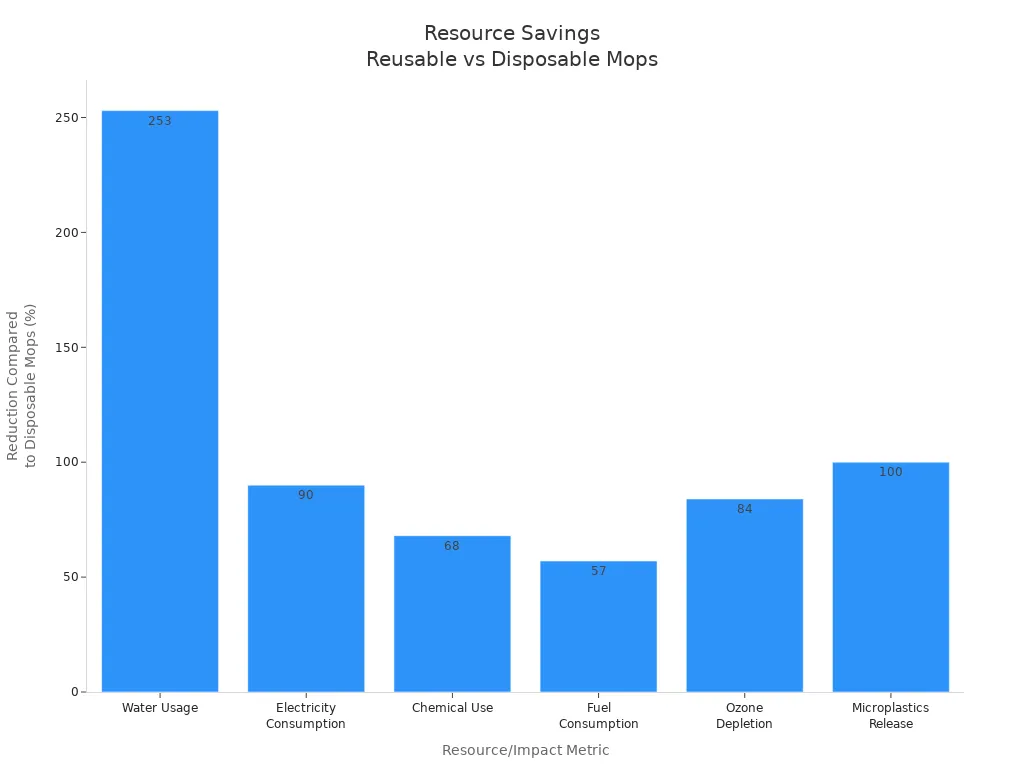
However, when examining resource use over the entire lifecycle, reusable mops often consume less water, electricity, and chemicals compared to disposable mop systems. The table below summarizes these differences:
| Resource/Impact Metric | Reusable Mops Compared to Disposable Mops |
|---|---|
| Water Usage | 253 gallons less water used |
| Electricity Consumption | 90% less electricity used |
| Chemical Use | 68% less chemical use |
| Fuel Consumption (Transport) | 57% less fuel/resources used |
| Ozone Depletion | 84% less air pollution from transport |
| Microplastics Release | 100% less microplastics released |
Reusable mops require washing after every use, which increases water and detergent consumption. Disposable mops eliminate laundering but shift the environmental cost to increased solid waste. The overall carbon footprint depends on usage patterns, facility size, and cleaning frequency.
Cost, Hygiene, and Practicality
Cost, hygiene, and practicality play important roles in the decision between disposable and reusable mop systems. Disposable mop systems, such as the Swiffer, have a low initial cost but require frequent pad replacements. Over a year, the cost of disposable pads can exceed $283. In contrast, reusable microfiber mop systems, like the Don Aslett, have a higher upfront cost but offer substantial savings over time. Their washable pads last for many uses, reducing the need for constant replacement.
| Mop Type | Initial Cost | Replacement Cost Frequency | Annual Replacement Cost | Notes on Durability and Cost Impact |
|---|---|---|---|---|
| Disposable Pad Mop (e.g., Swiffer) | Low (~$15) | Frequent (pads replaced often) | High (pads add up to $283+/year) | Low upfront cost but high ongoing expenses due to disposable pads |
| Reusable Microfiber Pad Mop | Moderate (~$37) | Yearly (pads last about 1 year) | Low (replacement pads are cheap) | Higher initial cost but pads are washable and last longer, reducing yearly costs |
| Traditional Mop and Bucket | Low | Replacement as needed | Moderate (~$100/year) | Requires mop replacement every few years; water and cleaning solution add to cost |
| Steam Mop | High | Long-lasting | Lower over time | Higher upfront cost but durable and chemical-free cleaning reduces ongoing costs |
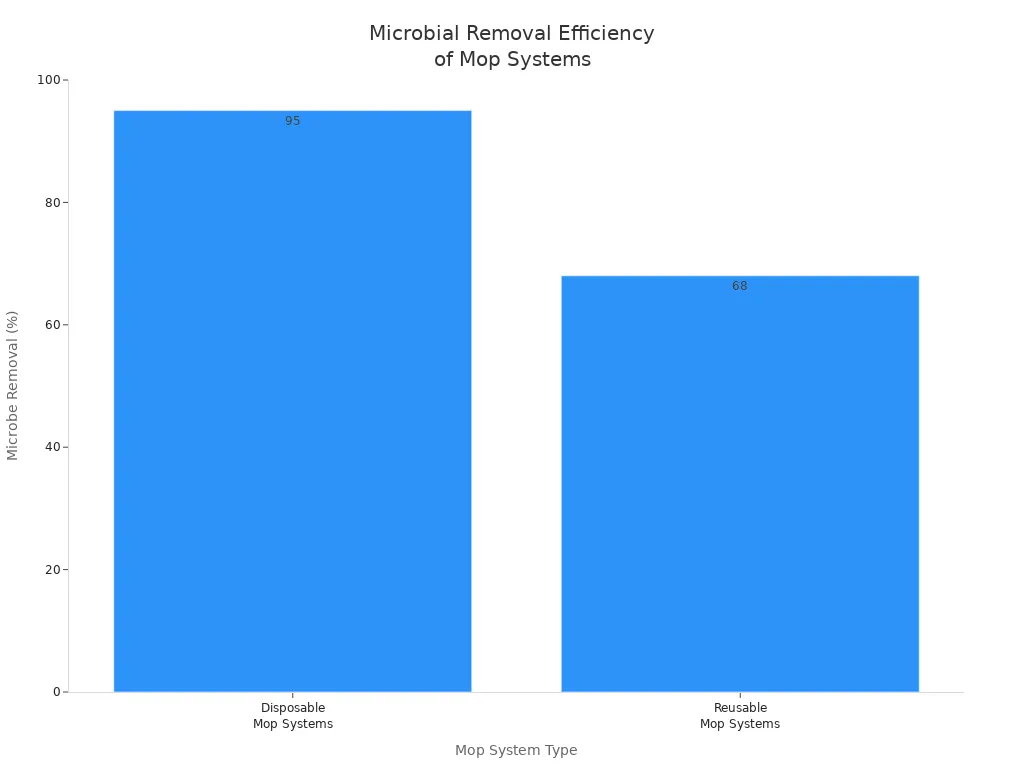
Hygiene outcomes also differ between systems. Disposable microfiber mop pads remove up to 95% of microbes and minimize cross-contamination because they are single-use. This makes them ideal for healthcare and food service environments where infection control is critical. Reusable mops, especially cotton types, can retain pathogens even after laundering, increasing the risk of cross-contamination. Microfiber reusable mops perform better but still require careful maintenance to ensure hygiene.
| Aspect | Disposable Mop Systems | Reusable Mop Systems |
|---|---|---|
| Microbial Removal Efficiency | Up to 95% microbe removal with microfiber pads | Around 68% microbe removal; reusable mops retain pathogens up to 27% after laundering |
| Cross-Contamination Risk | Minimal due to single-use pads preventing pathogen transfer | Higher risk due to reuse and incomplete pathogen removal |
| Infection Control | Supports strict hygiene protocols, reduces healthcare-associated infections (HAIs) | Potential contributor to HAIs due to residual contamination |
| Compliance | Facilitates meeting ISO, GMP, FDA standards with traceability and consistent cleaning | More challenging to ensure compliance due to variable laundering effectiveness |
| Workflow Efficiency | Faster cleaning times, reduced laundering, less staff exposure to contaminants | Longer cleaning times, requires laundering and storage, increased staff handling of soiled mops |
| Cost Considerations | Higher average cost per use due to single-use nature | Lower average cost per use with multiple reuses, but higher initial investment |
| Environmental Impact | Higher waste generation, but some eco-friendly disposable options exist | Lower waste, but laundering consumes water, energy, and chemicals |
Tip: Facilities that require strict hygiene protocols may benefit from disposable mop systems, while households and low-risk environments can achieve sustainability and cost savings with reusable options.
Sustainable Cleaning Options

Best Reusable Mop Alternatives
Environmental organizations recommend reusable mop systems that use washable pads made from microfiber or organic cotton. These pads can be machine washed and reused many times, which greatly reduces waste compared to single-use options. Many brands design their products with sustainability in mind, using materials like bamboo, recycled plastics, and compostable cotton. The table below highlights popular reusable mop alternatives and their eco-friendly features:
| Brand / Alternative | Price Range | Key Features & Materials | Sustainability Credentials & Benefits |
|---|---|---|---|
| Full Circle Home Mighty Mop | $30–$35 | Bamboo handle, recycled plastic head, microfiber washable pads | B Corp, Plastic Neutral, GRS, USDA Biobased, GOTS Organic |
| Quick Loop Cuban Mop Attachment | ~$25 | Natural wood dowel, reusable fabric pads, washable microfiber | Reduces plastic waste, eco-friendly design |
| Yocada | $23–$25 | 100% cotton string mop head, compostable, replaceable heads | Natural materials, compostable heads |
| Fuller Brush | ~$45 | Plastic-free, steel handle, high absorbency | Durable, designed for longevity |
| Saged Home Reusable Mop Pads | $19–$31 | 100% cotton, fits Swiffer sizes, machine washable | Plastic-free, Climate Neutral, biodegradable packaging |
Reusable mop pads can last for 150–200 cleaning cycles, replacing hundreds of single-use pads and significantly reducing landfill waste.
Eco-Friendly Cleaning Products
Eco-friendly cleaning products use natural ingredients such as vinegar, baking soda, lemon, and essential oils. These substances clean effectively, disinfect, and neutralize odors without harmful side effects. Consumers should look for products with non-toxic, bio-based, and plant-derived ingredients. Certifications like Green Seal, EcoLogo, EPA Safer Choice, USDA Organic, and Cradle to Cradle indicate that a product meets strict environmental and health standards.
| Certification | Description |
|---|---|
| Green Seal | Focuses on climate, water, waste, and health. |
| EcoLogo | Tests for biodegradability, low toxicity, and waste reduction. |
| Safer Choice | Reviews ingredient safety and environmental impact. |
| Cradle to Cradle | Assesses material health, reuse, renewable energy, and fairness. |
| USDA Organic | Certifies natural ingredients and sustainable farming. |
Tip: Always check for ingredient transparency and avoid products with vague terms like “fragrance” to minimize chemical exposure.
Reducing Cleaning Waste
Households can reduce cleaning waste by adopting several strategies:
- Segregate waste into recyclables, organics, and general trash.
- Use separate bins for each waste type.
- Recycle paper, plastics, glass, and metal.
- Compost organic waste to enrich soil and cut greenhouse gas emissions.
- Properly dispose of hazardous items like batteries and paint cans.
Promoting minimalist living, buying in bulk, and using reusable supplies further decrease waste. Regular waste audits and educational programs help families track progress and improve habits.
Sustainable cleaning choices include reusable microfiber pads, biodegradable products, and non-toxic solutions. Households that adopt small, consistent changes—such as using reusable supplies and natural cleaners—help reduce waste and improve indoor air quality. These habits support a healthier home and contribute to measurable environmental benefits for communities.
FAQ
Are disposable mops biodegradable?
Most disposable mops use synthetic fibers. Only some brands offer biodegradable options. Always check product labels for compostable or biodegradable certifications.
How often should reusable mop pads be replaced?
Replace reusable mop pads after 150–200 washes. Inspect pads regularly for wear or loss of cleaning efficiency.
What certifications indicate eco-friendly cleaning products?
Look for Green Seal, EPA Safer Choice, EcoLogo, or USDA Organic certifications. These labels show a product meets strict environmental and health standards.
