

 Send Email
 whatsapp


Why More Cleaning Companies Are Switching to Disposable Mops

Cleaning companies increasingly select disposable mop systems for safer, more efficient cleaning.
- Microfiber disposable mop pads remove up to 98% of bacteria and 93% of viruses, outperforming cotton mops.
- Medical disposable mops and hospital disposable mop options reduce cross-contamination risks in sensitive environments.
Key Takeaways
- Disposable microfiber mop pads remove more bacteria and viruses than traditional cotton mops, greatly reducing infection risks and cross-contamination.
- Using disposable mop systemsspeeds up cleaning, lowers staff workload, and improves safety by eliminating the need to wash and store Reusable Mop heads.
- disposable mop systems help cleaning companies meet strict health standards and support audit readiness, especially in hospitals and labs.
Disposable Mop: Hygiene, Efficiency, and Cost Benefits
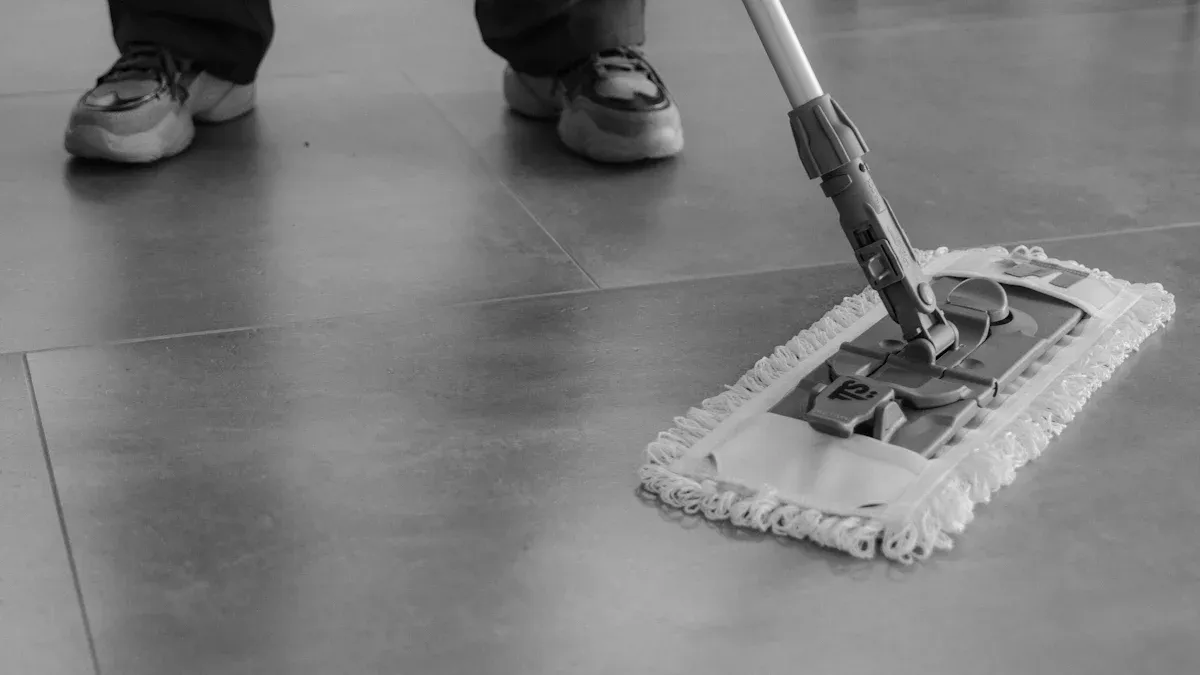
Preventing Cross-Contamination and Infection
Cleaning companies prioritize hygiene, especially in environments like hospitals and clinics. Disposable mop systems play a crucial role in reducing cross-contamination and infection risks. Scientific studies show that cotton string mops often increase the risk of spreading bacteria, while launderable and disposable flat mops significantly lower bacterial transfer. Microfiber materials, commonly used in disposable mop pads, outperform cotton by removing more soil and preserving disinfectant effectiveness.
Disposable mop pads, especially those made from microfiber, capture and remove microbes more effectively than traditional cotton mops. Their single-use design ensures that pathogens do not transfer between rooms, which is vital in sensitive areas such as intensive care units. Industry experts note that even after laundering, a significant portion of reusable mop heads still test positive for pathogens. This lingering contamination can lead to healthcare-associated infections (HAIs). Disposable mop pads eliminate this risk by providing a fresh, uncontaminated surface for each cleaning session.
Disposable microfiber mop pads can remove up to 95% of microbes, compared to 68% with reusable mops. This reduction in cross-contamination risk supports safer environments for both staff and clients.
Facilities using reusable microfiber mops face higher risks because these mops can retain bacteria even after washing. In one study, 27% of laundered mop heads still carried pathogens. Disposable mop systems, when used properly, prevent this carryover and help maintain strict hygiene standards.
Streamlining Cleaning Workflows
Switching to disposable mop systems brings significant workflow improvements for cleaning companies. Staff productivity increases because disposable mop pads simplify cleaning routines. Workers no longer need to spend time laundering, drying, or storing reusable mop heads. This time savings allows staff to focus on critical cleaning tasks and reduces physical strain.
- Cleaning time for ten rooms drops from 90 minutes with traditional methods to just 40 minutes with disposable pads.
- Disposable mop systems cover up to 23,000 square feet per hour, compared to only 5,000 square feet with reusable mops.
- Touchless handling systems reduce staff exposure to contaminants and improve safety.
Disposable mop pads also support audit readiness and compliance with infection control protocols. Using a fresh pad for each room ensures consistent cleaning performance and reduces the risk of errors. Hospitals report floors up to 80% cleaner and a notable reduction in infections such as C. difficile after adopting disposable mop systems.
Tip: Disposable mop systems not only streamline workflows but also help cleaning teams maintain high hygiene standards with less effort.
Comparing Costs: Disposable vs. Reusable Mops
Cost remains a key consideration for cleaning companies. Reusable microfiber mop systems require a higher initial investment but offer long-term savings. These mop pads can be washed and reused for 150–200 cleaning cycles, reducing replacement frequency and supply expenses. Spin mops, for example, have a higher upfront cost but their replacement heads last several months, making them cost-effective for heavy-duty cleaning.
Disposable mop pads, on the other hand, require frequent replacement after each use. This leads to ongoing purchasing costs and contributes to plastic waste. While disposable mops may seem cheaper at first, their average cost per use is higher over time compared to reusable options. Reusable systems also reduce operational costs by minimizing waste and providing better durability.
| Mop Type | Initial Cost | Replacement Frequency | Average Cost per Use | Waste Generation |
|---|---|---|---|---|
| Disposable Mop | Low | High | Higher | High |
| Reusable Mop | Higher | Low | Lower | Low |
Despite the higher long-term costs, many cleaning companies choose disposable mop systems for their hygiene and workflow benefits, especially in settings where infection control is critical.
Disposable Mop: Compliance, Environmental, and Practical Advantages

Meeting Health and Safety Standards
Cleaning companies face strict regulations in healthcare, food service, and laboratory environments. Disposable mop systems help these organizations meet health and safety standards by reducing cross-contamination and supporting infection control. Each cleaning session uses a fresh, uncontaminated mop pad, which prevents microbes from transferring between rooms or surfaces. This approach eliminates the risk of improper laundering, a common source of lingering pathogens in reusable mop heads.
Disposable mop systems support compliance with ISO, GMP, and FDA standards by ensuring traceability and consistent cleaning performance.
Single-use mop pads also minimize operator contact with dirty mop heads, reducing the spread of bacteria. Precision dosing systems deliver the exact amount of cleaning solution, improving efficacy and reducing chemical waste. These features make disposable mop systems ideal for facilities that require strict documentation and audit readiness, such as hospitals and cleanrooms.
Eco-Friendly Disposable Mop Options
Sustainability remains a top priority for many cleaning companies. While disposable mop products have traditionally raised concerns about waste, manufacturers now offer eco-friendly alternatives that reduce environmental impact. Many disposable mop handles use renewable materials like bamboo or wood, which grow quickly and are sustainable. Mop heads and pads often feature:
- Organic cotton
- Recycled plastics
- Post-industrial garment waste
- Biodegradable bamboo fibers
Some products carry certifications such as Green Seal, GOTS, and USDA Certified Biobased, verifying their environmental responsibility. For example, the Mega Dust Mop uses recycled plastic and reusable pads, while the Mighty Mop combines a bamboo handle with recycled plastic parts. The ABCO Natura Yarn Mop uses 100% post-industrial garment waste, and the Harper Live Love Clean Bamboo Mop features a washable microfiber pad.
Facilities can further reduce waste by choosing washable microfiber pads or mops that allow any cloth as a mop head, such as the Homesong Market Cuban Mop.
Despite these innovations, reusable mop systems still have a lower overall environmental impact. Studies show that laundering reusable mops consumes water, energy, and chemicals, but generates less landfill waste and carbon emissions than the continuous disposal of single-use products. However, disposable mop systems help facilities save water and energy by eliminating laundering, and many new products use compostable packaging and recycled content to align with green building standards.
Best Facility Types and Implementation Tips
Certain facility types benefit most from switching to disposable mop systems. These include:
- Hospitals and healthcare centers
- Cleanrooms and laboratories
- Pharmaceutical plants
These environments require strict hygiene and infection control. Disposable mop systems improve compliance by providing uncontaminated cleaning surfaces and supporting cleaning protocol documentation. Staff safety increases as single-use pads minimize exposure to pathogens. Operational efficiency also improves, as disposable mops simplify routines and reduce laundry needs.
To implement disposable mop systems effectively, cleaning companies should follow best practices:
- Use color-coded mop heads to prevent cross-contamination between areas (e.g., red for bathrooms, blue for dining areas).
- Employ quick-release mop handles to minimize hand contact with soiled mop heads.
- Store mops upright in ventilated areas and avoid leaving them in dirty water.
- Train staff regularly on proper cleaning techniques and safety protocols.
- Simplify cleaning protocols to reduce errors and improve compliance.
Tip: Regular training and clear communication help staff adapt to new systems and maintain high cleaning standards.
Transitioning to disposable mop systems may present challenges, such as staff resistance to change, training requirements, and initial cost concerns. Cleaning companies can address these issues by providing hands-on training, simplifying workflows, and highlighting the benefits of improved hygiene and efficiency.
- Disposable Mop systems deliver measurable improvements in hygiene, efficiency, and compliance.
- Microfiber pads trap pathogens and reduce cross-contamination, supporting infection control.
- Companies meet regulatory standards more easily and see better ROI.
Industry trends show rising demand for sustainable, customizable solutions that enhance cleaning performance and safety.
FAQ
What types of facilities benefit most from disposable mop systems?
Hospitals, laboratories, and food service areas see the greatest benefits. These environments require strict hygiene and infection control.
Are disposable mop pads safe for all floor types?
Disposable mop pads work on most surfaces, including tile, vinyl, and hardwood. Always check manufacturer guidelines for compatibility with specialty flooring.
How can cleaning companies reduce waste when using disposable mops?
- Choose eco-friendly mop pads.
- Use compostable packaging.
- Train staff to use only what is needed.
