

 Send Email
 whatsapp


How Disposable Hospital Curtains Simplify Cleaning Protocols

Disposable hospital curtains help staff maintain hygiene by enabling fast replacement. Unlike traditionalmedical curtain options, these disposable cubicle curtains can be changed within minutes, not hours. Hospitals save valuable time and reduce infection risks. Medical clinic curtains and icu curtain systems both benefit from this streamlined process.
Key Takeaways
- Disposable hospital curtains reduce infection risks by allowing quick, frequent replacement, which helps stop the spread of harmful germs in healthcare settings.
- These curtains save time and labor by eliminating the need for laundering, letting staff focus more on patient care and improving hospital efficiency.
- Hospitals can meet safety and privacy standardseasily with Disposable curtains while supporting sustainability through biodegradable or recyclable options.
Hospital Curtain Challenges and Disposable Solutions
Infection Risks with Traditional Hospital Curtains
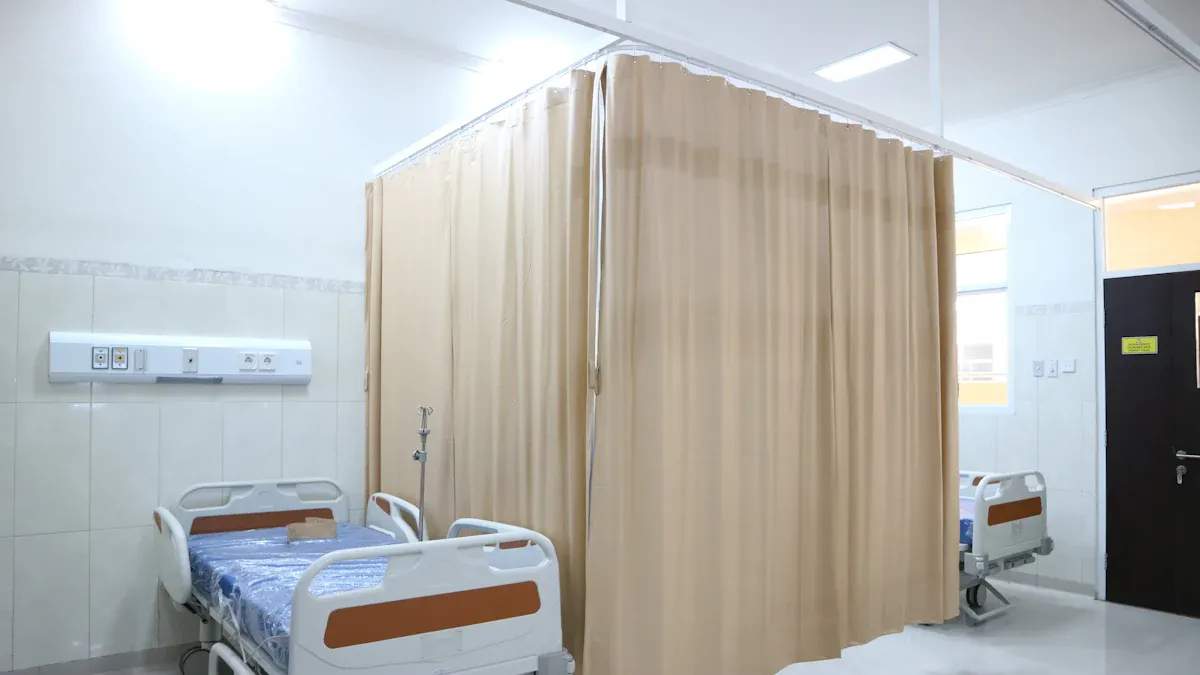
Traditional hospital curtains present a significant infection risk in healthcare environments. Recent studies show that these curtains often harbor dangerous pathogens such as methicillin-resistant Staphylococcus aureus (MRSA), Vancomycin-resistant enterococci (VRE), and Clostridium difficile. These organisms contribute to healthcare-associated infections because curtains are high-touch surfaces that rarely receive thorough cleaning. Hospital staff and patients frequently handle these curtains, which increases the chance of spreading bacteria throughout the facility. The persistent presence of these pathogens highlights the need for improved infection prevention strategies and more effective hospital curtain solutions.
Operational Burdens of Fabric Hospital Curtains
Managing fabric hospital curtains creates substantial operational challenges for healthcare facilities. Staff must follow strict cleaning protocols, which include removing, laundering, drying, and rehanging each curtain. This process requires significant time and labor, diverting attention from direct patient care. In a large hospital, laundering and maintaining approximately 250 fabric curtains twice a year can cost around $16,536 annually. The table below compares the workload and efficiency between disposable and fabric curtains:
| Aspect | Disposable Curtains | Fabric (Reusable) Curtains |
|---|---|---|
| Maintenance | Minimal; quick replacement | Requires regular cleaning, laundering, and rehanging |
| Staff Workload | Low; less labor-intensive | High; significant time and labor commitment |
| Time Efficiency | High; quick installation and replacement | Low; laundering increases time requirements |
| Infection Control | Frequent replacement possible | Requires strict schedules to prevent contamination |
| Operational Complexity | Low; no laundering needed | High; complex cleaning protocols |
| Impact on Patient Care | Staff focus more on patient care | More staff time spent on curtain maintenance |
Both curtain types can use snaps or removable panels to speed up the change-out process, but fabric curtains still demand more resources for ongoing maintenance.
How Disposable Hospital Curtains Reduce Cross-Contamination
Disposable hospital curtains offer a practical solution for reducing cross-contamination in clinical settings. These curtains use lightweight, non-woven polypropylene fabric, which resists microbial penetration and supports infection control. Designed for single use and frequent replacement, disposable curtains limit the spread of germs by removing contaminated surfaces from the environment. Hospitals can easily install and dispose of these curtains, making them ideal for high-traffic areas such as emergency rooms and intensive care units. Studies reveal that privacy curtains become contaminated rapidly, with 92% showing contamination within one week and 95% contaminated at least once during the study period. Pathogens like MRSA and VRE frequently appear on these surfaces. By switching to disposable options, hospitals can break the chain of infection and reduce the risk of healthcare-associated infections.
Tip: Frequent replacement of disposable curtains in high-risk areas helps limit the transmission of multidrug-resistant organisms and supports safer patient care.
Eliminating Laundering with Disposable Hospital Curtains
Disposable hospital curtains eliminate the need for laundering, which brings both operational and environmental benefits. Hospitals no longer need to allocate resources for washing, sterilizing, or storing fabric curtains. This change reduces water and energy consumption, as well as the use of detergents and chemicals. While disposable curtains do contribute to medical waste, many facilities address this by choosing biodegradable materials, recycling programs, and waste-to-energy conversion technologies. These practices help balance infection control with environmental responsibility. Disposable curtains also enable faster room turnover and reduce labor costs, allowing staff to focus on patient care rather than curtain maintenance. By removing the laundering step, hospitals streamline their cleaning protocols and improve overall efficiency.
Hospital Curtain Compliance and Implementation
Streamlining Regulatory Compliance with Disposable Hospital Curtains
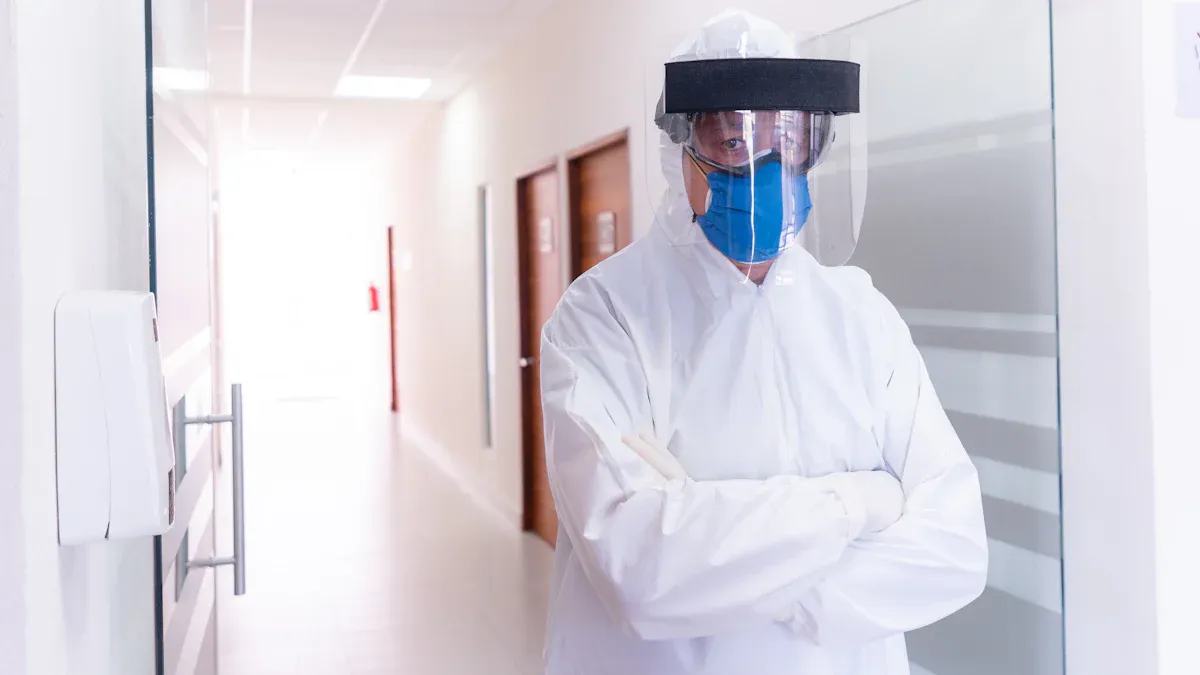
Healthcare facilities must meet strict regulatory standards when using disposable hospital curtains. Key requirements include:
- Compliance with fire safety standards such as NFPA 701 in the US and BS 5867-2 Type C in the UK.
- FDA clearance for antimicrobial properties to ensure safety and efficacy.
- Proper labeling with fire ratings and manufacturer information.
- Documentation of cleaning, inspection, and replacement schedules for audit readiness.
- Full patient privacy, meeting opacity and installation standards.
- Adherence to patient privacy regulations, including HIPAA, by providing physical safeguards.
- Following manufacturer guidelines for cleaning to maintain antimicrobial and flame-retardant properties.
These protocols help hospitals demonstrate a commitment to safety and infection control.
Practical Steps for Implementing Disposable Hospital Curtains
Transitioning to disposable hospital curtain systems requires careful planning. Hospitals should:
-
Assess current curtain systems and identify high-risk areas.
-
Retrofit existing tracks to accommodate disposable options.
-
Establish replacement schedules based on department needs. For example:
Hospital Department Recommended Replacement Frequency Infectious and Intensive Care Units Monthly General Patient Rooms Every 6 months Consultation and Examination Rooms Every 3 months -
Monitor curtain condition and replace immediately if soiled or damaged.
-
Partner with suppliers offering recyclable or biodegradable products to address sustainability concerns.
Note: Quick-change systems and QR code tracking can improve compliance and efficiency.
Staff Training and Administrative Support for Hospital Curtain Systems
Effective implementation depends on staff education and administrative backing. Hospitals should:
- Train staff on proper installation, removal, and disposal procedures.
- Monitor curtain usage and condition regularly.
- Update policies to reflect infection control priorities and regulatory requirements.
- Support sustainability initiatives, such as recycling programs.
Administrative policies drive adoption by emphasizing patient safety and compliance. Technological innovations, like RFID tracking, further enhance operational efficiency and support infection prevention goals.
Disposable hospital curtains deliver measurable benefits for healthcare facilities:
- Hospitals report up to a 93% reduction in bacterial contamination and an 18% drop in infection rates after switching.
- Patients notice cleaner environments, which improves satisfaction.
- Staff replace curtains quickly, supporting efficient workflows and consistent infection control.
FAQ
How often should hospitals replace disposable curtains?
Hospitals should follow manufacturer guidelines. High-risk areas may require monthly changes. General patient rooms often need replacements every three to six months.
Are disposable hospital curtains environmentally friendly?
Many manufacturers offer biodegradable or recyclable options. Hospitals can partner with suppliers to support sustainability initiatives and reduce environmental impact.
Do disposable curtains provide the same privacy as fabric curtains?
Disposable curtains meet privacy standards. They use opaque materials and secure installation methods to ensure patient confidentiality and comfort.
