

 Send Email
 whatsapp


A Guide to Medical Curtain Materials for Privacy and Infection Prevention

Hospital privacy curtains often harbor pathogens, including MRSA and VRE, which can survive for weeks on fabric surfaces. Frequent contamination of medical curtain surfaces highlights the importance of infection control curtains and surgical drapes disposable in healthcare settings. Selecting hospital curtain materials directly impacts patient safety and infection prevention efforts.
Key Takeaways
- Choosing the right medical curtain material helps protect patient privacy and reduces infection risks by lowering bacterial contamination and easing cleaning workloads.
- Polyester, polypropylene, and vinyl curtains each offer unique benefits; polyester balances durability and hygiene, polypropylene suits disposable use with strong antimicrobial effects, and vinyl provides high durability for moist environments.
- Regular cleaning, timely replacement, and compliance with fire and infection control standards are essential to maintain curtain safety, hygiene, and effectiveness in healthcare settings.
Medical Curtain Material and Its Impact
Patient Privacy Protection
Medical curtain materials play a vital role in maintaining patient privacy in healthcare environments. The choice of fabric affects not only visual separation but also the risk of cross-contamination. Research comparing antimicrobial and sporicidal curtains to traditional cloth curtains highlights significant differences in bacterial contamination and operational efficiency:
| Aspect | Antimicrobial & Sporicidal Curtains | Traditional Cloth Curtains |
|---|---|---|
| Bacterial contamination (CFUs) | 0.56 | 32.6 |
| Statistical significance | P < 0.05 | N/A |
| Study duration | 20 weeks | 20 weeks |
| Impact on HAIs | Potential reduction in pathogen transmission risk | N/A |
| Cost savings | Estimated $20,079.38 annually | N/A |
| Environmental services workload | Reduced by 66.95 hours annually | N/A |
This data shows that antimicrobial curtains can reduce contamination and workload, supporting patient privacy by lowering the risk of infection from shared surfaces.
Infection Prevention Benefits
Hospitals rely on medical curtain barriers to limit the spread of infectious agents. A study in a South Indian hospital demonstrated that installing physical barrier curtains around beds eliminated nosocomial COVID-19 clusters, with high compliance among staff. This intervention prevented airborne and droplet transmission, showing the effectiveness of proper curtain placement.
Other research found that Privacy Curtains quickly accumulate bacteria, including MRSA. Regular cleaning with hydrogen peroxide products reduced contamination, but bacteria returned over time. This finding emphasizes the need for ongoing maintenance. Trials with antimicrobial-impregnated curtains revealed only a temporary reduction in bacterial load, with no significant long-term benefit over standard curtains. These results suggest that while material choice matters, consistent cleaning and replacement schedules remain essential for infection prevention.
Medical Curtain Material Options

Polyester Fabric Medical Curtains
Polyester fabric medical curtains remain a popular choice in healthcare settings due to their balance of durability, affordability, and hygiene features. Manufacturers often enhance these curtains with antimicrobial finishes and flame-retardant treatments, making them suitable for environments where infection control and fire safety are priorities. Many polyester curtains include a mesh top for airflow and privacy, and they are machine washable, supporting routine cleaning protocols.
| Curtain Type | Material | Privacy Features & Hygiene Protection | Compliance & Durability Features | Additional Notes |
|---|---|---|---|---|
| Tranquility Privacy | 100% polyester fabric | 20" white mesh for privacy; machine washable; spa-like comfort | Inherently flame retardant (NFPA 701, CA Title 19); nickel-plated brass grommets | Made in USA |
| Nontron Privacy | 100% inherently flame retardant polyester | Antimicrobial finish effective against C. Diff, E. Coli, MRSA; 20" tusk-colored mesh for strength and privacy; machine washable | NFPA 701 Small Scale and CA Title 19 certified; integral header for durability | Made in USA |
| Gingko Privacy | 100% inherently flame retardant polyester | Long-lasting antimicrobial finish effective against C. Diff, E. Coli, MRSA; 20" tusk-colored mesh; machine washable | NFPA 701 Small Scale and CA Title 19 certified; integral header for strength | Made in USA |
| Fabtex Parallel | 100% polyester fabric | 20" white mesh for privacy; machine washable and dryable; satisfies F-tag 460 for full visual privacy | Inherently flame retardant (NFPA 701); CA Title 19 compliant; nickel-plated brass grommets | Made in USA; volume pricing available |
Polyester curtains treated with advanced antimicrobial and liquid-repellent technologies inhibit mold and mildew growth, resist stains, and maintain cleanliness. Clinical studies show that polyester blended with antimicrobial agents can keep bacterial counts below hygiene standards for extended periods, reducing the risk of hospital-acquired infections. While polyester curtains require regular laundering, they offer a reusable and aesthetically pleasing solution that supports both privacy and infection prevention.
Tip: Polyester fabric curtains provide a middle ground between disposable and heavy-duty options, combining comfort, hygiene, and regulatory compliance.
Polypropylene Medical Curtains
Polypropylene (PP) Medical Curtains are lightweight and often used as disposable barriers in high-turnover areas. Manufacturers embed or coat these curtains with antimicrobial agents such as quaternary ammonium chlorides (QACs), silver, or polysiloxane to enhance infection control. Laboratory tests confirm that QAC-embedded PP curtains achieve up to 99.9% reduction in bacteria, viruses, and fungi. In clinical settings, these curtains extend contamination-free periods from a few weeks to several months compared to standard options.
- Polypropylene curtains with biostatic coatings trap and kill pathogens rapidly, maintaining effectiveness for up to two years.
- Disposable PP curtains impregnated with antibacterial agents and nanometer silver show activity against a wide range of microorganisms, including MRSA, VRE, and C. difficile.
- Sporicidal PP curtains require replacement every six months in high-risk areas to sustain antimicrobial efficacy.
- While effective against most bacteria and viruses, non-sporicidal PP curtains may not fully control spore-forming pathogens like C. difficile.
- Cleaning or wiping these curtains is not recommended, as it can reduce the effectiveness of the antimicrobial coating.
Despite their infection control benefits, polypropylene curtains have lower durability than polyester or vinyl. They are prone to tearing, have weak seams, and degrade under UV exposure. These characteristics make them best suited for single-use or short-term applications.
Vinyl (PVC) Medical Curtains
Vinyl (PVC) medical curtains offer superior durability and resistance to moisture, mold, and mildew. Healthcare facilities often select vinyl for high-moisture environments such as emergency rooms and intensive care units. The material resists tearing, abrasion, and UV damage, ensuring a long service life.
- Sure-Chek vinyl curtains meet NFPA 701 flame-retardant standards, ensuring compliance with fire safety regulations.
- Flame retardant additives in vinyl interfere with combustion by releasing non-flammable gases, absorbing heat, and forming protective barriers.
- Vinyl curtains are also antimicrobial, odor-resistant, stain-resistant, and antistatic, supporting a safe and hygienic environment.
| Material Type | Durability Characteristics | Additional Notes |
|---|---|---|
| Polypropylene | Lower durability; prone to tearing; shorter lifespan; affordable and lightweight | Suitable for disposable or single-use applications; limited soundproofing; fire-retardant |
| Polyester | Balanced durability and affordability; reusable; wrinkle-resistant; antimicrobial treated | More durable in healthcare; requires more frequent cleaning; fire-retardant varies by treatment |
| Vinyl | Highly durable; water-resistant; easy to clean; excellent tear, abrasion, mold, mildew, UV resistance | Ideal for high-moisture areas; most robust option; may feel stiff and less breathable |
Vinyl curtains may feel less breathable and stiffer than fabric options, but their robust construction and easy-clean surfaces make them ideal for demanding healthcare environments.
Antimicrobial-Treated Medical Curtains
Antimicrobial-treated medical curtains incorporate coatings or embedded agents that actively reduce microbial contamination. Laboratory tests show that fabrics coated with polycationic polymers or quaternary ammonium compounds achieve rapid and significant reductions in bacteria and viruses. These coatings disrupt bacterial membranes and inactivate pathogens within minutes of contact.
- Coated textile samples inhibit the growth of hospital-relevant bacteria such as staphylococci and pseudomonas within ten minutes.
- Over 99% of viruses are inactivated by antimicrobial-treated fabrics.
- The antimicrobial effect remains durable, even after months of storage.
Antimicrobial curtains can lower the risk of healthcare-associated infections and reduce cleaning frequency. Facilities may find these curtains cost-effective, as they help minimize laundering and replacement costs while supporting infection control protocols.
Note: Antimicrobial-treated curtains provide enhanced protection, but regular inspection and timely replacement remain essential for optimal performance.
Disposable Medical Curtains
Disposable medical curtains deliver consistent sterility and minimize cross-contamination risks. Each curtain arrives sterile from the manufacturer and is used only once, eliminating the need for laundering and reducing reliance on staff cleaning protocols.
| Factor | Disposable Medical Curtains | Reusable Medical Curtains |
|---|---|---|
| Sterility Assurance | Consistently sterile as each curtain is single-use and sterile from manufacturer | Variable sterility depending on strict adherence to cleaning and sterilization protocols |
| Risk of Cross-Contamination | Very low due to single-use and no prior patient contact | Higher risk if reprocessing protocols are not rigorously followed; pathogens may survive |
| Reliance on Human Factors | Minimal, as sterility is guaranteed by manufacturer and single-use nature | High, depends on staff diligence in cleaning, inspection, and sterilization |
| Handling | Reduced handling limits contamination opportunities | Requires multiple handling steps increasing contamination risk |
| Infection Control Benefit | Provides a fresh, sterile barrier for each use, reducing infection risk | Requires strict cleaning and sterilization to maintain safety; lapses can lead to contamination |
Disposable curtains are lightweight, easy to install, and compatible with most track systems. They are 100% recyclable and incur no laundry costs, making them practical for high-turnover areas. However, they must be replaced every three months or sooner if visibly soiled.
- Healthcare facilities can implement recycling programs for disposable curtains made from recyclable materials.
- Biodegradable options allow natural breakdown, reducing environmental impact.
- Waste-to-energy conversion technologies help minimize landfill contributions.
- Collaboration with eco-conscious suppliers supports sustainability.
- Staff education on proper disposal methods promotes responsible practices.
- Ongoing assessment of sustainability initiatives ensures continuous improvement.
Disposable medical curtains simplify infection control and support environmental responsibility when paired with proper disposal and recycling protocols.
Comparing Medical Curtain Properties
Privacy and Opacity
Medical curtain materials provide varying levels of visual privacy. A study in the Annals of Emergency Medicine found that patients perceive less privacy with curtains than with solid walls, as curtains can allow visual breaches unless fully closed. While curtains offer flexibility and quick installation, they inherently provide less protection against unwanted viewing compared to permanent barriers. Facilities must ensure curtains are properly drawn to maximize privacy for patients.
Antimicrobial and Hygiene Features
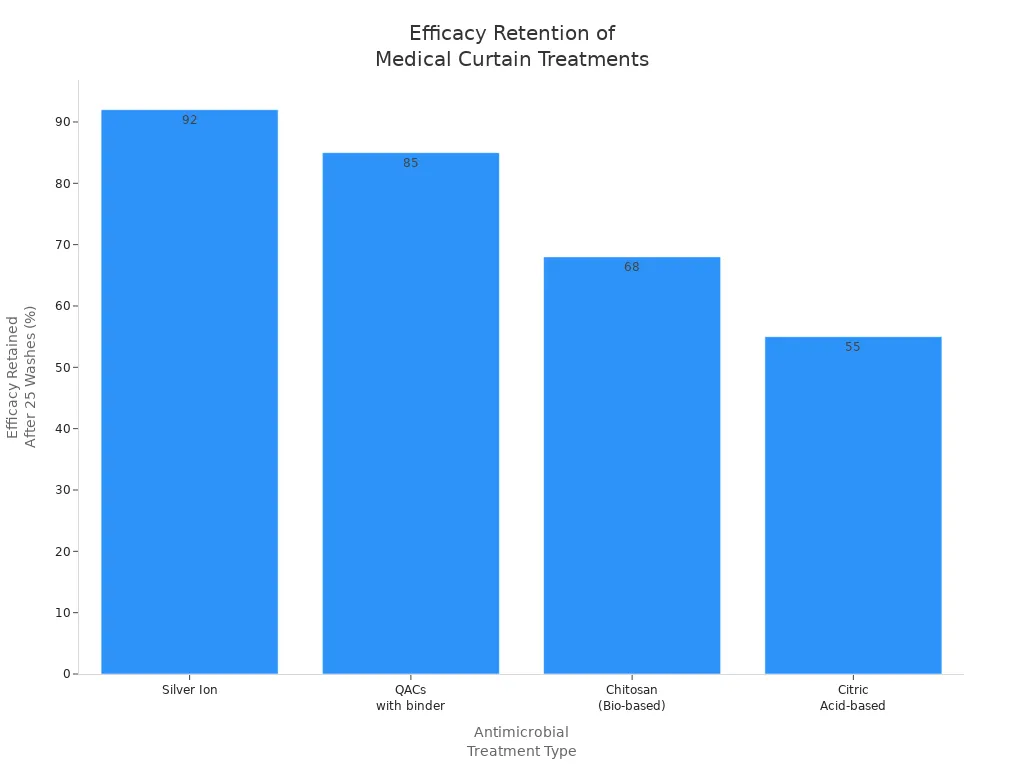
Leading curtain fabrics, such as treated cotton-linen, demonstrate high antimicrobial performance. These materials achieve up to 99% bacterial reduction against MRSA and E. coli, maintaining efficacy through 50–75 wash cycles. The table below summarizes key hygiene features:
| Feature | Treated Cotton-Linen Fabric | Untreated Fabric |
|---|---|---|
| Bacterial Reduction | ≥ 99% | < 20% |
| Wash Cycle Durability | 50–75 cycles | Not applicable |
| Moisture Management | 4–10 g/g | 3–6 g/g |
| Flame Retardant Compatible | Yes | Not applicable |
Flame-Retardancy and Safety
Hospitals require curtains that meet strict fire safety standards. Most medical curtain fabrics comply with NFPA 701, which limits afterflame time and char length to prevent fire spread. Permanent flame-retardant fibers and chemical treatments ensure these curtains resist ignition and maintain safety in clinical environments.
Cleaning and Maintenance Ease
Professional cleaning services play a crucial role in maintaining curtain hygiene. Facilities should select cleaning methods tailored to each fabric type, using non-toxic products and following OSHA and CDC guidelines. Disposable curtains simplify maintenance, as staff can replace them quickly without laundering, reducing cross-contamination risks.
Durability and Lifespan
Disposable antimicrobial curtains last up to two years, while reusable options can serve for up to 10 years with proper care. Durable materials reduce replacement frequency and operational disruptions, supporting efficient hospital workflows.
Medical Curtain Safety Standards and Compliance
Fire Safety Requirements
Healthcare facilities must follow strict fire safety standards for all curtain installations. Medical curtain materials need to comply with National Fire Protection Association (NFPA) codes and local fire regulations. Hospitals use fire-resistant fabrics to help limit the spread of fire. The following requirements guide safe curtain selection and use:
- All curtain materials must meet NFPA standards for flame resistance.
- Facilities should install fire doors and smoke curtains to control fire and smoke movement.
- Staff must perform regular maintenance and inspections of fire protection systems.
- Fire safety training and emergency evacuation plans support safe curtain management.
Hospitals also require curtain fabrics to retain flame-retardant and antimicrobial properties after repeated washing. Durable, flame-retardant fabrics help reduce long-term maintenance costs and maintain safety over time.
Infection Control Regulations
Hospitals implement comprehensive programs to ensure medical curtain compliance with infection control regulations from organizations such as the CDC, OSHA, and The Joint Commission. These programs include:
- Multi-stage sanitization processes, such as mechanical cleaning, chemical processing, steam sanitization, and residual antimicrobial treatments.
- Polywrapping and barcoding for tracking and quality control.
- Frequent cleaning schedules, often weekly or bi-weekly, with increased frequency in high-risk areas.
- Use of EPA-registered antimicrobial agents to reduce the spread of bacteria and viruses.
Curtain management supports both infection control and patient privacy requirements. Hospitals must also follow state and local regulations, which may add further specifications for material safety and cleaning.
Environmental and Sustainability Factors
Sustainability plays an increasing role in medical curtain selection. Many hospitals choose fabrics certified by the Global Recycled Standard (GRS), which ensures eco-friendly sourcing and production. GRSFRTex™ fabrics meet these standards, supporting responsible material sourcing. Facilities also use recycled polyester and biodegradable fibers to reduce environmental impact. The Green Button certification, established by the German government, recognizes textiles that meet strict environmental and social criteria. These certifications help healthcare providers align with global sustainability goals while maintaining safety and performance.
Practical Medical Curtain Considerations

Maintenance and Replacement Schedules
Hospitals maintain strict cleaning and replacement routines for privacy curtains to ensure safety and hygiene.
- Staff clean curtains in high-traffic areas weekly or bi-weekly, depending on usage and risk level.
- Industry guidelines recommend replacing curtains every quarter to reduce infection risks.
- Cleaning procedures follow CDC laundry standards, using “dead on contact” washing and bacteria-inhibiting softeners.
- Many facilities outsource curtain cleaning and replacement to specialized partners, which helps maintain compliance and reduces staff workload.
- Regular assessments of curtain condition and adherence to manufacturer instructions support a safe healthcare environment.
Tip: Consider curtain hardware quality and ease of cleaning when planning maintenance schedules.
Installation and Compatibility with Track Systems
Modern curtain track systems use extruded aluminum with double-wheeled carriers that glide smoothly around corners.
- Tracks come pre-drilled and include all necessary hardware for easy installation into drop ceiling grids.
- Flexible designs support straight, curved, and horseshoe configurations, meeting diverse facility needs.
- Patented rings on textile curtains allow quick hanging and removal, enabling staff to change curtains without ladders.
- These systems fit most ceilings and existing tracks, improving efficiency and reducing labor costs.
- Traditional hooks and chains are less compatible and require more effort to exchange, often causing noise and delays.
Suitability for ICU, Shared Rooms, and Specialized Areas
| Hospital Area | Suitable Curtain Material Features | Design & Functional Considerations | Safety & Hygiene Standards |
|---|---|---|---|
| ICU & High-Risk Areas | Antimicrobial fabrics, durable materials, disposable options | Clear panels for monitoring, noise-reducing fabrics | Stringent hygiene, flame-retardant, regular replacement |
| Shared Rooms | Easy-to-clean fabrics, mesh tops, calming patterns | Full coverage for elevated beds, built-in pockets for belongings | Frequent cleaning, balance privacy with airflow and light |
| Specialized Areas | Customizable types and sizes, accordion-style curtains | Ceiling or wall-mounted tracks, dual-sided curtains for adaptability | Fire safety compliance, track systems support weight and frequent use |
Antimicrobial fabrics help control infection in ICUs and high-risk zones. Flame-retardant curtains protect patients and staff. Disposable curtains work best in areas with high contamination risk. Facilities must match curtain features to each area’s needs for optimal safety and performance.
Selecting the right medical curtain ensures privacy, antimicrobial protection, and flame-retardancy. Hospitals should match curtain materials to each area’s needs and follow cleaning protocols.
Regular reviews help facilities maintain safety and compliance.
A well-chosen medical curtain supports patient dignity and infection prevention.
FAQ
What is the recommended replacement schedule for medical privacy curtains?
Healthcare facilities should replace reusable curtains every three to six months. Disposable curtains require replacement after each patient or when visibly soiled. Regular replacement supports infection control.
Are antimicrobial curtains effective against all hospital pathogens?
Antimicrobial curtains reduce bacteria and some viruses. They may not eliminate all pathogens, especially spores like C. difficile. Facilities should combine antimicrobial curtains with routine cleaning.
Can medical curtains be recycled or disposed of sustainably?
Many disposable curtains use recyclable polypropylene. Facilities can partner with recycling programs or choose biodegradable options. Staff training ensures proper disposal and supports sustainability goals.
