

 Send Email
 whatsapp


Top Benefits of Using Disposable Hospital Curtains in Medical Facilities
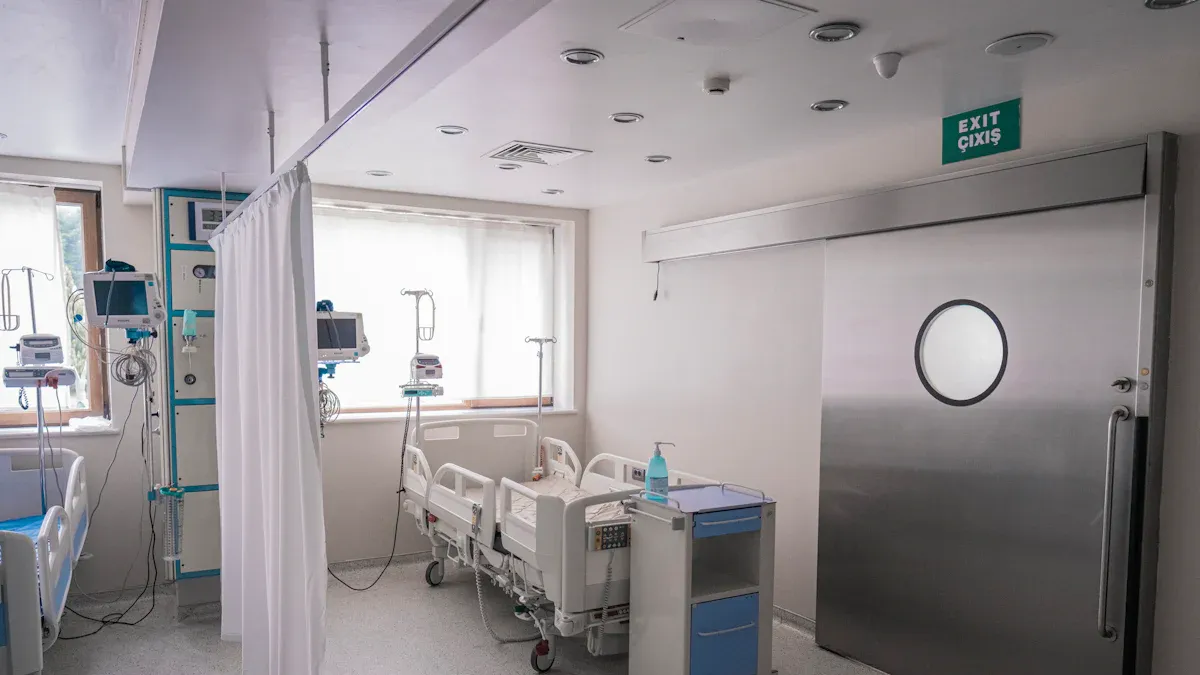
Hospital curtain contamination remains a major concern. Studies show that by day 14, 87.5% of curtains in burn units test positive for MRSA. 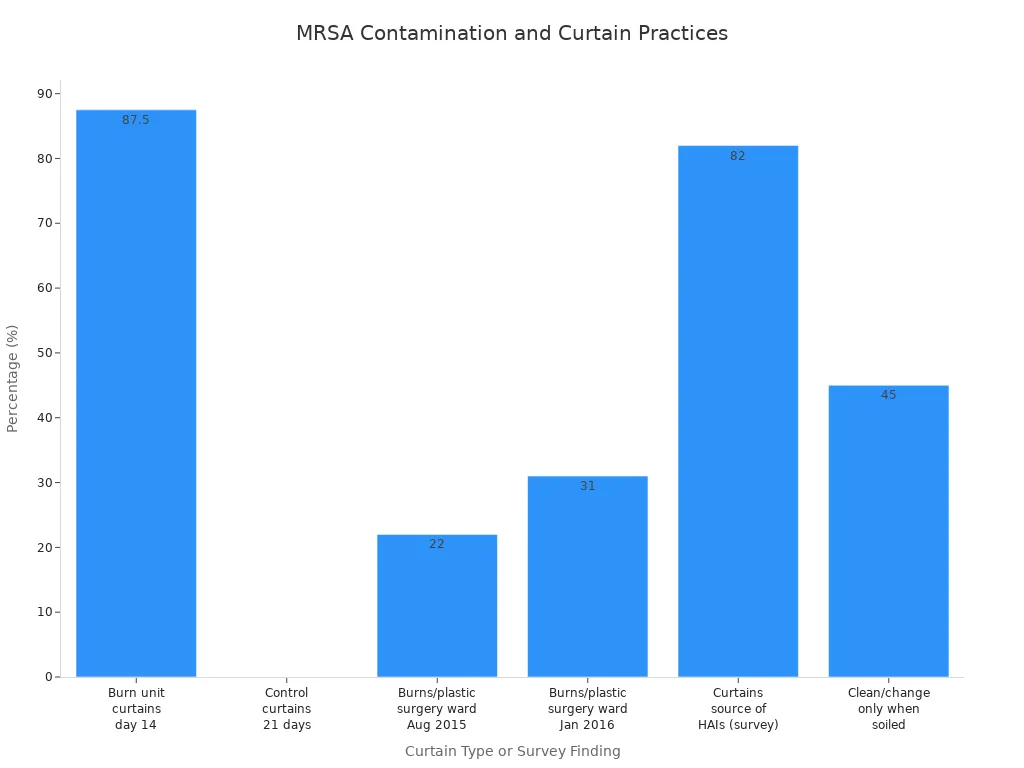 Disposable hospital curtains help medical facilities control infection, support hygiene, and improve operational efficiency. Medical curtain solutions offer quick replacement and reduce maintenance. A hospital partition curtain supports a safer environment.
Key Takeaways
- Disposable hospital curtains help stop the spread of germs by allowing quick replacement, especially in high-risk areas, which supports strong infection control.
- These curtains save staff time and effort with easy installation and removal, letting healthcare workers focus more on patient care and less on maintenance.
- Using Disposable curtains reduces laundering and maintenance costs, meets safety regulations, and supportshospital sustainability through recyclable materials and responsible disposal.
Hospital Curtain and Enhanced Infection Control
Reducing Cross-Contamination
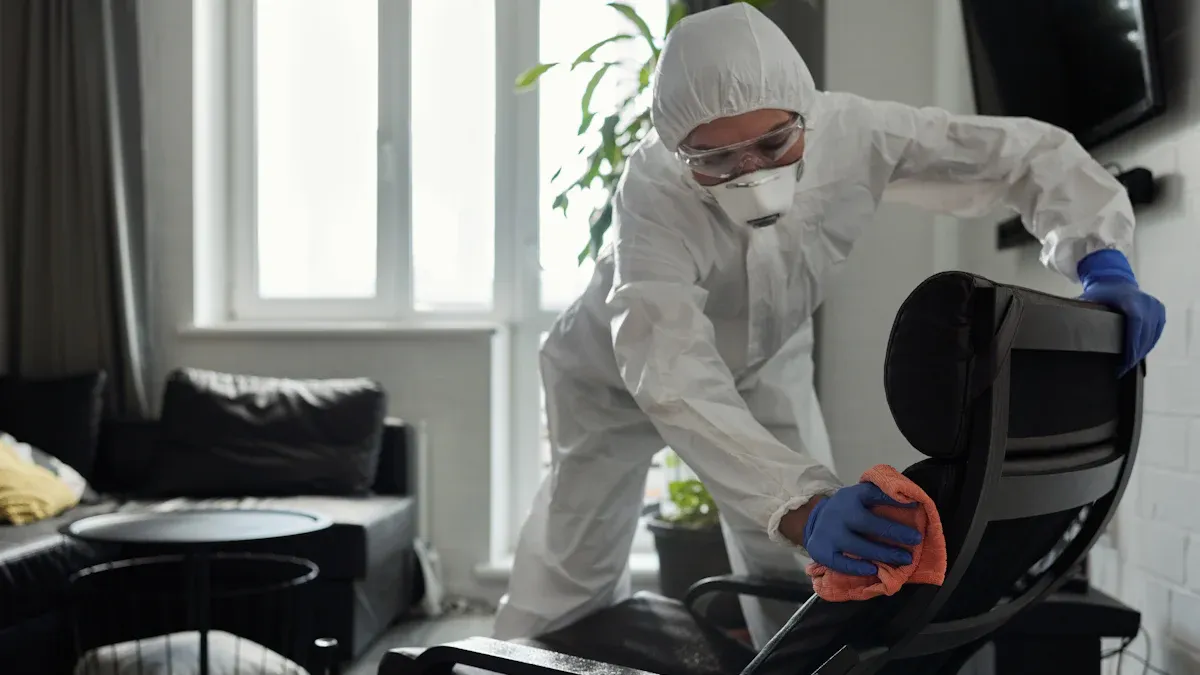
Healthcare environments face constant threats from bacteria and viruses. Disposable hospital curtains provide a strong barrier against pathogens. Staff can replace contaminated curtains quickly, which limits the spread of germs between patients. In high-risk areas, such as intensive care units and emergency rooms, frequent curtain changes help prevent cross-contamination. Disposable options eliminate the need for laundering, which can sometimes spread bacteria if not handled properly.
Tip: Quick-change track systems allow staff to swap curtains in minutes, reducing downtime and exposure risks.
Supporting Hygiene Protocols
Medical facilities must follow strict hygiene protocols to protect patients and staff. The recommended frequency for changing disposable curtains varies by hospital setting. The table below outlines best practices:
| Hospital Setting | Recommended Frequency for Changing Disposable Curtains | Reason/Notes |
|---|---|---|
| Standard Patient Rooms/General Wards | Every 1 to 3 months | Routine cleaning prevents bacterial buildup |
| Intensive Care Units (ICUs) and High-Risk Areas | Every 2 to 4 weeks or immediately after patient discharge | High vulnerability to infections; multiple high-risk patients |
| Emergency Rooms (ERs) | Every 2 to 4 weeks or after high-risk exposure | Frequent handling and exposure to bodily fluids increase contamination risk |
| Operating Rooms and Isolation Units | After each surgical procedure or patient discharge | Near-sterile conditions required; any contamination could harm patients |
| Maternity and Pediatric Wards | Every 1 to 2 months (more frequent in high-risk cases) | Cleanliness is critical for newborns and young patients |
Facilities that use disposable hospital curtains align with CDC and WHO guidelines. These protocols help reduce healthcare-associated infections and support a safer environment for everyone.
Hospital Curtain for Time and Labor Savings
Easy Installation and Removal
Disposable hospital curtains offer a straightforward installation process. Staff can hang or remove each curtain in under two minutes. This quick change does not require ladders or special tools. The design allows for easy handling, which reduces the risk of workplace injuries. Many facilities use quick-change track systems, making the process even faster. Staff can replace curtains between patients or after contamination events without disrupting care. This efficiency ensures that fresh curtains are always available, supporting infection control and smooth operations.
Note: Quick installation means less downtime for patient rooms and faster turnover rates.
Lower Staff Workload
Switching to disposable curtains has transformed daily routines for hospital staff. Previously, changing a traditional hospital curtain could take up to 45 minutes per room. Now, staff complete the task in just a few minutes. This dramatic reduction in time allows staff to focus more on patient care and less on maintenance. Hospitals have reported up to a 90% decrease in curtain change time. Staff morale improves as they spend less time on labor-intensive tasks. The elimination of laundering also reduces labor costs and operational complexity. These changes help create a safer, more efficient environment for both staff and patients.
Hospital Curtain Cost-Effectiveness
Eliminating Laundering Expenses
Medical facilities often face high costs when laundering reusable curtains. Disposable options remove the need for regular washing, which saves money and time. The following table compares the annual costs of disposable and washable hospital curtains:
| Curtain Type | Curtain Cost | Laundering Frequency | Laundering Cost | Replacement Frequency | Annual Cost per Curtain |
|---|---|---|---|---|---|
| Disposable | $25 | N/A | N/A | Every 3 months | Higher |
| Washable | $10 | Every 6 months | Significant | Every 7 years | 70% less than disposable |
Facilities that use disposable curtains avoid laundering expenses, but washable curtains cost less per year due to their longer lifespan. Staff hourly rates for curtain changes also affect total costs. Decision-makers must weigh the benefits of reduced laundering against the frequency of curtain replacement.
Note: Disposable curtains help facilities save on water, detergent, and energy costs associated with laundering.
Minimizing Maintenance Costs
Reusable curtains require ongoing attention to maintain hygiene and prevent damage. Disposable hospital curtain solutions eliminate many common maintenance issues:
- Staff must clean reusable curtains frequently, especially in high-risk areas.
- Proper laundering with hospital-grade detergents and correct temperatures is necessary to preserve antimicrobial properties.
- Staff need training for safe installation and removal to avoid cross-contamination.
- Reusable curtains often suffer from wear, stains, and chemical damage.
- Disposable curtains avoid these problems because staff discard them after use, removing the need for cleaning, repairs, or special handling.
Facilities that choose disposable curtains reduce maintenance costs and simplify staff routines. This approach supports a cleaner, safer environment for patients and staff.
Hospital Curtain Compliance and Safety
Meeting Regulatory Standards
Healthcare facilities must follow strict rules when selecting hospital curtains. Disposable options help organizations meet these requirements in several ways:
- Fire-retardant materials meet standards set by the National Fire Protection Association (NFPA).
- Curtains provide privacy, supporting The Joint Commission (TJC) and HIPAA Privacy Rule.
- Antimicrobial treatments help reduce healthcare-associated infections, especially in intensive care units.
- Non-woven polypropylene construction makes disposable curtains lightweight and cost-effective.
- Single-use design lowers the risk of cross-contamination, supporting infection control protocols.
- Curtain track systems and trackless designs reduce places where bacteria can hide.
Note: Proper curtain selection and installation help facilities pass inspections and maintain a safe environment for patients and staff.
Improving Patient Safety
Disposable hospital curtains play a key role in protecting patients. Each new curtain creates a fresh barrier, reducing the chance of spreading germs. Hospitals can use QR codes and tracking apps to monitor curtain changes. This technology ensures staff replace curtains on time, lowering infection risks. Automated systems replace manual logs, making compliance easier and more reliable.
Patients benefit from a cleaner, more professional setting. Quick curtain changes mean less disruption and a safer space. Disposable curtains also support sustainability goals, as many use recyclable materials. Lower costs and fewer maintenance needs allow hospitals to focus resources on patient care.
Hospital Curtain Convenience and Flexibility
Quick and Simple Replacement
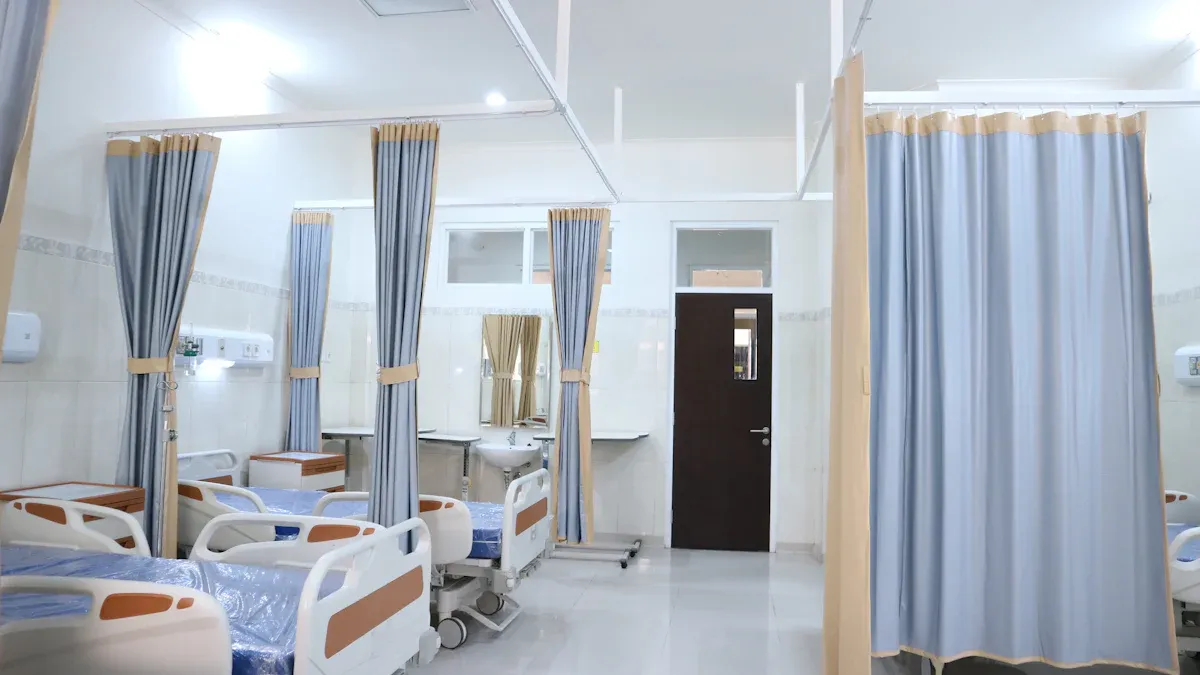
Disposable curtains offer unmatched convenience for busy medical facilities. Staff can replace each curtain in minutes, which helps maintain a clean environment. The lightweight design allows easy handling, so workers do not need special tools or training. Many hospitals use quick-change track systems that let staff swap curtains without climbing ladders or moving heavy equipment. This process reduces room downtime and supports faster patient turnover.
Tip: Quick replacement means less waiting for patients and more time for care.
Facilities with high traffic, such as emergency rooms and clinics, benefit from this feature. Staff can respond quickly to contamination events, which helps prevent the spread of germs. Frequent curtain changes support strict hygiene standards and improve overall safety.
Adaptability to Different Environments
Disposable curtains fit many healthcare settings. Hospitals, clinics, and urgent care centers use them in patient rooms, treatment areas, and waiting spaces. The non-woven materials resist stains and moisture, which makes them suitable for areas with frequent visitors.
- Emergency rooms need curtains that can handle constant use and quick changes.
- Clinics require solutions that support privacy and infection control.
- Pediatric wards benefit from curtains with bright colors and child-friendly designs.
A table below shows how different environments use disposable curtains:
| Environment | Curtain Features | Benefit |
|---|---|---|
| Emergency Room | Quick-change, antimicrobial | Controls contamination |
| Clinic | Lightweight, privacy | Easy installation |
| Pediatric Ward | Colorful, stain-resistant | Comfort for young patients |
Disposable curtains adapt to changing needs and layouts. Staff can select styles and sizes that fit each space. This flexibility helps facilities maintain high standards of care and hygiene.
Hospital Curtain Environmental Considerations
Eco-Friendly Material Options
Medical facilities now seek sustainable solutions for patient privacy and infection control. Manufacturers produce disposable curtains using 100% recyclable polypropylene and biodegradable polymers. These materials help reduce landfill waste and support hospital sustainability goals. Antimicrobial treatments on curtain surfaces further enhance infection control. Hospitals often choose products with recognized certifications to ensure quality and environmental responsibility.
| Certification/Standard | Description |
|---|---|
| ISO 9001 | Quality management system certification |
| ISO 14001 | Environmental management system certification |
| BS 5867 Fire classification | Fire safety standard (FR: Part 2: Type C) |
| NHS Approval | Approval relevant for hospital infection control |
| Material | 100% recyclable polypropylene, antibacterial |
Disposable curtain manufacturers also offer take-back programs. These initiatives recycle used curtains into resin pellets, which can be remanufactured into new products. Hospitals participate in recycling programs and waste-to-energy projects to further reduce their environmental footprint.
Responsible Disposal Practices
Proper disposal of single-use curtains remains essential for environmental stewardship. Hospitals implement recycling programs to divert curtains from landfills. Staff separate recyclable materials and send them to approved facilities. Some organizations partner with manufacturers to return used curtains for processing. Waste-to-energy initiatives convert non-recyclable materials into usable energy, supporting sustainability targets.
- Hospitals train staff to follow disposal protocols.
- Recycling bins and clear signage help ensure compliance.
- Manufacturers provide guidance on responsible disposal methods.
Tip: Facilities can request documentation from suppliers to verify environmental certifications and recycling options.
Responsible disposal practices allow medical facilities to maintain high hygiene standards while minimizing environmental impact.
Disposable hospital curtains offer strong infection control, quick installation, and cost savings. Many experts recommend reusable textiles for most situations, but disposable options help when laundering is not possible. Medical facilities choose hospital curtain solutions to improve safety, meet regulations, and support efficient care.
FAQ
How often should staff replace disposable hospital curtains?
Staff should replace disposable hospital curtains according to facility protocols. High-risk areas may require changes every two to four weeks or after patient discharge.
Are disposable hospital curtains fire-retardant?
Most disposable hospital curtains use fire-retardant materials. Facilities should confirm that products meet NFPA and local fire safety standards before purchase.
Can hospitals recycle used disposable curtains?
Many manufacturers offer recycling programs for used curtains. Hospitals can participate in these programs to reduce waste and support sustainability goals.
